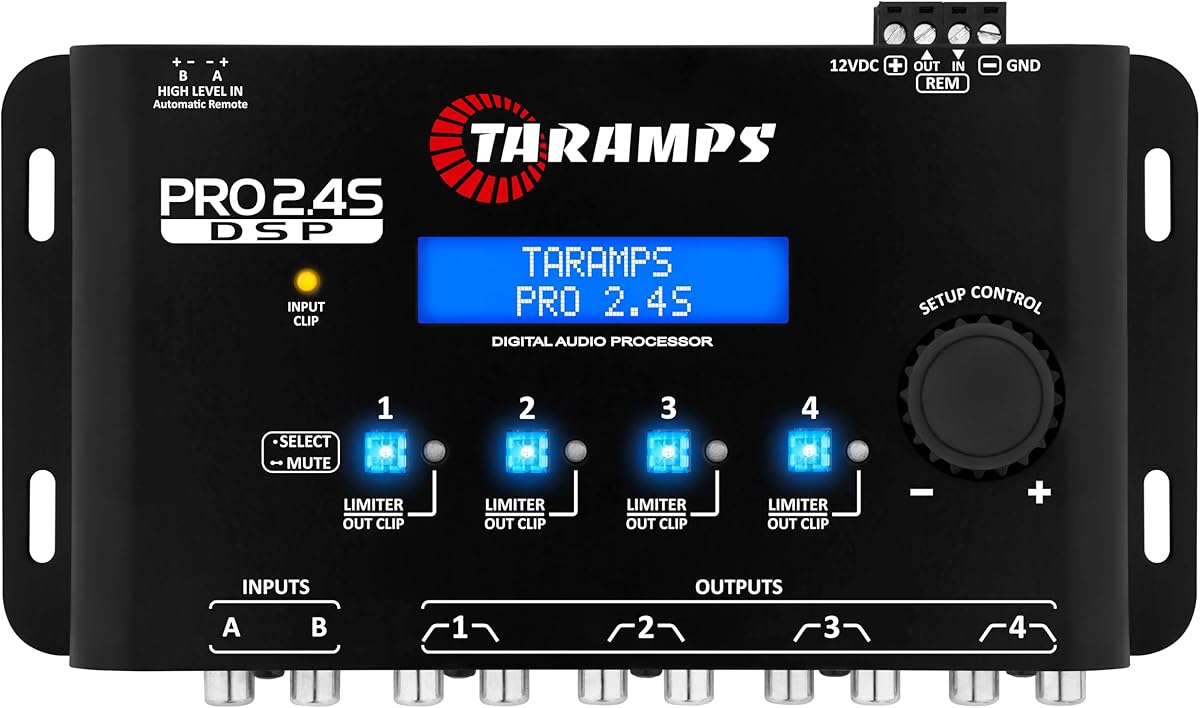
Taramps PRO 2.4S
4.6Editor score
Compact 4 channel design
Anti-Pop system included
Parametric EQ per channel
This guide compares the top digital signal processor Dsp for car audio systems to help you choose the best processor for tuning equalization and crossover
Car audio enthusiasts seek precise sound control to transform factory systems into high fidelity experiences. A digital signal processor Dsp for car audio provides the tools needed to adjust equalization, crossovers, and timing for perfect speaker alignment.
We evaluated ten leading models based on channel count, connectivity, software usability, and processing power. Each product offers unique features ranging from Bluetooth app control to high level inputs for seamless OEM integration.
Every review highlights specific strengths and trade-offs to match your setup needs. Prices and availability fluctuate frequently so verify current details before purchasing your ideal audio processing solution.
4.6Editor score
4.6Editor score

4.6Editor score
The following table compares key specifications across all ten models to help you identify the right fit for your vehicle audio upgrade project.




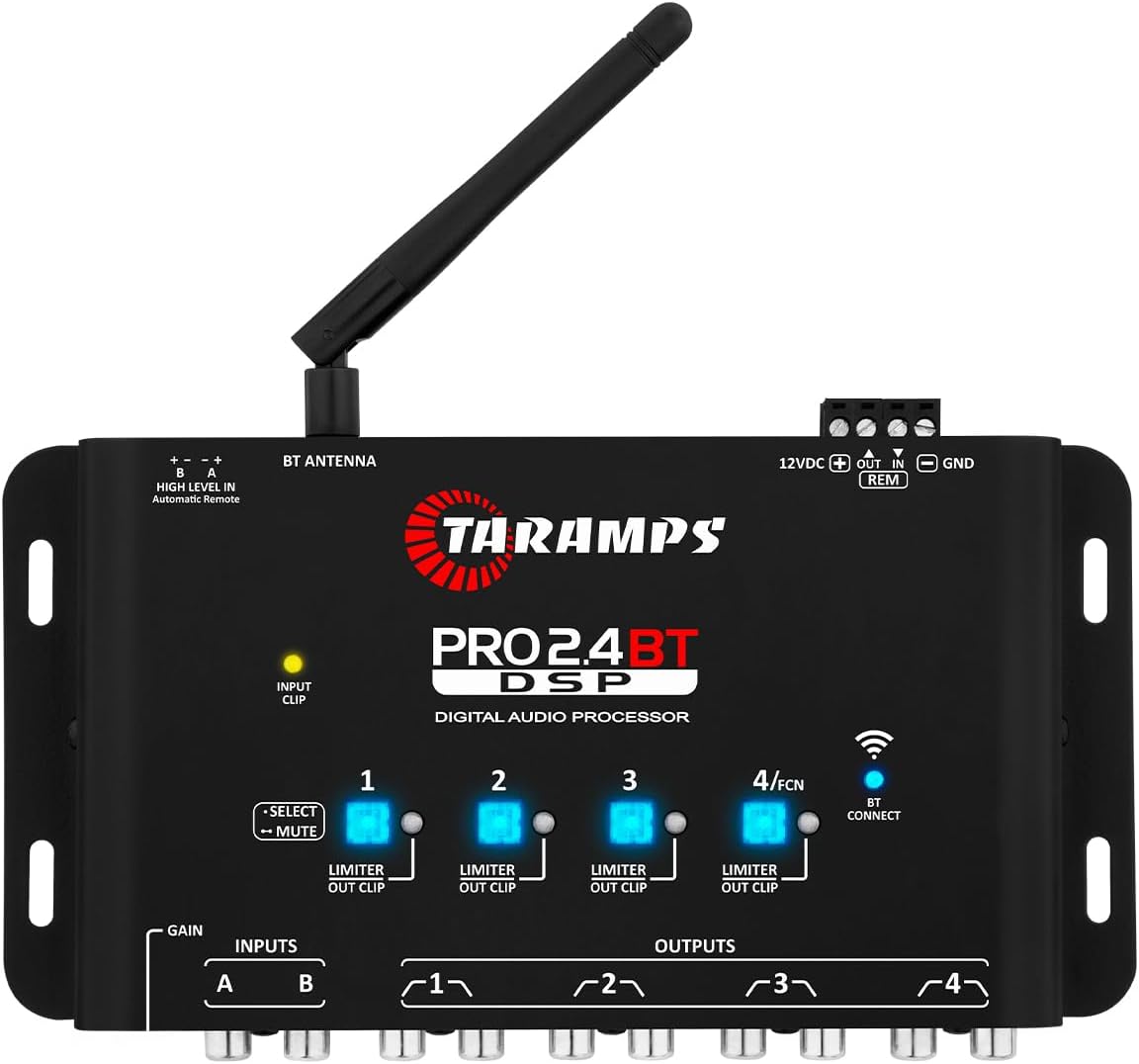
The Taramps Pro 2.4 BT stands out as a top contender for car audio tuning. With a 4.6 rating, users praise its Bluetooth 5.4 BLE connectivity and robust feature set.
We may earn a commission when you buy through this link, at no additional cost to you.
Its wireless configuration allows real-time adjustments from smartphones or tablets. The 15-band graphic EQ and parametric controls offer precise sound shaping for any setup.
While powerful, the interface requires study to maximize potential. New users may find the app navigation slightly complex initially.
Ideal for DIYers seeking professional grade tools without high costs. Its balance of features and affordability makes it a strong recommendation.
Bluetooth 5.4 BLE ensures stable connections for smooth app adjustments during setup sessions.
Built-in high level inputs simplify connections to factory head units without extra adapters.
We may earn a commission when you buy through this link, at no additional cost to you.
The PRV AUDIO DSP 2.4X offers solid control with an intuitive LCD display. Rated 4.7, it excels in manual adjustments and sequencer automation.
We may earn a commission when you buy through this link, at no additional cost to you.
Real-time audio changes via the interface simplify calibration. The sequencer allows sequential triggering of amplifiers for synchronized startup.
Lack of wireless features may limit remote tuning needs. Some users prefer app-based control over physical interface buttons.
A reliable choice for setups prioritizing wired control and automation. Its sequencer feature adds unique value for system integration.
The 16×2 character display provides clear visual feedback for parameter adjustments.
Remote relay connection enables triggering other components in sequence for power management.
We may earn a commission when you buy through this link, at no additional cost to you.
Expanding on the 2.4X model, this unit adds four more outputs for complex speaker layouts. It maintains the same intuitive interface and sequencer capabilities.
We may earn a commission when you buy through this link, at no additional cost to you.
Eight independent channels allow precise control over tweeters, mid-bass, woofers, and subs. Source routing flexibility supports dual input switching.
Wireless tuning remains absent which may deter app-centric users. The higher price reflects expanded channel count and processing power.
Ideal for systems needing more speaker outputs without separate processors. Its balance of channels and features suits advanced installations.
Eight outputs support multi-zone or active three-way speaker configurations effectively.
Two inputs allow switching between stereo sources like Bluetooth and auxiliary easily.
We may earn a commission when you buy through this link, at no additional cost to you.
This version integrates Bluetooth app control with PRV speaker presets. The app helps beginners set basic crossovers quickly for common driver sizes.
We may earn a commission when you buy through this link, at no additional cost to you.
High level inputs enable integration with factory radios without signal loss. The 4-channel design fits standard front and rear speaker setups.
Users report occasional connection instability with the app interface. Advanced tuning options are less flexible compared to dedicated professional units.
Suitable for owners seeking simplicity with PRV product compatibility. Its presets simplify initial setup for stock audio upgrades.
Wireless app access enables remote EQ and delay adjustments for convenience.
High level inputs accept factory wiring directly for easy installation.
We may earn a commission when you buy through this link, at no additional cost to you.
Taramps PRO 2.4S offers essential DSP features at an entry-friendly price point. Its compact design fits neatly under seats for discreet installation.
We may earn a commission when you buy through this link, at no additional cost to you.
Anti-Pop system eliminates turn-on noises which protects amplifiers and listeners. RCA and high level inputs ensure compatibility with most head units.
Lack of Bluetooth limits remote tuning convenience for some users. Basic EQ options may restrict advanced acoustic correction needs.
Best for budget-conscious builders needing core tuning features. Its value proposition and reliability make it a popular choice.
Small dimensions allow hidden mounting under seats or dashboards without hassle.
Integrated Anti-Pop system prevents speaker pops during power transitions.
We may earn a commission when you buy through this link, at no additional cost to you.
The X8AiR delivers professional grade audio with 32-bit 96kHz processing power. Its 79-band equalizer provides unmatched precision for acoustic tuning.
We may earn a commission when you buy through this link, at no additional cost to you.
Bluetooth app allows detailed adjustments without physical access to the unit. Eight outputs support multi-amplifier setups with independent crossover control.
Complexity demands technical knowledge to leverage full potential fully. Higher cost may exceed budgets for casual car audio enthusiasts.
Ideal for audiophiles demanding studio quality tuning capabilities. Its high resolution engine ensures pristine signal fidelity throughout.
32-bit 96kHz processing preserves audio detail across the full frequency spectrum.
79 EQ bands allow micro adjustments for eliminating resonance effectively.
We may earn a commission when you buy through this link, at no additional cost to you.
The 2.8S focuses on dynamic control with adjustable peak and RMS limiters. It maintains the proven Taramps interface for straightforward tuning.
We may earn a commission when you buy through this link, at no additional cost to you.
Eight channels enable full system management with independent crossover settings. Auto turn-on simplifies integration with factory head units easily.
Absence of wireless features limits modern convenience expectations. Dynamic tools add complexity but offer protection against signal overload.
A solid choice for users prioritizing signal protection and power. Its dynamic DSP mode is rare in this price segment.
Adjustable limiters protect speakers and amplifiers from signal distortion risks.
Eight outputs allow multi-zone tuning without needing additional hardware.
We may earn a commission when you buy through this link, at no additional cost to you.
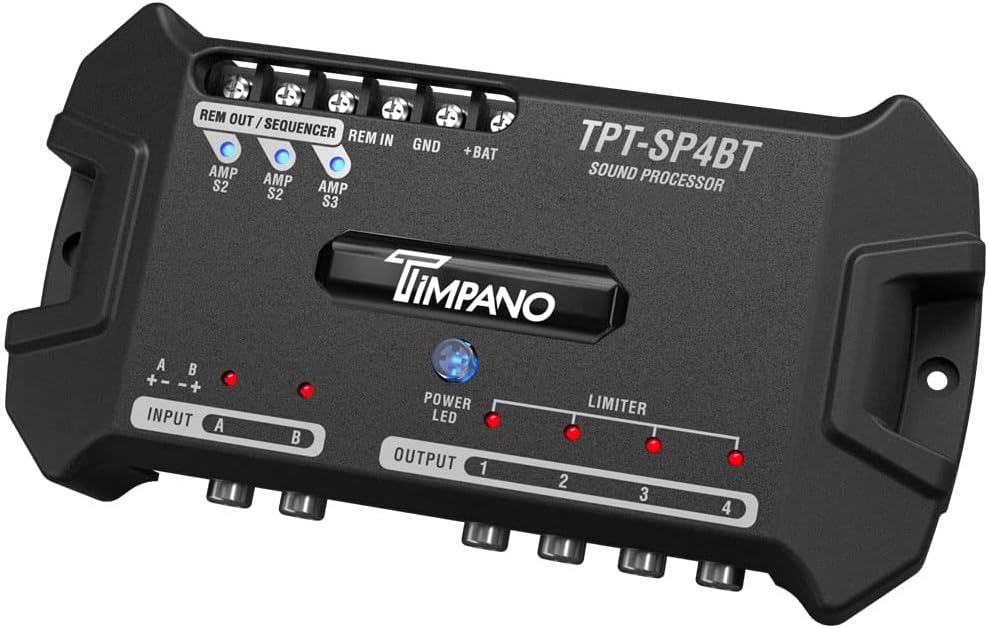
Timpano TPT-SP4BT stands out with a built-in voltmeter for voltage monitoring. Bluetooth connectivity enables adjustments from smartphones efficiently.
We may earn a commission when you buy through this link, at no additional cost to you.
Remote relay features allow sequencing of accessories during startup. The 4-channel setup fits typical two-way speaker configurations well.
EQ and crossover settings are basic compared to higher end units. Advanced acoustic tuning may require external tools or upgrades.
Ideal for owners needing voltage checks and wireless access. Its monitoring capabilities provide useful diagnostic insights.
Built-in voltmeter helps track electrical system health during operation.
Remote relay enables turning on amplifiers or fans sequentially.
We may earn a commission when you buy through this link, at no additional cost to you.
This model offers four inputs allowing mixing of multiple sources. Parametric EQ on all outputs supports detailed acoustic shaping.
We may earn a commission when you buy through this link, at no additional cost to you.
Input mixing capabilities are unique among typical car DSPs. Time alignment ensures accurate soundstage positioning across speakers.
Bluetooth requires optional purchase which adds to total cost. Interface complexity may challenge users seeking simple setup.
Suited for applications requiring source mixing like audio systems. Its flexibility supports complex home or vehicle projects.
Four inputs allow blending sources like phone and radio simultaneously.
Full parametric EQ on every channel ensures precise frequency control.
We may earn a commission when you buy through this link, at no additional cost to you.
Stetsom STX2448 features unique Floating mode for flexible audio streaming. Subharmonic bass generation enhances low-end response for heavy listening.
We may earn a commission when you buy through this link, at no additional cost to you.
Encoder buttons simplify navigation through device configurations quickly. Remote sequencer handles component startup automation effectively.
Limited documentation may slow adoption for new users significantly. Complex modes require patience to master fully.
Best for users seeking specialized bass enhancement features. Its unique capabilities cater to specific sound system preferences.
Floating mode allows different audio streams for versatile system configurations.
Subharmonic generation enhances low frequency impact significantly.
We may earn a commission when you buy through this link, at no additional cost to you.
Selecting the right processor involves evaluating input types channel count software features and budget.
Match output channels to your speaker setup. Basic systems need four outputs while multi-zone or active setups require eight.
Higher channel counts allow independent control for each speaker driver.
Check for RCA or high level inputs to fit existing head units. High level inputs integrate directly with factory wiring.
Universal input types reduce installation complexity for OEM systems.
Decide between wired LCD interfaces or wireless app control. Bluetooth enables remote tuning from your phone.
Wired controls offer reliability where wireless connectivity may fail.
Graphic EQs simplify tuning but parametric EQs allow precise frequency adjustments. Look for 15 bands minimum for flexibility.
Parametric controls help target specific resonance issues in your car.
Standard 24-bit 48kHz fits most needs but 32-bit 96kHz offers higher fidelity. Higher resolution reduces noise in complex systems.
Prioritize resolution for audiophile builds needing detailed correction.
Software quality dictates tuning ease. Look for features like preset sharing or speaker profiles.
Preset libraries speed initial setup for common driver sizes.
Features like sequencers or limiters add value for system integration. Subharmonic bass options enhance low end performance.
These extras tailor the unit to specific listening goals.
Prices vary widely based on specs. Entry units start lower while premium models cost more.
Balance feature needs against your total project budget.
Connect the DSP between your head unit and amplifiers using RCA or high level inputs. Ensure secure grounding to avoid noise.
Download the app or open the GUI to begin tuning. Adjust delay and gain for each speaker channel systematically.
Update firmware periodically via the app for performance improvements. Keep the unit dry and free from dust to maintain reliability.
A DSP significantly improves aftermarket speaker performance by correcting factory signal flaws. It allows precise time alignment and equalization for better clarity and imaging.
Yes many models include high level inputs for direct factory radio connections. This avoids needing extra adapters or replacing the head unit.
Graphic EQ adjusts fixed frequency bands while parametric EQ lets you select frequency Q and gain. Parametric offers more control for detailed acoustic tuning.
Models with Bluetooth use a dedicated app on your smartphone. Connect via Bluetooth settings and launch the app to access tuning controls.
Limiters and crossover filters in DSPs help protect speakers from overexcursion. They prevent frequencies outside the speaker range from damaging drivers.
An 8 channel DSP supports up to eight independent speaker outputs. This suits setups with tweeters mid-bass, and subwoofers needing individual routing.
Most apps offer basic software but advanced tuning tools may require separate purchase. Check product details for included application features before buying.
The top picks like Taramps Pro 2.4 BT and Banda Audiopart X8AiR offer distinct advantages for different user needs.
Prioritize channel count and control features based on your system complexity and tuning experience level.
Verify current product details on the official site to ensure compatibility and availability before ordering.