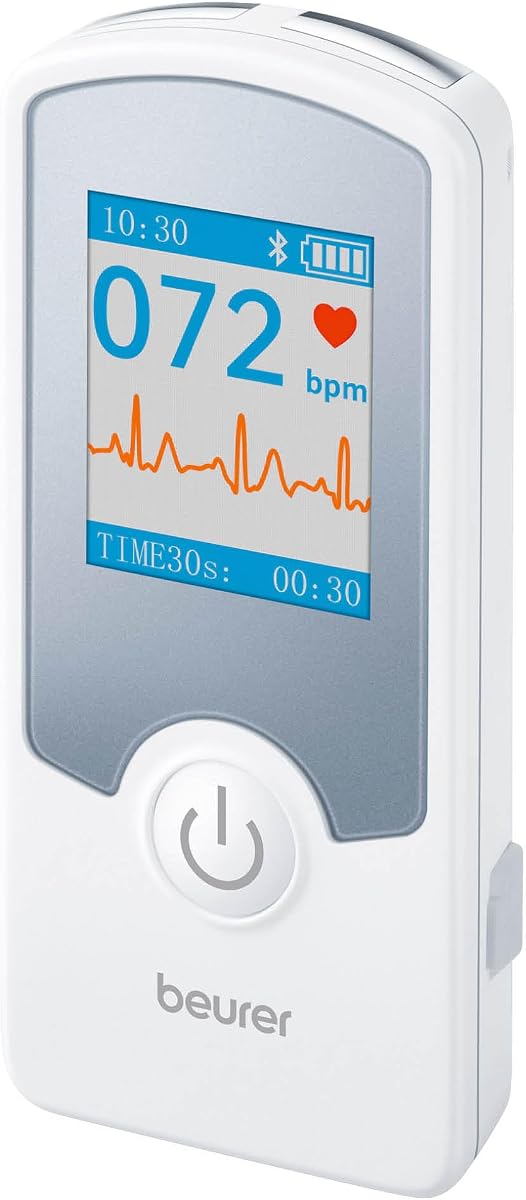
Beurer Cardio Companion EKG
4.2Editor score
Affordable three-lead option
Fast thirty-second results
Bluetooth app integration
Discover the top heart rate monitors for arrhythmia. This guide compares 10 devices with EKG tracking, continuous monitoring, and doctor-friendly reports for
Finding the right heart rate monitor for arrhythmia is crucial for managing your cardiovascular health effectively. These devices help track irregular beats and provide data to share with your healthcare provider for accurate diagnosis and treatment plans.
We compared ten top-rated devices based on accuracy, ease of use, battery life, and features like EKG capability and continuous tracking. Our analysis focuses on medical-grade insights and user-friendly designs suitable for daily monitoring at home.
Each pick highlights key strengths and potential trade-offs to help you choose the best fit for your needs. Prices and availability change frequently, so verify the latest details before purchasing to ensure you get the best value.
4.2Editor score

4.4Editor score

3.6Editor score
This side-by-side comparison highlights the key specifications and capabilities of each device to help you make an informed decision for your heart health monitoring needs.



The KardiaMobile 6L EKG stands out as a top choice for monitoring heart rhythm irregularities. With a 4.4 rating, it offers medical-grade six-lead EKG recordings that provide detailed insights into your heart health without needing a subscription.
We may earn a commission when you buy through this link, at no additional cost to you.
Its FDA-cleared determinations allow you to detect conditions like AFib, Bradycardia, and Tachycardia in just 30 seconds. The device works seamlessly with most smartphones, making it easy to share data with your doctor for professional review.
While it requires direct finger contact and is not recommended for pacemaker users, its accuracy and lack of recurring costs make it a reliable option. Many users appreciate the ability to record unlimited EKGs anytime.
If you need a trusted, portable tool for regular heart checks, this device is an excellent investment. It balances professional-grade data with user-friendly features for effective at-home monitoring.
Six leads provide a more detailed view of your heart than standard two-lead devices, helping detect more arrhythmias accurately.
Unlike some competitors, this device works fully without a mandatory monthly fee, saving you money over time.
We may earn a commission when you buy through this link, at no additional cost to you.
This simpler version of the KardiaMobile focuses on ease of use without any cables or Bluetooth connectivity. It delivers quick results in 30 seconds by placing fingers on the sensors, making it ideal for spot checks.
We may earn a commission when you buy through this link, at no additional cost to you.
While it lacks the six-lead depth of the 6L model, it still offers reliable rhythm detection for common issues. The lack of subscription requirements and straightforward design appeal to users who want minimal hassle.
The trade-off is less detailed data compared to multi-lead devices. If you need comprehensive cardiac analysis, this might not be enough, but for basic monitoring it performs well.
Consider this if you value simplicity and portability over advanced features. It is a cost-effective way to track your heart rhythm regularly without complex setup steps.
No pairing or Wi-Fi needed; just place fingers on sensors for instant readings.
Sufficient for normal rhythm checks but lacks detailed lead data for complex arrhythmias.
We may earn a commission when you buy through this link, at no additional cost to you.
The KardiaMobile 6L Max includes a one-year membership that unlocks advanced features like cardiologist EKG reviews and telehealth appointments. This adds significant value for users seeking professional interpretation of their heart data.
We may earn a commission when you buy through this link, at no additional cost to you.
With four free reviews annually, you can discuss findings with board-certified specialists. The device detects over 20 arrhythmias, offering deeper insights than basic models. Automatic email features make sharing with doctors seamless.
However, membership renews after the first year, and additional reviews cost extra. Users should budget for ongoing fees if they rely on professional analysis regularly.
If you want expert support alongside your EKG data, this model is worth considering. It bridges the gap between personal monitoring and clinical guidance effectively.
Access to cardiologist reviews helps interpret complex results and guide next steps.
Tag EKGs with activity notes to identify trends and share comprehensive reports.
We may earn a commission when you buy through this link, at no additional cost to you.
EMAY offers a compelling six-channel ECG monitor that rivals top brands at a competitive price point. Its 4.6 rating reflects strong user satisfaction with accuracy and functionality across mobile and desktop platforms.
We may earn a commission when you buy through this link, at no additional cost to you.
You can connect via Bluetooth to phones or USB to PCs for detailed case reviews. The absence of subscription fees makes it an attractive long-term option for continuous heart health tracking.
While the interface may take some learning to master full software capabilities, the flexibility is unmatched. Rechargeable batteries ensure readiness without frequent battery swaps.
For users wanting detailed channel data without hidden costs, this device is a strong contender. It provides professional-level capabilities for home monitoring effectively.
Sync data with both smartphones and computers for comprehensive analysis.
All features included without mandatory monthly memberships or hidden fees.
We may earn a commission when you buy through this link, at no additional cost to you.
Beurer delivers a reliable three-lead EKG monitor at an accessible price point. It measures heart rhythm in under 30 seconds and offers flexible measurement modes including hand-to-hand and hand-to-leg options.
We may earn a commission when you buy through this link, at no additional cost to you.
The device is FDA-cleared and includes Bluetooth app support for saving up to 100 readings locally or unlimited via app. Optional app use allows tracking without forcing subscriptions.
While it lacks six-lead detail, it is sufficient for basic irregular rhythm detection. The rechargeable battery and compact design make it convenient for travel and daily use.
This is an ideal choice for those seeking entry-level arrhythmia monitoring without high costs. It balances affordability with necessary medical-grade features effectively.
Measure using hand-to-hand, wrist, leg, or chest for varied data perspectives.
Keep 100 readings on device or sync to app for broader tracking.
We may earn a commission when you buy through this link, at no additional cost to you.
Bioheart offers a continuous 24/7 monitoring solution that captures every heartbeat throughout your day. This wearable chest strap design is comfortable and washable, allowing sleep and exercise tracking without interruption.
We may earn a commission when you buy through this link, at no additional cost to you.
Trusted by thousands of cardiologists, it uses advanced technology to provide multiple heart views and AI insights. Real-time alerts help you respond quickly to irregularities and share reports with physicians.
The subscription model is necessary for full functionality, which may increase long-term costs. Some users report lower ratings regarding app stability or comfort fit.
Choose this if you need round-the-clock data rather than spot checks. It provides the most comprehensive view of heart rhythm variability during normal daily life.
Washable fabric strap ensures comfort during sleep, exercise, and all daily activities.
Advanced algorithms analyze trends and generate professional reports for doctors.
We may earn a commission when you buy through this link, at no additional cost to you.
HaSoCare provides a compact EKG monitor with a built-in LCD screen for immediate viewing. Weighing only 60 grams, it is highly portable and suitable for monitoring on the go without needing to sync instantly.
We may earn a commission when you buy through this link, at no additional cost to you.
It supports multiple monitoring modes including hand to hand, chest, and leg for better accuracy. Bluetooth and cable options allow flexible data transfer to phones or computers for later review.
The device does not require a subscription and offers sampling time settings. However, data depth is standard compared to clinical-grade models with more leads.
This monitor is great for users wanting quick visual feedback without smartphone dependency. It offers reliable basic monitoring for daily heart health checks.
View results directly on the unit without needing a paired phone.
Ultra-light design ensures you can carry it easily for travel.
We may earn a commission when you buy through this link, at no additional cost to you.
The Garmin HRM 200 transmits accurate heart rate and variability data to compatible devices. It is built for fitness enthusiasts who want to monitor intensity and recovery during workouts.
We may earn a commission when you buy through this link, at no additional cost to you.
With up to one year of battery life and 3 ATM water resistance, it is durable and easy to maintain. The strap is machine washable and available in multiple sizes for ideal fit.
While it captures HRV data useful for stress and recovery, it is not designed for diagnosing arrhythmias. This device serves fitness tracking better than medical diagnosis.
If your goal is performance optimization rather than health monitoring, this is a solid choice. It delivers consistent real-time heart rate for gym and cycling use.
HRV mode captures subtle heartbeat variations for training and stress tracking.
Water resistant and washable strap withstands sweat and daily training conditions.
We may earn a commission when you buy through this link, at no additional cost to you.
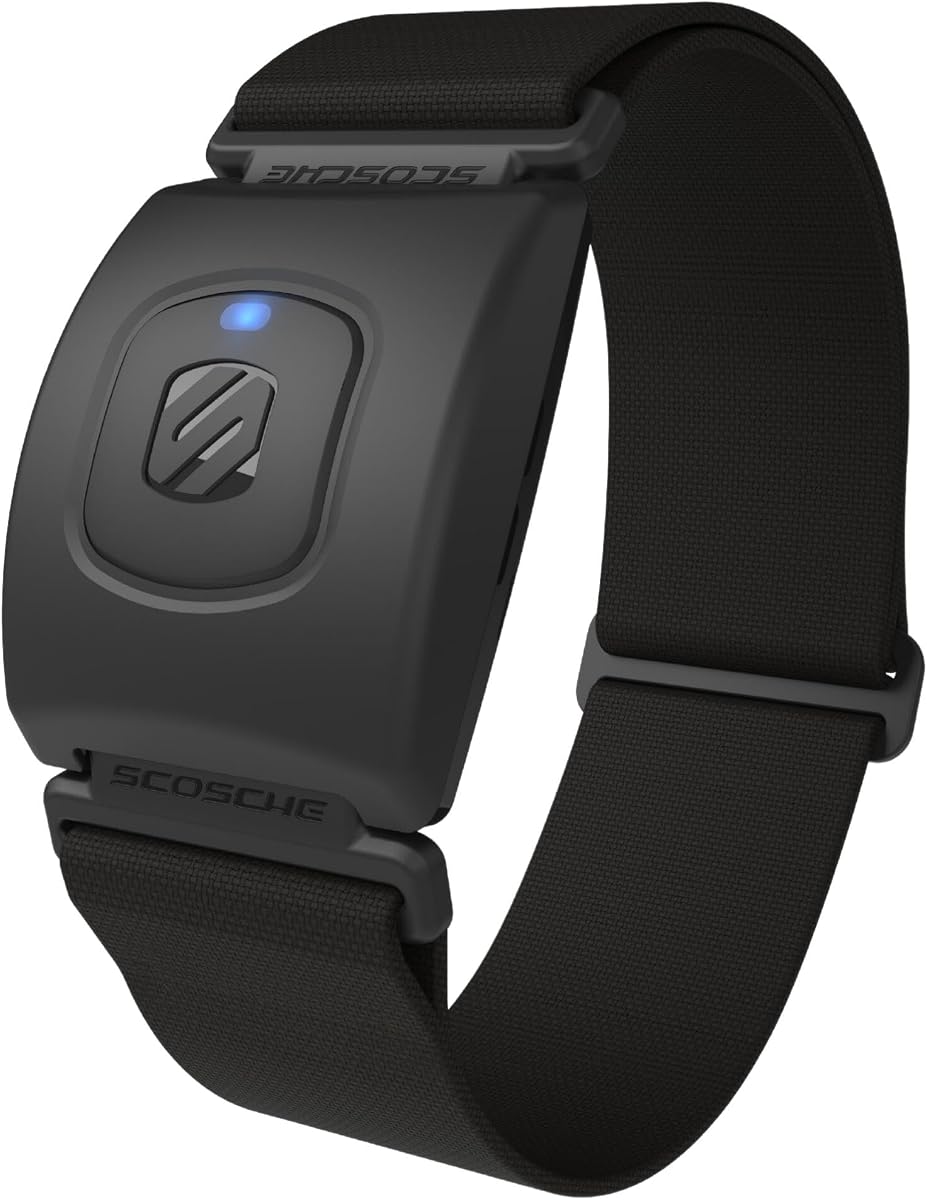
Scosche offers an optical heart rate armband that avoids chest straps while maintaining accuracy. It is designed for running and cycling with secure fit options on forearm or bicep.
We may earn a commission when you buy through this link, at no additional cost to you.
The device supports ANT+ and Bluetooth for stable connections with apps. IP68 waterproofing ensures performance during sweaty or wet conditions. HRV data helps track training and sleep quality.
Optical sensors may struggle during high-intensity movement compared to EKG. However, for general fitness and recovery tracking it is a dependable alternative to restrictive straps.
Choose this if you prefer arm-based comfort over chest straps. It integrates well with popular fitness platforms like Strava and Peloton.
Adjustable strap secures to forearm or bicep comfortably during workouts.
Stream RR interval data to apps for deeper recovery and stress analysis.
We may earn a commission when you buy through this link, at no additional cost to you.
The Polar Ft1 is a classic heart rate monitor watch that pairs with a coded chest strap for accuracy. It features a large display and simple one-button start for effortless operation.
We may earn a commission when you buy through this link, at no additional cost to you.
Manual heart rate target zones help you exercise safely within your desired intensity. The coded transmission avoids cross-talk from other nearby devices. A summary of your latest workout appears on the wrist.
While modern apps offer more features, this model remains reliable for basic zone training. It lacks advanced app connectivity or arrhythmia detection capabilities.
Ideal for users who prefer simplicity and wrist-worn displays. It provides essential heart rate monitoring for fitness goals without complexity.
Set manual heart rate targets to stay within safe and effective zones.
Coded signals prevent interference from other heart rate monitors nearby.
We may earn a commission when you buy through this link, at no additional cost to you.
Selecting the right monitor requires considering your specific health needs, desired features, and budget constraints.
Most arrhythmia monitors offer two to six leads. Six-lead models provide more detailed views and detect more types of irregularities compared to basic two-lead options.
Choose six leads if you need comprehensive data; otherwise two leads suffice for basic checks.
Look for devices that are FDA-cleared for rhythm determination. This ensures the device meets regulatory standards for medical accuracy and safety.
Prioritize cleared devices to ensure reliable results that you can share with healthcare providers.
Some devices require monthly fees for full functionality. Check if the model you want needs a membership or allows unlimited recordings without extra costs.
Avoid subscriptions if you prefer one-time purchase and lower long-term expenses.
Decide between spot-check devices that take 30-second readings and continuous wearables that track all day. Continuous monitors are better for capturing intermittent arrhythmias.
Continuous monitors are essential if symptoms occur randomly throughout the day.
Effective monitoring involves sharing data with your doctor. Look for features like automatic emailing, PDF reports, or app syncing to facilitate professional review.
Choose devices that make sharing with physicians easy and secure.
Consider how long the battery lasts and whether it is rechargeable. Longer life reduces interruptions and maintenance efforts.
Rechargeable units are more sustainable than disposable battery models.
Comfort is key for consistent use. Devices with washable straps or lightweight designs improve compliance for daily monitoring.
Choose a form factor that feels comfortable enough to wear during sleep or exercise.
Smartphone compatibility allows better data tracking. Ensure the device works with your iOS or Android device for seamless connectivity.
Select an app that provides clear insights and easy sharing options.
To begin, ensure your skin is dry and clean before placing electrodes or wearing the strap. Moisture or lotion can interfere with signal accuracy.
Follow the specific positioning instructions provided with your device. Proper contact is essential to capture clear EKG or heart rate data.
Clean the device after each use with a soft dry cloth and store it in a cool dry place to extend battery life and functionality.
Yes, FDA-cleared devices offer medical-grade accuracy suitable for tracking irregular rhythms. For best results, follow placement instructions and avoid skin interference. Always consult your doctor for diagnosis.
No, personal monitors are not a substitute for hospital diagnostic ECGs. They are designed for home tracking and screening. Seek immediate medical attention for serious symptoms or emergencies.
Battery life varies by model. Rechargeable units typically last days per charge, while non-rechargeable models may last months. Check specs to ensure you can track effectively without frequent changes.
Most modern EKG monitors require a smartphone for data storage and sharing. Some models have onboard LCD screens but still benefit from app connectivity for detailed insights.
While safe for most users, devices are not recommended for those with pacemakers or implanted defibrillators. Consult your physician before use if you have implanted medical devices.
Yes, many devices allow exporting reports via email or apps. Look for features like PDF summaries or automatic sharing to facilitate professional review of your heart rhythm data.
Frequency depends on your doctor's advice. Some users check daily if symptoms persist, while others check weekly. Consistency helps identify patterns in your heart rhythm over time.
The KardiaMobile 6L EKG remains the top choice for accuracy and simplicity. The Beurer Cardio offers budget-friendly relief while Bioheart delivers continuous monitoring for 24/7 insight.
Prioritize FDA-cleared devices that share data easily with professionals. Ensure you choose a monitor that fits your lifestyle and monitoring frequency needs effectively.
Prices fluctuate on marketplaces so check current listings before buying. With the right device, you can track your heart health confidently at home.