
10 Pack 3 Pins AMS1117-3.3 DC 4.75V-12V to 3.3V Voltage Regulator
4.1Editor score
Low cost multi-pack value
Simple 3-pin design
0.8A current capacity
This guide compares the top 5V to 3V voltage regulator modules for microcontrollers and sensors, reviewing specs performance and value for your next electronic
Finding a reliable 5V to 3V voltage regulator is crucial for powering sensitive electronics like microcontrollers and sensors. A good regulator ensures stable output, protects your components from voltage spikes, and maintains efficiency across various input conditions.
We evaluated ten top-rated voltage regulator modules based on user feedback, technical specifications, and real-world performance. Our comparison covers buck converters and linear regulators, highlighting their input ranges, current capacities, and ease of integration into DIY and professional circuits.
Each selection in this list offers distinct advantages for different project needs, from compact designs to high-current outputs. Please note that pricing and availability may fluctuate over time, so check current listings before making your final purchasing decision.
4.1Editor score

4.6Editor score

4.8Editor score
The following table provides a side-by-side comparison of all ten voltage regulator modules selected for this guide. It highlights key specifications such as input voltage ranges, output current limits, and physical dimensions to help you quickly identify the best fit for your specific application.


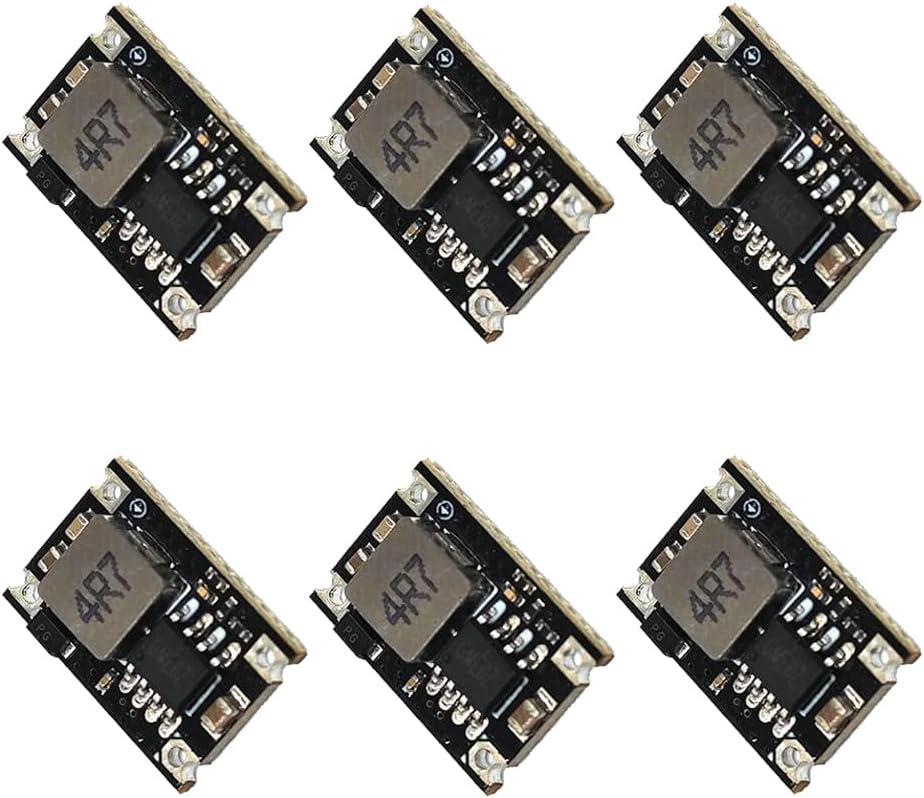
This module stands out as the top choice for powering microcontrollers and sensors that require a stable 3.3V supply. With a rating of 4.6 stars, users appreciate its ability to handle input voltages from 4.5V to 24V while maintaining a consistent output.
We may earn a commission when you buy through this link, at no additional cost to you.
The standout quality here is the high current capacity of up to 1.8A combined with a very low ripple of less than 30mV. This ensures that sensitive components receive clean power, reducing the risk of glitches or resets during operation.
While the module is robust, users must be cautious when connecting inductive loads like motors or servos. Adding a diode and capacitor is recommended to prevent voltage spikes that could damage the module or connected circuitry.
Ideal for hobbyists and makers who need multiple units for various projects, this 5-pack offers great value. It is highly recommended for any project requiring a reliable conversion from higher voltages to 3.3V.
The ability to accept inputs from 4.5V up to 24V means you can use it with standard 5V, 9V, 12V, or even 24V power supplies without needing a replacement.
Measuring just 17.5x12x4.5mm, this module easily fits into narrow spaces within DIY, embedded, or portable projects where board real estate is limited.
We may earn a commission when you buy through this link, at no additional cost to you.
For projects where cost is a primary concern, this 10-pack of AMS1117-3.3 regulators offers an unbeatable price point. With a 4.1 star rating, it is a reliable choice for applications that do not require high current output.
We may earn a commission when you buy through this link, at no additional cost to you.
The key strength lies in its simplicity and built-in safety features. It supports inputs from 4.75V to 12V and provides a fixed 3.3V output. The overheat shutdown circuit protects the chip from damage due to excessive temperatures.
However, as a linear regulator, it is less efficient than switching buck converters, especially with larger voltage drops. Additionally, the 0.8A current limit may not suffice for power-hungry peripherals like motors or high-brightness LEDs.
This pack is perfect for students, educators, and hobbyists who need multiple units for classroom projects or small sensor networks. It is a solid choice when budget constraints are tight and power demands are modest.
The module features a dual-panel design with input output using a 2-pin single row pin for easy connection, making it very user-friendly for beginners.
The overheat shutdown circuit ensures that the regulator will automatically cut off power if temperatures get too high, preventing permanent damage to the component.
We may earn a commission when you buy through this link, at no additional cost to you.
This module represents the premium end of the spectrum with a high rating of 4.8 stars. It combines an incredibly wide input range with a compact footprint, making it ideal for professional and portable applications alike.
We may earn a commission when you buy through this link, at no additional cost to you.
Its standout feature is the ability to handle inputs from 4.5V all the way to 30V while delivering a stable 3.3V output. The ultra-compact size allows it to fit into wearables, drones, and IoT devices where space is at a premium.
While it is priced higher than basic linear regulators, the performance and versatility justify the cost. The clean power output under 30mV ripple ensures sensitive microcontrollers and sensors operate without interference or noise.
Recommended for advanced makers and professionals working on complex projects, this module offers reliable performance in diverse power environments. It is a robust choice for any project requiring both portability and high efficiency.
Measuring just 17.5×12.3×4.3mm, this module fits wearables, drones, and tight PCB layouts where traditional regulators would be too bulky.
With support for 4.5V to 30V input, it works seamlessly with 12V and 24V batteries, solar panels, and vehicle power systems.
We may earn a commission when you buy through this link, at no additional cost to you.
This converter stands out for its ability to handle inputs both above and below the target 3.3V output. It is an excellent choice for battery-powered devices where voltage might drop during discharge.
We may earn a commission when you buy through this link, at no additional cost to you.
The primary strength lies in its versatility. Unlike standard buck converters that require input higher than output, this module can step up from as low as 1.8V while also stepping down from 5V to maintain a steady 3.3V.
The main limitation is the current capacity of 100mA, which restricts its use to low-power sensors or logic circuits. It is not suitable for driving motors, LEDs, or other power-hungry peripherals.
Ideal for small IoT nodes or battery-powered wearables, this 5-pack offers great value for prototyping. It ensures stable power even as battery voltage fluctuates, making it a reliable component for energy-sensitive projects.
Since it accepts inputs from 1.8V up to 5V, it can boost low battery voltage to 3.3V, extending the usable life of your battery powered projects.
Regardless of whether the input is 3V, 3.7V, or 5V, the output remains a steady 3.3V, protecting your sensitive electronics from voltage drops.
We may earn a commission when you buy through this link, at no additional cost to you.
This module earns a perfect 5.0 star rating for its reliability and compact form factor. It is a Mini360 power module designed to deliver efficient power conversion in a very small package.
We may earn a commission when you buy through this link, at no additional cost to you.
The key strength is its combination of high current output up to 1.5A and a tiny footprint. It accepts inputs from 4.5V to 24V and provides a stable 3.3V output with low ripple ensuring clean power for electronics.
Users should be aware that when driving motors or servos, additional protection components like Zeners and capacitors are needed to prevent ripple from affecting the circuit. Soldering wires to such a small board can also be challenging for beginners.
Recommended for portable devices and embedded systems, this module is an excellent choice for projects requiring high efficiency in a small space. It balances performance and size perfectly for modern electronic designs.
With dimensions of 17.5×12.3×4.3mm, this module saves valuable board space, making it ideal for compact PCBs and portable electronics.
Output ripple is kept below 30mV, ensuring sensitive microcontrollers and sensors receive stable power without noise or voltage fluctuations.
We may earn a commission when you buy through this link, at no additional cost to you.
This 7-pack offers a balanced option for projects requiring multiple regulators without breaking the bank. With a rating of 4.2 stars, it is known for its simplicity and reliability in low-power applications.
We may earn a commission when you buy through this link, at no additional cost to you.
The strength lies in its ease of use and protective features. It supports inputs from 4.75V to 12V and provides a fixed 3.3V output. The AMS1117-3.3 regulator chip includes overheat protection to ensure safety.
However, the current limit of 800mA means it may not be suitable for projects with high power requirements. As a linear regulator, it also dissipates more heat than a switching buck converter with large voltage drops.
This pack is recommended for classrooms or workshops where multiple students or members need individual units. It is a practical choice for educational projects and low-power sensor networks.
The 3-pin design makes connection to development boards like Arduino and ESP32 straightforward, allowing quick integration into various circuits.
Overheat shutdown circuitry ensures the module will stop working safely if temperatures exceed safe limits, protecting both the module and your circuit.
We may earn a commission when you buy through this link, at no additional cost to you.
With a 5.0 star rating, this 15-pack is highly appreciated by users for its value and reliability. It is ideal for large scale projects, classrooms, or anyone needing a substantial inventory of regulators.
We may earn a commission when you buy through this link, at no additional cost to you.
The standout feature is the combination of bulk quantity and consistent quality. Each unit stabilizes input voltages from 4.75V to 12V to a precise 3.3V output with minimal fluctuation during load changes.
The main trade-off is that it is a linear regulator, which generates more heat than switching options. Users should ensure proper ventilation or heat sinking if using these in high ambient temperature environments.
This pack is recommended for institutions, large workshops, or serious hobbyists stocking up. The large quantity ensures you always have spares available, reducing project downtime due to component issues.
Receiving 15 units in one package ensures you have enough regulators for extensive prototyping or multiple small projects without needing to reorder.
Voltage accuracy is ±2%, ensuring minimal voltage fluctuation when the load changes, which is crucial for sensitive digital circuits and microcontrollers.
We may earn a commission when you buy through this link, at no additional cost to you.
This module offers a unique design with a very small PCB board that saves space. It is designed for high current output and includes reverse polarity protection to prevent accidental wiring errors.
We may earn a commission when you buy through this link, at no additional cost to you.
Its primary strength is the ability to output up to 1.8A from a wide input range of 5V to 30V. The switching frequency of 1.5MHz ensures a stable output with ripple under 30mV.
However, the lower rating of 3.4 stars suggests some inconsistencies or quality control issues reported by users. The small PCB size might also make soldering connections more difficult for some.
It is recommended for advanced users who need small form factor modules and are comfortable troubleshooting electronics. The reverse polarity protection adds a layer of safety for complex projects.
The PCB board has a reverse polarity mark and protection circuitry which helps suppress ripple and protect the circuit from damage due to incorrect wiring.
With a maximum output current of 1.8A, this module can power demanding devices while maintaining a stable voltage output under load.
We may earn a commission when you buy through this link, at no additional cost to you.
This 10-pack earns a perfect 5.0 star rating for its reliability and value. It is a versatile module suitable for projects requiring input voltages from 4.5V to 7V with a fixed 3.3V output.
We may earn a commission when you buy through this link, at no additional cost to you.
The main strength lies in its automatic adjustable boost board start limit voltage, which ensures the module operates within safe voltage limits. This prevents damage if the input voltage exceeds the recommended range.
However, the operating voltage must be carefully monitored. Exceeding the limits can easily damage the unit, so it is important to design circuits that stay within the specified 4.5V to 7V window.
Recommended for hobbyists who need a bulk supply for testing and prototyping, this pack is a solid value. It is suitable for low-current applications where voltage stability is key.
The automatic adjustable boost board start limit voltage feature helps protect the module by preventing operation outside its safe voltage range.
Supporting inputs from 4.5V to 7V allows flexibility for various power sources including standard batteries and regulated supplies.
We may earn a commission when you buy through this link, at no additional cost to you.
This module is a top choice for high-power projects, earning a 4.9 star rating. It utilizes the MP1584EN chip to deliver up to 1.8A while maintaining a small form factor.
We may earn a commission when you buy through this link, at no additional cost to you.
The standout feature is its ability to handle high input voltages up to 24V while providing a strong 1.8A output. This makes it highly suitable for aircraft models, drones, and industrial control systems.
Users should take care when connecting inductive loads, as large ripples can affect rear stage chips. Adding Zener diodes and capacitors is recommended to ensure system stability and longevity.
This pack is recommended for makers working on complex mechanical or aerospace projects. The high current capacity ensures motors and servos receive the power they need without voltage drops.
The MP1584EN power module offers high efficiency and a 1.8A output, making it ideal for power-hungry applications like drones and industrial equipment.
Accepting inputs from 4.5V to 24V allows compatibility with a wide range of batteries and power supplies used in RC models and vehicles.
We may earn a commission when you buy through this link, at no additional cost to you.
Choosing the right voltage regulator depends on your project's specific requirements. This guide helps you evaluate key factors like input range, current capacity, and regulator type.
Ensure the regulator accepts your expected input voltage. Buck converters typically handle wider ranges like 4.5V to 24V, while linear regulators might be limited to lower ranges.
Select a regulator that can safely handle your power supply voltage without requiring additional components.
Determine the total current your load requires. If using microcontrollers and sensors, 800mA may suffice. For motors or high-power devices, look for 1.5A to 1.8A options.
Choosing a regulator with sufficient current headroom prevents overheating and ensures stable operation.
Buck converters are efficient and generate less heat, ideal for battery projects. Linear regulators like AMS1117 are simpler but less efficient and generate more heat.
Use buck regulators for high efficiency and linear regulators for low noise in audio or sensitive analog circuits.
Consider the available space on your board. Compact Mini360 modules are perfect for portable devices, while larger modules may fit more easily into breadboard setups.
Smaller modules save space but can be harder to solder and handle during assembly.
Low output ripple ensures sensitive components like microcontrollers and sensors operate without glitches. Look for modules with ripple under 30mV.
Reducing ripple improves system reliability and reduces the need for additional filtering components.
Buying in bulk can reduce costs per unit and ensure you have spares. Packs of 5, 7, 10, or 15 units offer good value for hobbyists and educators.
Consider your project volume and future needs to determine the best pack size.
Look for built-in protections like overheat shutdown, overcurrent protection, and reverse polarity protection. These features prevent accidental damage to your components.
Prioritize modules with safety features to extend the lifespan of your electronics.
Modules with 3-pin designs or labeled pins (VIN, OUT, GND) simplify wiring. Some come with pre-attached terminals while others require soldering.
Choose based on your comfort level with soldering and connection requirements.
Always connect the input voltage correctly to the VIN pin and ground to GND. Double check polarity before powering on to prevent damage.
If using motors or inductive loads, add external capacitors and diodes as recommended by the datasheet to protect against voltage spikes.
Ensure adequate ventilation or use heat sinks if running the regulator at high currents to prevent overheating and thermal shutdown.
A buck converter uses switching to convert voltage efficiently with less heat. A linear regulator uses a resistive method which is simpler but generates more heat and is less efficient.
Yes, many buck converters support inputs up to 24V or 30V. However, linear regulators like AMS1117 typically only support inputs up to 12V or lower.
Check the datasheet of each component like microcontrollers or sensors. Add up their currents and choose a regulator with a higher capacity for safety.
Heat can be caused by high current draw or large voltage drops in linear regulators. Using a buck converter or adding a heatsink can reduce this heat.
Most modules come with built-in capacitors. However, adding external capacitors near the input and output can improve stability especially with long wires or inductive loads.
Exceeding the current limit may cause overheating, output voltage drops, or permanent damage. Some modules include overcurrent protection to prevent this.
This guide has highlighted the top 10 options for 5V to 3V voltage regulation. The 5pcs 3.3V Buck Converter Module stands out for its balance of performance and reliability.
Prioritize your project's voltage and current needs when selecting a module. Buck converters are preferred for efficiency while linear regulators suit simple low-noise circuits.
Prices and availability change frequently. Check current listings before purchasing to ensure you get the best value and quality for your electronics.