
KK 2.1.5 Flight Control Board Flight Controllers VTOL V-Tail Self-Balancing Aerobatics For FPVRacings Drones Flight Controllers
5.0Editor score
Self-Balancing Mode
VTOL Specific Design
Budget Friendly Price
This comprehensive guide compares ten top flight controllers for hybrid VTOL and VTOL drones, evaluating performance, firmware support, and hardware specs.
Selecting the right flight controller for hybrid VTOL and VTOL drones is critical for achieving stable vertical takeoffs and efficient forward flight transitions. These systems require precise sensor fusion and robust processing power to manage distinct flight modes seamlessly without compromising safety or performance during complex maneuvers.
We evaluated ten leading flight controllers based on processor speed, firmware compatibility, sensor redundancy, and overall build quality. Our analysis focuses on how each unit handles the unique demands of fixed-wing and multirotor hybrid configurations, ensuring you find the best fit for your specific aerial application.
Each recommendation highlights specific strengths such as budget value, premium features, or specialized VTOL support. Keep in mind that availability and pricing can fluctuate frequently, so verify current stock and costs before making your final purchase decision to ensure you get the best value available today.
5.0Editor score

4.8Editor score
4.9Editor score
The following table provides a side-by-side comparison of all ten flight controllers evaluated in this guide. It highlights key specifications including processor type, firmware support, and specific features relevant to hybrid VTOL operations to help you make an informed decision quickly.



The Pixhawk 2.4.8 stands out as a premier choice for hybrid VTOL and VTOL drone enthusiasts seeking reliability and advanced capabilities. With its PX4 open-source firmware support and included GPS module, it offers a comprehensive solution for autonomous flight missions. This controller is highly rated for its stability and ability to handle complex flight profiles.
We may earn a commission when you buy through this link, at no additional cost to you.
It features a high-end configuration based on the 32-bit ARM Cortex M4 core processor which ensures responsive control and efficient computation. The inclusion of a 32-bit fail-safe co-processor adds an extra layer of security during flight operations. Developers and hobbyists alike appreciate the rich function modules that allow for secondary development and customization.
While it offers top-tier features, new users might find the initial calibration and wiring process slightly more involved than simpler boards. However, the provided quick start guide helps mitigate this challenge effectively. The trade-off for this complexity is significantly higher performance and flexibility compared to entry-level alternatives.
This flight controller is ideal for researchers, developers, and serious hobbyists who require precise control and robust autonomous capabilities. If you are building a complex VTOL or hybrid drone that demands reliability and scalability, this Pixhawk unit is an excellent foundation for your project.
Open-source firmware allows for community-driven improvements and customization to suit specific hybrid VTOL needs.
The Pixhawk architecture is designed to manage transitions between fixed-wing and multirotor modes efficiently.
We may earn a commission when you buy through this link, at no additional cost to you.
The KK 2.1.5 Flight Control Board is an exceptional option for budget-conscious pilots looking for stable flight control in VTOL applications. It is specifically designed to support vertical takeoff and landing scenarios while providing self-balancing capabilities. With a perfect 5.0 rating, it proves its reliability in various aerial photography and competition contexts.
We may earn a commission when you buy through this link, at no additional cost to you.
This controller excels in offering essential flight control technology without the high cost associated with advanced autopilot systems. It allows hobbyists to explore flight control systems and perform challenging maneuvers like aerobatics and self-leveling. The advanced flight control ensures stability and flexibility in different flight occasions suitable for V-Tail and VTOL aircraft.
While it lacks the raw computing power of premium boards like the Pixhawk or H743, it delivers solid performance for standard hobbyist builds. The limitation in advanced customization is acceptable for users who prioritize stability and ease of use over complex autonomous scripting. This balance makes it an enduring choice for entry-level VTOL builds.
If you are building a VTOL drone on a budget or need a reliable controller for basic aerobatics and aerial photography, the KK 2.1.5 is highly recommended. It offers an excellent entry point into advanced flight control features and ensures a smooth flying experience for enthusiasts seeking value.
This controller delivers essential VTOL functionality at a fraction of the cost of advanced systems.
Perfect for hobbyists focused on visual flight rules and basic autonomous transitions.
We may earn a commission when you buy through this link, at no additional cost to you.
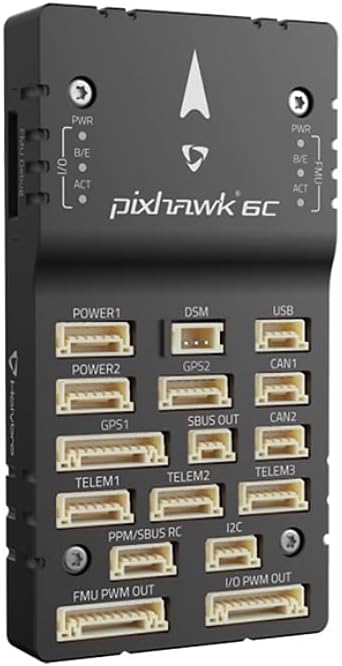
The Pixhawk 6C represents the pinnacle of flight control technology for serious UAV and VTOL applications. Equipped with a powerful STM32H743 processor running at 480MHz, it provides the computing power needed for complex autonomous vehicle algorithms. The dual redundant IMU system ensures unmatched reliability even in challenging environmental conditions.
We may earn a commission when you buy through this link, at no additional cost to you.
One of its standout features is the advanced vibration isolation system which effectively filters high-frequency drone vibration and reduces sensor noise. This design guarantees precise sensor readings and better overall flight performance. Additionally, the integrated heating resistors provide temperature control allowing IMUs to work at optimum temperatures consistently.
While this unit commands a higher price compared to basic options, the investment is justified for commercial or research applications where reliability is non-negotiable. It supports both PX4 and ArduPilot firmware ensuring flexibility for diverse project needs. The plastic case variant offers a cost-effective entry into this high-end hardware class.
Choose the Pixhawk 6C if you require enterprise-grade reliability and advanced autonomous capabilities for your hybrid VTOL drone. It is perfect for academic research, corporate labs, and commercial autonomous vehicle applications where sensor precision and redundancy are paramount to mission success.
Advanced vibration isolation ensures accurate data even in high-vibration drone environments.
Dual IMUs from different manufacturers provide critical backup in case of sensor failure.
We may earn a commission when you buy through this link, at no additional cost to you.
The PIX 2-12S Flight Controller is designed for demanding high-voltage applications where performance and precision are critical. It integrates the STM32F405VGT6 main controller with MPU6500 gyroscope and LPS22HB barometer for accurate environmental sensing. This board supports 2 to 12S power supply making it ideal for high-performance drones.
We may earn a commission when you buy through this link, at no additional cost to you.
Its compatibility with GH1.25 connectors for GPS, SBUS, PPM, and CRSF receivers offers versatile connectivity options for modern telemetry systems. The design specifically targets fixed-wing VTOL and multi-rotor applications providing a reliable core for DIY autonomous driving systems. The lightweight construction helps maintain a high power-to-weight ratio.
Users should note that wiring accessories may vary by production batch and it does not include an ESC. However, the comprehensive port support ensures seamless integration with existing flight infrastructure. The technical robustness makes it a strong contender for specialized autonomous projects requiring high voltage inputs.
This controller is best suited for advanced users building custom high-voltage VTOL drones or autonomous vehicles. If your project demands reliable sensor integration and support for a wide range of receiver types, this board offers a solid technical foundation for your build.
Support for up to 12S power systems allows for high-speed performance and larger payloads.
Support for SBUS, PPM, and CRSF ensures compatibility with diverse control systems.
We may earn a commission when you buy through this link, at no additional cost to you.
The F405 Wing Flight Controller is specifically engineered for fixed-wing drones with VTOL capabilities offering versatile flight modes. It supports Ardupilot firmware which allows for extensive customization and high-performance tuning. This board is lightweight and compact minimizing added weight while maintaining robust functionality for various builds.
We may earn a commission when you buy through this link, at no additional cost to you.
With APP control capabilities, users can easily configure and monitor flight parameters directly via smartphone. This feature simplifies setup for both beginners and experienced pilots due to its user-friendly nature. The F405 processor ensures fast and stable flight experiences suitable for versatile operational environments.
While newer controllers may offer more advanced sensors, this unit remains highly reliable for standard fixed-wing applications. It strikes a good balance between performance and ease of use for VTOL builds that do not require complex redundant systems. The extensive features make it a flexible option for custom projects.
Select this controller if you need a dedicated solution for fixed-wing drones that occasionally transition to VTOL modes. It is an excellent choice for hobbyists who want easy smartphone configuration and reliable flight performance without the complexity of advanced enterprise systems.
ArduPilot APP support simplifies setup and monitoring for mobile-friendly operation.
Designed specifically to handle the aerodynamic nuances of fixed-wing hybrid aircraft.
We may earn a commission when you buy through this link, at no additional cost to you.
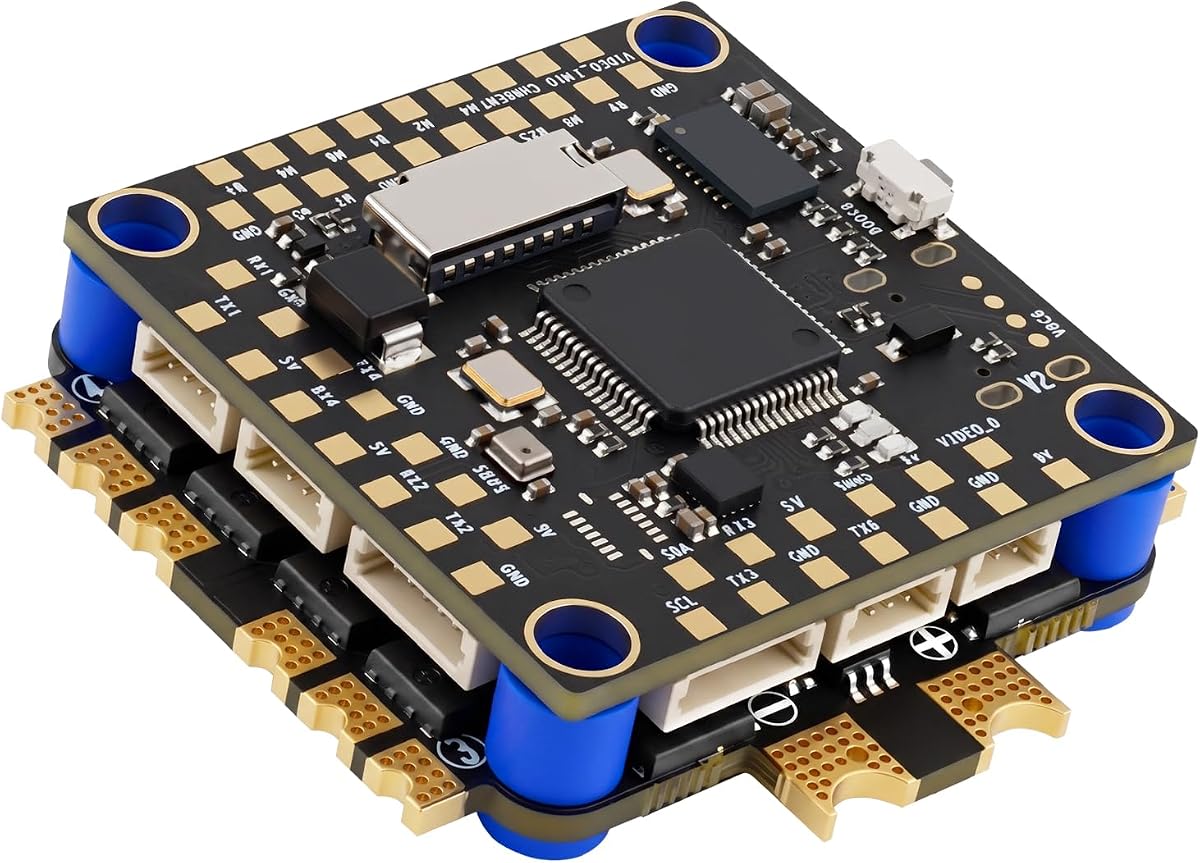
This stack combines a high-performance H743 Flight Controller with a 60A 32 bit ESC offering a reliable combination for lightweight builds. The STM32H743 processor at 480MHz ensures responsive control while the dual IMUs provide accurate motion sensing. It supports 2-8S LiPo batteries delivering high power for demanding flight profiles.
We may earn a commission when you buy through this link, at no additional cost to you.
Compatibility with Betaflight, INAV, PX4, and Ardupilot gives users immense flexibility in firmware choice. The stack includes 7 UART ports and 10 PWM outputs offering vast expansion potential for sensors and telemetry. Its lightweight 23.2g design ensures efficient space management within compact frames.
While marketed towards FPV and racing, its robust specs make it suitable for agile VTOL builds needing quick response times. The inclusion of compass and barometer supports stable altitude hold and orientation. The integration of ESC and FC simplifies assembly for users wanting a complete motor control solution.
Choose this stack if you need a compact high-power solution for racing or agile VTOL configurations. It is perfect for builders who value firmware flexibility and want a pre-matched FC and ESC combo to minimize wiring complexity in small frames.
Dual IMUs ensure stable flight data even under rapid acceleration or vibration.
60A 32-bit ESC delivers rapid motor response for agile transitions and racing.
We may earn a commission when you buy through this link, at no additional cost to you.
The H743 Flight Controller paired with a 50A 8 bit ESC offers ultra-responsive motor control for dynamic flight experiences. It features an STM32H743 processor and dual IMUs ensuring accurate motion tracking and stable flight. This stack supports 2-6S lithium batteries and includes comprehensive connectivity options for sensors.
We may earn a commission when you buy through this link, at no additional cost to you.
Compatible with major firmware ecosystems like Betaflight, ArduPilot, and PX4 it provides enhanced stability across various drone types. The lightweight 21.5g design simplifies installation and enhances assembly efficiency. With 7 UART ports and 10 PWM outputs it offers ample space for peripheral integration.
While the 8-bit ESC is slightly less powerful than its 32-bit counterpart, it remains sufficient for standard racing and agile VTOL builds. It provides high-frequency PWM and DSHOT protocols for precise throttle response. This stack is ideal for those prioritizing firmware flexibility over raw power output.
Select this stack for agile builds where speed and responsiveness are critical. It is a great choice for hobbyists who want a high-performance flight controller with a reliable ESC match for competitive flying or dynamic VTOL maneuvers.
Support for DSHOT and ONESHOT ensures precise motor timing and control.
Multiple firmware options allow you to tailor the system to your specific flight style.
We may earn a commission when you buy through this link, at no additional cost to you.
The AERO SELFIE F405NC Flight Controller offers a reliable combination for lightweight builds with its compact stack design. It features dual IMUs and a barometer ensuring stable flight and altitude hold across various conditions. The stack supports 2-6S LiPo batteries delivering optimal power for standard racing and VTOL builds.
We may earn a commission when you buy through this link, at no additional cost to you.
With compatibility across Betaflight, INAV, and ArduPilot users gain quick configuration options for ease of setup. The 6 UART ports and 10 PWM outputs provide vast expansion potential for additional sensors and telemetry. Its lightweight 23.2g total weight ensures efficient space management in small frames.
While it relies on an older F405 processor architecture it remains fast enough for most agile flight profiles. The 8-bit ESC supports standard continuous current needs making it suitable for hobbyist racing and VTOL transitions. This stack balances performance with affordability effectively for custom builds.
Choose this controller if you need a lightweight versatile solution for FPV and VTOL hybrid builds. It is ideal for pilots who want a well-integrated stack with multiple firmware options for quick configuration and reliable performance.
A 30.5×30.5mm pattern fits a wide variety of compact drone frames.
Includes barometer for altitude hold and dual IMUs for motion tracking.
We may earn a commission when you buy through this link, at no additional cost to you.
This AERO SELFIE H743 stack combines a powerful processor with a 60A 32 bit ESC for superior motor control. It supports 2-6S LiPo batteries and offers burst current over 80A ensuring responsiveness. The stack includes 7 UART ports and 10 PWM outputs offering vast expansion potential for sensors.
We may earn a commission when you buy through this link, at no additional cost to you.
Compatible with Betaflight, PX4, INAV, and ArduPilot it provides flexibility for different flight styles. The lightweight 23.2g total weight fits a wide variety of drone frames efficiently. The dual IMU and compass support enhance stability and orientation accuracy during complex maneuvers.
While user ratings suggest some setup complexity it remains a high-performance option for those willing to invest time. The 32-bit ESC ensures efficient power delivery for high-performance builds. It is a strong candidate for agile VTOL racing where raw responsiveness is needed.
Opt for this stack if you want high power and firmware flexibility in a compact package. It is suitable for experienced pilots building custom racing or agile VTOL drones who value 32-bit ESC performance.
A 32-bit ESC delivers precise throttle control for improved motor efficiency.
Multiple UART and PWM ports support extensive sensor and telemetry integration.
We may earn a commission when you buy through this link, at no additional cost to you.
The COREWING F405 V2 Flight Controller is designed to fit both RC airplanes and drones providing versatile control. It utilizes an F405 processor which offers reliable performance for standard flight profiles. This V2 version aims to improve stability and response for fixed-wing and multirotor applications.
We may earn a commission when you buy through this link, at no additional cost to you.
Its compatibility with standard drone systems allows it to integrate well into hybrid VTOL builds. The compact profile helps minimize weight impact on flight performance. Users appreciate its simple design which makes assembly straightforward for hobbyist projects.
While specific advanced features may not be detailed in the listing it serves as a functional option for general flight control. It provides consistent performance for users prioritizing simplicity over complex autonomous features. The F405 processor ensures adequate speed for most hobby needs.
Choose this controller if you need a reliable general-purpose option for RC airplane and drone conversions. It is suitable for builders looking for a straightforward F405 board for custom fixed-wing or VTOL applications.
Designed to handle both fixed-wing and multirotor flight dynamics effectively.
The V2 iteration brings refined stability and performance over previous versions.
We may earn a commission when you buy through this link, at no additional cost to you.
Selecting the right flight controller for hybrid VTOL systems involves balancing processing power, sensor accuracy, and firmware support. Here are the critical factors to evaluate before making your purchase to ensure optimal performance.
The processor determines how quickly the flight controller can calculate flight corrections and process sensor data. High-end boards like the Pixhawk 6C use STM32H743 processors to manage complex autonomous algorithms efficiently.
Look for processors with high clock speeds and ample memory to ensure smooth transitions between VTOL and fixed-wing modes.
Different controllers support specific firmware ecosystems such as ArduPilot, PX4, or Betaflight. Hybrid VTOL applications often benefit from ArduPilot or PX4 due to their advanced VTOL logic and scripting capabilities.
Ensure the controller you choose explicitly supports the firmware you intend to use for your specific flight profile and automation needs.
Dual IMU systems provide backup sensors to ensure safety if one sensor fails during flight. This redundancy is critical for commercial or research applications where reliability is non-negotiable.
Choose a board with dual IMUs if you prioritize safety and operational continuity in mission-critical scenarios.
Vibration from motors and propellers can interfere with gyroscope readings leading to unstable flight. Advanced boards incorporate mechanical vibration isolation to filter out high-frequency noise.
Prioritize controllers with built-in vibration isolation if your drone design generates significant vibration that could impact sensor accuracy.
Many flight controllers come paired with ESCs (Electronic Speed Controllers) in a stack. This simplifies wiring but limits flexibility if you need specific ESC performance characteristics.
Decide whether you prefer an integrated stack for simplicity or a standalone FC for custom ESC pairing to meet specific power requirements.
Sufficient UART ports and PWM outputs are necessary for connecting GPS modules, telemetry radios, and cameras. Complex VTOL setups often require multiple peripherals to function autonomously.
Verify the number of available ports matches your planned accessory load to avoid needing additional expansion hardware.
Ensure the controller and ESC support your battery's voltage range such as 2-6S or 2-8S. High-power VTOL builds often require higher voltage support for optimal thrust.
Check the continuous current rating of the ESC to ensure it can handle the peak demands of your motors.
The physical dimensions and weight of the flight controller affect your drone's center of gravity and payload capacity. Compact boards like 30x30mm stacks are preferred for small VTOL frames.
Select a board size that fits your frame without adding unnecessary weight or causing balance issues.
Start by carefully calibrating the accelerometer and gyroscope on your flight controller using the specific software provided by the firmware manufacturer. Ensure the board is mounted securely using vibration damping material to prevent erroneous sensor readings during flight operations.
Regularly update your firmware to benefit from the latest bug fixes and performance improvements. Keep your flight controller dry and free from dust by storing it in a protective case when not in use to prolong its lifespan.
Always check your electrical connections before every flight to avoid loose wires that could cause signal loss. Monitor temperature sensors if available to ensure your hardware is operating within safe thermal limits during extended flight sessions.
While some racing controllers support fixed-wing modes, they often lack advanced VTOL logic. Boards specifically designed for hybrid VTOL provide smoother transitions and better stability for these unique flight profiles.
Dual IMUs offer redundancy so if one fails the system can switch to the backup. This increases safety significantly especially for autonomous or research applications where failure is not an option.
Both are open-source but ArduPilot is known for extensive hardware support and ease of use. PX4 offers a modular design suited for commercial development and complex autonomy research projects.
Use soft rubber mounts or silicone grommets to isolate the board from the frame. Additionally, choose a controller with built-in vibration isolation for maximum sensor accuracy in high-vibration builds.
Yes GPS is essential for autonomous mission flight and precise landing. Always pair your flight controller with a compatible GPS module for safe return-to-home capabilities.
Yes 32-bit ESCs offer more precise control and better heat management. This leads to improved motor efficiency which is critical for extended hover times in VTOL operations.
The ten flight controllers evaluated in this guide offer a range of options from budget-friendly boards to premium autonomous systems. Each option has distinct strengths catering to different build requirements and pilot expertise levels.
Prioritize processor performance and firmware compatibility to ensure your VTOL transitions are smooth and reliable. Consider sensor redundancy and vibration isolation if your project involves complex autonomous missions.
Verify current availability and pricing before purchasing to ensure you get the best value for your specific project needs. These controllers represent the current best in hybrid VTOL control technology available today.