
Mcbazel Surecom SF401 Plus
4.1Editor score
27MHz to 3000MHz range
CTCSS DCS decoder
Portable handheld design
TCXO accuracy
This guide compares the top frequency counters for ham radio, evaluating accuracy, portability, and features to help you choose the best tool for your station
Finding the right frequency counter for ham radio is essential for precise tuning and signal analysis. These devices help operators verify transmit frequencies and ensure compliance with regulations. A good counter offers high accuracy, wide range coverage, and easy portability for field operations.
We have analyzed ten leading frequency counters available on the market today. Our comparison focuses on measurement range, accuracy specs, usability features, and overall value. Each product was selected based on user feedback, technical specifications, and relevance to amateur radio enthusiasts.
Each pick below highlights key strengths and potential limitations to guide your decision. We include detailed reviews, specs, and buying advice to streamline your search. Please note that prices and availability can change frequently, so check current listings before purchasing.
4.1Editor score

5.0Editor score

4.4Editor score
The following table provides a side-by-side comparison of all ten frequency counters reviewed in this guide. We highlight key specifications like frequency range, accuracy, and special features to help you quickly identify the right tool for your ham radio station or field operations.


The Mcbazel Surecom SF401 Plus stands out as a reliable tool for ham radio operators needing to verify transmission frequencies. It measures continuous carrier signals from 27MHz to 3000MHz, covering most amateur bands. Its signal strength indicator helps confirm active transmission without needing an oscilloscope.
We may earn a commission when you buy through this link, at no additional cost to you.
This unit uses a TCXO temperature compensated crystal oscillator for accuracy within ±2 to ±4ppm across operating temperatures. The included VU and UHF antennas ensure compatibility with common two way radios. The four button interface makes range selection straightforward for field technicians and enthusiasts alike.
While it cannot measure wide bandwidth signals, its focus on continuous wave ensures stability during typical handheld radio testing. The small form factor allows easy transport to remote sites. Users should note the limitation to carrier signals only when planning diverse RF measurements.
For hobbyists seeking a cost effective way to check walkie talkie frequencies, this counter delivers consistent results. It balances functionality with portability, making it ideal for maintenance personnel or club operators. We recommend it for standard VHF and UHF verification tasks.
The 27MHz to 3000MHz range covers CB, amateur VHF, and UHF bands effectively.
TCXO technology maintains precision even when outdoor temperatures vary significantly.
We may earn a commission when you buy through this link, at no additional cost to you.
The Surecom SF401 Plus offers nearly identical specifications to its sibling model but often receives higher user ratings. It targets the same frequency range of 27MHz to 3000MHz for two way radio testing. The inclusion of a signal strength indicator provides immediate feedback on transmission power levels.
We may earn a commission when you buy through this link, at no additional cost to you.
Its design prioritizes ease of use with intuitive button controls and a compact chassis. The TCXO ensures stable readings despite temperature fluctuations common in outdoor environments. This makes it suitable for both fixed station checks and field day operations where reliability matters.
Although it lacks advanced modulation analysis, it excels at its primary task of frequency verification. The portability factor is high, allowing users to slip it into a field kit easily. Those needing detailed spectrum data should look elsewhere, but for simple checks this works well.
Given its strong rating and consistent performance, this model represents excellent value for budget conscious buyers. It provides the essential tools needed to verify transmitter output without unnecessary complexity. We suggest it for casual operators or entry level technical users.
Specifically designed to count continuous wave signals from handheld transceivers.
Operates reliably between -45 C and 65 C for diverse climate conditions.
We may earn a commission when you buy through this link, at no additional cost to you.
The FC-2800M distinguishes itself by supporting DMR digital radio modes alongside traditional analog counting. It measures frequencies from 2MHz to 2800MHz, covering most amateur radio applications. Users appreciate the dual range selection for precise adjustments across different bands.
We may earn a commission when you buy through this link, at no additional cost to you.
A built in DCS CTCSS decoder adds versatility for checking tone coded transmissions. The low PPM crystal time base ensures high accuracy measurement for critical applications. This model appeals to digital radio enthusiasts who need to validate digital voice channel frequencies.
While it costs slightly more than basic models, the added features justify the investment for advanced users. The user friendly control scheme with four buttons keeps operation simple even with complex modes. The two year warranty provides peace of mind for longer term usage.
For those investing in DMR equipment, this counter offers the necessary tools to ensure proper frequency alignment. Its compact design makes it easy to bring along for system troubleshooting. We recommend it for modern digital amateur radio stations.
Designed specifically to handle continuous wave signals from DMR radios.
Low PPM crystal ensures reliable measurements across the full frequency span.
We may earn a commission when you buy through this link, at no additional cost to you.
The Portable TinySA offers far more than simple frequency counting by providing full spectrum analysis. It covers MF HF VHF and UHF signals from 100kHz to 960MHz with adjustable resolution bandwidth. The color touchscreen visualizes signals helping users identify interference and harmonics easily.
We may earn a commission when you buy through this link, at no additional cost to you.
An internal signal generator allows self testing and calibration without external equipment. Users can view up to 290 scan points simultaneously on the display for detailed analysis. USB connectivity enables remote control and data logging via Windows or Linux systems.
This tool excels at RF troubleshooting beyond basic frequency checks. It can act as an antenna analyzer for station setup without needing complex calibration. The rechargeable battery supports field use, though the upper frequency limit restricts high band applications.
For operators wanting to see the spectrum landscape, this analyzer is unmatched in its price class. It turns abstract RF concepts into visible graphs for easier understanding. We suggest it for advanced hams needing deeper insight into their radio environment.
The touchscreen displays scan points to help visualize signal strength and noise.
Built in sine and square wave outputs assist in system calibration tasks.
We may earn a commission when you buy through this link, at no additional cost to you.
This handheld frequency counter focuses specifically on common VHF and UHF ranges used by many handheld radios. Its tiny dimensions make it arguably the most portable option in this list. A single button control simplifies operation significantly for quick checks during activities.
We may earn a commission when you buy through this link, at no additional cost to you.
It supports CTCSS and DCS decoding to verify tone settings alongside frequency. The 9V battery ensures long life during extended field sessions without recharging. Measuring within a 1 meter range provides enough accuracy for most routine radio maintenance.
The trade off is its narrow frequency range which excludes HF and higher bands. Users needing wide band coverage will find this limiting. However for those working strictly in 2 meter or 70 centimeter bands it delivers quick reliable results.
Its simplicity and small size make it ideal for emergency kits or field ops. The ease of use ensures even non technical users can verify a signal quickly. We recommend it for focused amateur tasks in standard VHF UHF bands.
The one button interface allows instant power on and frequency testing.
Standard 9V battery ensures operation anywhere without specialized chargers.
We may earn a commission when you buy through this link, at no additional cost to you.
The Anysecu SF-103 positions itself as an upgrade over previous models with a broader frequency range. It measures from 2MHz to 2.8GHz covering HF through UHF applications. This wider span makes it useful for diverse radio systems beyond standard walkie talkies.
We may earn a commission when you buy through this link, at no additional cost to you.
A clear signal strength indicator helps technicians assess transmission quality without extra gear. The four button control scheme maintains simplicity while offering necessary range selections. It serves well for maintenance personnel needing quick frequency and power verification.
While it lacks the tone decoder features of some competitors, its broader range compensates in versatility. The design encourages easy carrying due to small size and sturdy build. Those needing pure frequency validation will find it robust and dependable.
For shops handling mixed radio types, this model offers the range flexibility required. It remains affordable while expanding capability beyond the typical VHF UHF limit. We suggest it for users prioritizing range over specialized digital decoding.
The 2MHz to 2.8GHz span supports HF VHF and UHF testing needs.
Signal strength indicators help maintenance staff tune equipment quickly.
We may earn a commission when you buy through this link, at no additional cost to you.
This handheld counter from Mcbazel extends performance to 2.8GHz for comprehensive two way radio testing. The TCXO ensures stable accuracy across varying temperatures common in outdoor field use. A battery level display adds convenience by preventing unexpected power loss mid task.
We may earn a commission when you buy through this link, at no additional cost to you.
It is optimized for amateur bands including 2m and all standard VHF UHF allocations. The four button control remains intuitive despite the expanded capabilities. Users should heed the warning regarding direct antenna input to avoid damaging the meter.
While the input limits require care, the robust design withstands typical field conditions well. The accuracy specifications remain competitive for this price segment. It strikes a balance between portability and professional grade stability.
For hams needing reliable handheld tools for antenna tuning or station checks this model fits well. The visual battery status ensures users know when to swap cells. We recommend it for general amateur maintenance tasks.
TCXO oscillators keep accuracy high from -45 C to 65 C.
Specialized for 2m and all VHF UHF frequency areas.
We may earn a commission when you buy through this link, at no additional cost to you.
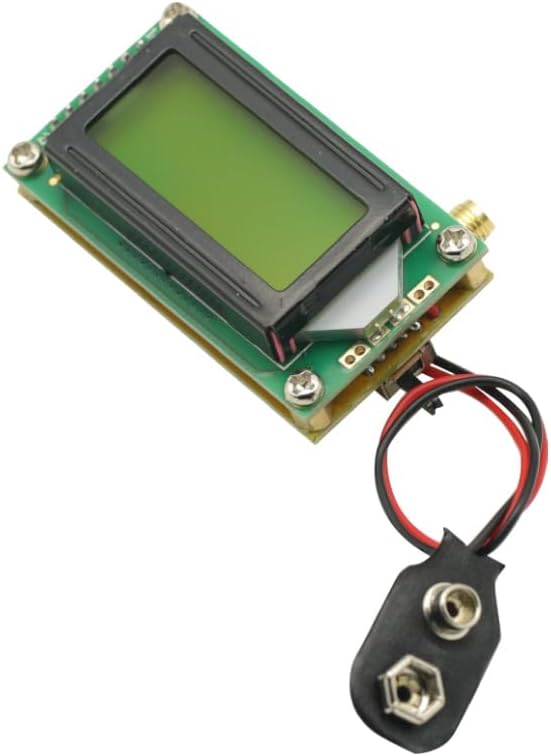
The Acxico module targets hobbyists who prefer to build their own test equipment. It covers frequencies from 1 to 500MHz suitable for basic RF projects. The digital LCD provides clear reading though precision is limited compared to dedicated handheld counters.
We may earn a commission when you buy through this link, at no additional cost to you.
Constructed with standard PCB materials it offers a straightforward testing module for lab use. The adjustable accuracy allows some tuning to match requirements but remains less precise than TCXO units. It serves well as a component for custom kits.
Lower user ratings reflect the limitations in precision and build quality compared to finished tools. However its low cost makes it accessible for experimental setups. Users needing high accuracy should look elsewhere but this suffices for rough checks.
For electronics DIYers exploring RF concepts this module provides a starting point. The open format allows integration into larger systems without extra packaging. We suggest it for builders comfortable with assembly and calibration tasks.
Affordable price lowers the barrier for experimenting with frequency measurement.
The module form factor allows custom integration into user projects.
We may earn a commission when you buy through this link, at no additional cost to you.
This counter board provides fundamental frequency measurement from 1MHz to 500MHz. It features an LCD display for visual readout and emphasizes low power consumption. It is suitable for simple ham radio kits or educational projects where precision is secondary.
We may earn a commission when you buy through this link, at no additional cost to you.
The board format allows it to be mounted in custom enclosures or breadboards easily. Its low power draw makes it compatible with portable battery setups. While basic it fulfills the core task of counting RF signals for training.
Ratings suggest limitations in stability and accuracy compared to commercial handheld units. Users seeking a finished tool may find it lacking but builders appreciate its flexibility. It works best for bench experiments rather than field deployment.
For those assembling a radio kit this board adds useful measurement capability. It teaches the principles of frequency counting without requiring expensive equipment. We suggest it for students or hobbyists learning electronics basics.
Low power consumption extends battery life in portable prototypes.
The board layout allows easy mounting in custom radio projects.
We may earn a commission when you buy through this link, at no additional cost to you.
The AURSINC TinyGTC represents the highest performance in this lineup with 40ps resolution. It measures from 0.1Hz to 7GHz covering everything from audio to microwave frequencies. The built in GPS disciplined oscillator ensures long term stability unmatched by basic counters.
We may earn a commission when you buy through this link, at no additional cost to you.
Users can view real time charts and run FFT analysis directly on the device. A 4 inch touchscreen plus jog wheel offers intuitive navigation of complex settings. It supports SCPI control for automated logging with professional software like TimeLab.
While expensive for casual use, its precision makes it ideal for SDR tuning and calibration. The active GPS antenna and included cables ensure quick setup out of the box. It bridges the gap between portable tools and benchtop lab equipment.
For serious radio amateurs and professionals requiring lab grade accuracy this counter is outstanding. It supports gapless counting for stable results across all bands. We recommend it for applications where precision directly impacts performance.
GPSDO locks to satellite time for excellent long term frequency accuracy.
Built in tools like ADEV and FFT support deep signal investigation.
We may earn a commission when you buy through this link, at no additional cost to you.
Selecting the right frequency counter involves weighing several technical and practical factors. Understanding your specific needs helps narrow down the options effectively.
Ensure the device covers the bands you use most such as VHF UHF or HF. A wider range provides flexibility but may increase cost. Check if the lower and upper limits match your typical operating frequencies.
Choose a model that fully covers your primary amateur bands to avoid measurement errors.
Accuracy is often expressed in parts per million or ppm. Temperature compensated crystal oscillators offer better stability across different weather conditions. Higher precision is critical for calibration tasks or sensitive equipment.
Prioritize TCXO or GPSDO stabilized counters for critical frequency verification.
A clear display helps read results quickly in varying lighting. Touchscreens offer more features while physical buttons work well in cold weather. Consider how easy it is to switch between modes or bands.
Select an interface that matches your comfort level with technology settings.
Field operators need lightweight devices with battery support. Rechargeable options reduce ongoing costs compared to disposable batteries. Check the dimensions to ensure it fits your field kit.
Verify power source compatibility before using in remote locations.
Look for decoders for CTCSS or DCS tones if you use private channels. Some units include signal generators for self testing. USB connectivity allows data logging for detailed records.
Identify must have features based on your specific radio usage patterns.
Construction quality affects longevity especially in rugged environments. Check input signal limits to avoid damaging the device with strong RF signals. A robust casing protects against drops during transport.
Ensure the build quality meets the rigors of your typical use cases.
A solid warranty indicates manufacturer confidence in reliability. Technical support availability helps resolve issues quickly. Read reviews to gauge the responsiveness of customer service teams.
Opt for products with transparent warranty terms for long term assurance.
Prices vary widely from basic kits to professional units. Set a realistic budget based on required features. Often a mid range model provides the best balance of performance and cost.
Balance your financial constraints against the technical capabilities needed.
Position the antenna near the radio output without direct connection unless rated for it. Activate the unit and select the appropriate frequency range for your signal. Wait for the reading to stabilize before noting the value.
Always verify the power source is stable before measuring sensitive signals. For battery powered units keep spare batteries on hand for field work. Clean the display gently to avoid scratching the screen.
Store the device in a dry place away from extreme heat. Regular calibration ensures continued accuracy especially after dropping the unit. Review the manual periodically to remember advanced functions or settings.
A frequency counter verifies the exact transmit frequency of your radio. It ensures you stay within authorized bands and comply with regulations. This helps prevent interference and ensures reliable communications.
GPSDO is ideal for high precision needs like SDR tuning. For general handheld checks TCXO units are sufficient and cheaper. Assess your specific accuracy requirements before investing.
Some modern counters support DMR digital modes directly. Others only measure continuous wave signals accurately. Check product specs to confirm compatibility with digital protocols.
Range determines which amateur bands you can test. Ensure it covers HF VHF and UHF if you operate multiple bands. A mismatch here limits the device utility significantly.
Most come factory calibrated but self checks are recommended. Units with external reference inputs allow periodic calibration. Regular checks ensure readings remain accurate over time.
Spectrum analyzers offer visual data but cost more. Counters provide simple numerical readings sufficient for most tasks. Choose based on whether you need to see signal spectrum.
Place the included antenna near the radio output for safe measurement. Do not connect directly to the antenna port unless specified. This protects the meter from high RF power.
Most handheld units use standard 9V or rechargeable packs. Check the specs before traveling to avoid power issues. Some allow both options for maximum flexibility.
We reviewed ten frequency counters ranging from affordable handhelds to professional lab tools. The top picks cover diverse needs whether you need digital mode support or GPS stability.
Prioritize frequency range and accuracy based on your primary operations. Field users should favor portability while stations might prefer advanced analysis tools.
Prices and availability change often so verify details before purchasing. Check current listings for the latest updates and ensure the device fits your budget.