
FotoZ Macro Conversion Lens
4.6Editor score
37mm to 72mm universal fit
8 diopter magnification power
Tool-free instant snap-on design
Discover the best macro lens for insect photography. This guide compares top mobile and camera lenses for capturing stunning insect details and vibrant nature
Macro photography opens a hidden world where tiny details become breathtaking subjects. Insects offer incredible textures and colors that demand specialized optics. Choosing the right lens ensures you capture every antenna and wing pattern with perfect clarity.
We evaluated ten top-rated lenses designed for close-up insect work. Our comparison covers smartphone attachments and professional camera optics. Each option balances magnification, build quality, and optical performance for diverse shooting scenarios.
Every product in this list showcases unique strengths for capturing small creatures. Readers will find options for beginners and advanced photographers alike. Please note that product availability and pricing may vary over time.
4.6Editor score

4.7Editor score
4.6Editor score
This side-by-side comparison highlights key specifications across all ten lenses. Each entry details optical design, compatibility, and unique features to help you decide.


The Canon RF100mm F2.8 L Macro IS USM stands as the premier choice for serious insect photographers seeking unparalleled detail. With a record-breaking 1.4x maximum magnification, this lens captures textures and features no other medium telephoto macro can. Its robust construction and high ratings confirm its status as a professional tool for demanding work.
We may earn a commission when you buy through this link, at no additional cost to you.
Optical performance is where this lens truly shines for insect photography. The hybrid image stabilization compensates for both angular and shift camera shake, which is critical when shooting small subjects at high magnifications. The spherical aberration control ring allows photographers to tailor the bokeh, creating stunning separation between the insect and its background even in complex environments.
While the investment required is significant, the trade-off yields results that define professional macro photography. The weight and size may deter casual users, but the clarity and magnification capabilities justify the bulk for dedicated nature shooters. This lens ensures your insect images look sharp, detailed, and gallery-ready with minimal post-processing.
Serious Canon RF users should buy this lens if they prioritize ultimate detail and optical excellence. It is the final recommendation for anyone aiming to publish or exhibit insect photography. The advanced features make it a long-term asset for any serious photography collection focused on the natural world.
The 1.4x magnification allows you to capture minute insect textures like wing veins and eye facets without digital cropping.
Hybrid IS provides up to 5 stops of correction, enabling sharp handheld shots of moving insects in natural light conditions.
We may earn a commission when you buy through this link, at no additional cost to you.
The TTARTISAN 40mm f/2.8 Macro Lens offers a compelling blend of optical quality and affordability for Sony shooters. With 1:1 magnification, it delivers life-size captures of insects and small objects that rival much more expensive alternatives. Its high rating reflects user satisfaction with its clarity and build despite the manual focus constraint.
We may earn a commission when you buy through this link, at no additional cost to you.
Key strengths include its lightweight all-metal construction, making it ideal for hiking and field photography where weight matters. The 11-blade aperture creates creamy bokeh that isolates insects beautifully from busy backgrounds. Optical design minimizes aberrations, ensuring sharp results even at wide apertures, which is vital for low-light insect scenes.
The main trade-off is the manual focus requirement, which demands patience when tracking active subjects. For still insects or controlled setups, this limitation is negligible. The cost savings compared to autofocus primes make it accessible for enthusiasts wanting professional results without breaking the bank.
Sony users seeking a compact macro solution should buy this lens for nature exploration. It is best for static subjects or patient shooters who value image quality over speed. The combination of sharpness and portability makes it a favorite for travel nature photographers.
The 11-blade aperture design produces smooth background blur that keeps insects as the clear focal point.
Weighing only 13.1 ounces, this lens is significantly lighter than competitors for extended field use.
We may earn a commission when you buy through this link, at no additional cost to you.
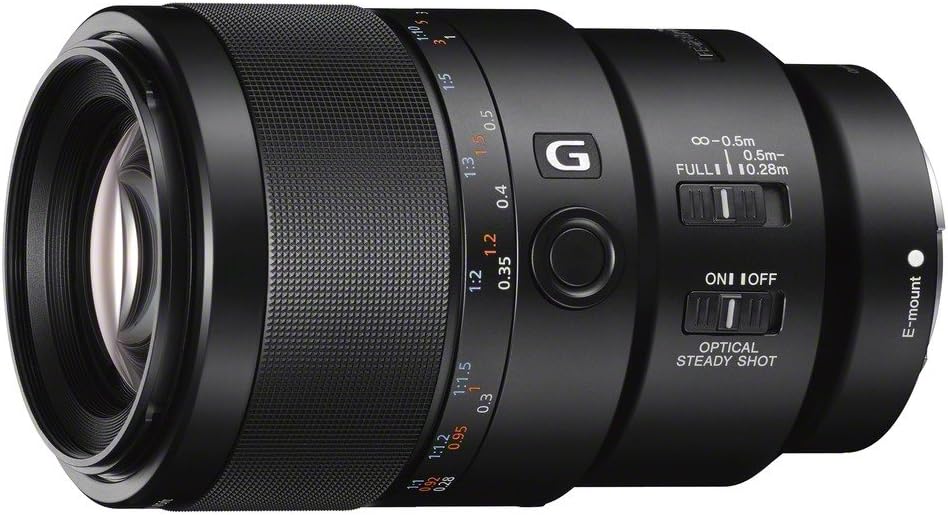
The Sony FE 90mm F2.8 Macro G OSS is a powerhouse for full-frame shooters targeting high-end insect photography. Its optical precision and weather resistance make it reliable for demanding outdoor environments. Consistent high ratings confirm its reputation as a professional-grade tool for nature photographers.
We may earn a commission when you buy through this link, at no additional cost to you.
Optical performance features advanced spherical elements and Super ED glass to eliminate aberrations and ghosting. The Nano AR coating effectively suppresses reflections, ensuring clean images even in harsh lighting conditions. Optical SteadyShot stabilization aids in handheld shooting, allowing for flexibility during field sessions.
While expensive, the durability and image quality justify the investment for professional use. The build quality is superior to many consumer lenses, protecting your gear in dust or rain. The smooth focus transition between manual and auto modes enhances workflow efficiency when switching tasks.
Sony full-frame users should buy this lens for serious macro work requiring weather protection. It is the ideal choice for those needing reliable performance in varied climates. The optical excellence and durability ensure you capture perfect insect images regardless of environmental challenges.
Dust and moisture resistant construction allows safe shooting in humid or dusty outdoor conditions.
Nano AR coating and ED glass deliver high contrast and sharpness even at maximum aperture.
We may earn a commission when you buy through this link, at no additional cost to you.
The APEXEL 100Ultra Macro Lens transforms smartphones into capable tools for insect photography. Designed for iPhone and Android, it offers significant magnification without needing a DSLR. Users appreciate the ease of use and the ability to capture stunning details with a device they already carry daily.
We may earn a commission when you buy through this link, at no additional cost to you.
Key strengths include its lossless magnification technology and large F1.05 aperture, which allows for better light gathering. This helps reduce blur and noise when shooting in shaded or indoor settings. The universal clip-on design ensures compatibility across most smartphone models, making it accessible to everyone.
Shake can be an issue given the high magnification, so using a stabilizer is often recommended. However, the clarity provided by the multi-lens combination minimizes flare and distortion. It is an excellent entry point for hobbyists exploring macro photography without investing in camera bodies.
Smartphone users wanting to try macro should buy this lens for convenience and fun. It is perfect for casual shooters or educators showing insect details to students. The affordability and versatility make it a top choice for mobile photography enthusiasts.
10X magnification enables extreme close-ups that were previously impossible with standard phone cameras.
Clip-on design works with iPhones and Android phones without requiring specialized cases or tools.
We may earn a commission when you buy through this link, at no additional cost to you.
The FotoZ Macro Conversion Lens provides an affordable way to add macro capabilities to existing camera kits. By attaching to standard filter threads, it turns regular lenses into close-up tools. Its high rating among budget options reflects strong value for money and ease of use for casual shooters.
We may earn a commission when you buy through this link, at no additional cost to you.
The multi-coated glass and 3-element design minimize distortion and maintain clarity. The spring-loaded adapter ensures quick changes between macro and standard photography. This versatility is vital for photographers who need to capture insects and wider scenes in the same session.
While it lacks the magnification of a dedicated macro lens, it offers sufficient detail for small objects and insects. The need for adapter rings can be a minor inconvenience but ensures wide compatibility. Overall, it is a practical entry tool for learning macro techniques.
Photographers on a tight budget should buy this lens for quick close-ups without new gear. It is ideal for beginners or those needing backup macro tools. The low cost and compatibility make it a smart purchase for experimental photographers.
Fits 37mm to 72mm filters, allowing use on many existing lenses without extra adapters.
Tool-free adapter lets you switch to macro mode instantly during a photo session.
We may earn a commission when you buy through this link, at no additional cost to you.
The Xenvo Pro Lens Kit is a complete solution for mobile macro and landscape photographers. It includes a high-magnification macro lens and an LED light to illuminate dark subjects like insects under leaves. The travel case ensures all components stay organized during field work.
We may earn a commission when you buy through this link, at no additional cost to you.
Key strengths include the TruGrip clip and GlowClip LED light which improve focus and lighting control. The macro lens offers 15x magnification, allowing for impressive details. Users report good value for the price due to the inclusion of accessories like the wide angle lens.
Optical quality can show some artifacts at extreme magnification, but this is acceptable for casual use. The clip mechanism is sturdy but may need adjustment on certain phone models. For educational or hobby use, the results are often sufficient to delight users.
Mobile photographers needing a portable kit should buy this set for versatility. It is great for kids or educators interested in science. The combination of macro and wide angle lenses makes it a comprehensive tool for smartphone creativity.
GlowClip LED provides warm fill light to brighten insect subjects in shadowy environments.
DuraCase protects all lenses and clips ensuring safety during travel and outdoor adventures.
We may earn a commission when you buy through this link, at no additional cost to you.
The Canon RF35mm F1.8 is Macro STM is a versatile lens for photographers needing both general and macro capabilities. Its compact design makes it easy to carry everywhere, while the 0.5x magnification allows for decent close-up shots of insects. High ratings confirm its quality and versatility for Canon EOS R users.
We may earn a commission when you buy through this link, at no additional cost to you.
The bright f/1.8 aperture allows for excellent low-light performance and smooth bokeh. STM motor ensures smooth and silent autofocus, beneficial for video and wildlife. The control ring adds convenience, allowing quick setting adjustments without diving into menus.
While it does not offer full 1:1 magnification, it is sufficient for many insect photography tasks. The trade-off is compactness and versatility over extreme detail. It is an excellent secondary lens for shooters wanting macro access without adding bulk.
Canon users wanting a dual-purpose lens should buy this for daily shooting. It is ideal for mixed work where macro is occasional. The build quality and optics ensure consistent results in various lighting conditions.
Serves as both a prime lens for general use and a capable macro tool for details.
STM technology provides silent and smooth focusing essential for video and wildlife work.
We may earn a commission when you buy through this link, at no additional cost to you.
The 67mm Close-up Filter Kit offers flexibility with four magnification strengths for various close-up needs. It is perfect for photographers who want to try macro without buying a new lens. The double threading allows stacking filters to increase magnification power or add polarizers for glare control.
We may earn a commission when you buy through this link, at no additional cost to you.
Key strengths include the variety of options from +1 to +10, allowing precise control over magnification. This helps in adapting to different subject sizes. The kit includes a pouch and cleaning cloth, ensuring accessories stay organized and clean during shoots.
Optical quality is decent for the price but may show some edge softness at higher magnification. For casual or educational use, this is often acceptable. The stackable nature makes it a versatile tool for experimenting with different levels of detail.
Photographers wanting options should buy this kit for exploration. It is great for learning macro basics without committing to a dedicated lens. The included accessories ensure you have everything needed to start shooting immediately.
Filters can be stacked to achieve higher magnification levels like +6 or +7 effectively.
Allows attachment of additional filters like polarizers for better light management.
We may earn a commission when you buy through this link, at no additional cost to you.
The ULANZI CL-003 Phone Macro Lens is designed for mobile users seeking a professional shooting experience. Its 75mm focal length allows for comfortable focusing distances, which helps in capturing shy insects without startling them. The durable aluminum construction feels robust and premium.
We may earn a commission when you buy through this link, at no additional cost to you.
Key strengths include the 17mm adapter thread which allows secure mounting on specialized phone cages or cases. This ensures stability during shooting. The tele-focusing operation mirrors professional DSLR methods, giving users precise control over the focal point.
Optical upgrades provide clear and distortion-free images, enhancing the quality of mobile macro shots. While slightly heavier than clip-ons, the build quality justifies the weight. It is an ideal choice for serious mobile photographers wanting reliable gear.
Mobile photographers seeking build quality should buy this lens for durability. It is perfect for those who use phone cages for stable shooting. The professional feel and performance make it a top pick for enthusiast mobile macro.
Tele-focusing allows precise distance control for sharp macro shots similar to DSLR use.
Aluminum alloy ensures long-lasting performance even during rugged outdoor field trips.
We may earn a commission when you buy through this link, at no additional cost to you.
The AstrHori 25mm F2.8 2-5X Ultra Macro Lens specializes in extreme close-up work for Sony users. It offers a 2:1 to 5:1 magnification range that captures details beyond life-size. Manual focus provides precise control, which is essential for high-magnification photography.
We may earn a commission when you buy through this link, at no additional cost to you.
Key strengths include a wide-angle configuration that improves depth of field. This helps in keeping more of the insect in focus compared to other macro options. The lightweight design makes it easy to handle, and the manual ring offers tactile feedback.
Without infinity focus, this lens is dedicated entirely to macro work. This limitation is acceptable for users seeking specific extreme close-ups. The optical design minimizes aberrations ensuring clean results even at high magnification levels.
Sony users seeking extreme macro should buy this for specialized detail work. It is perfect for scientific or artistic projects requiring minute detail. The unique magnification range sets it apart as a specialized tool for serious macro shooters.
Wide-angle design provides better focus retention across the subject at high magnification.
Manual focus ring ensures exact focus placement for intricate details on tiny subjects.
We may earn a commission when you buy through this link, at no additional cost to you.
Selecting the right macro lens involves balancing magnification, mount compatibility, and budget. This guide breaks down the essential factors for insect photography.
Magnification determines how large your subject appears on the sensor. A 1:1 ratio means life-size representation, which is ideal for most insects. Higher ratios like 2x or 5x reveal minute details like wing veins and eye facets.
Choose higher magnification if you need extreme detail but consider that working distance decreases as magnification increases.
Working distance is the space between the front element and the subject. Short distances can disturb insects, making longer focal lengths better for skittish subjects. A 90mm or 100mm lens allows more room than a 40mm lens.
Opt for longer working distance to avoid startling your insect subjects and to allow room for lighting equipment.
Aperture controls light and depth of field. Wider apertures like f/2.8 are great for low light but produce very thin focus planes. Narrower apertures like f/8 increase depth of field but require more light.
Adjust your aperture based on light availability; use narrower settings for more of the insect to remain sharp.
Ensure the lens matches your camera system. Canon RF, Sony E-mount, and smartphone clips each have specific compatibility. Mismatched mounts can lead to expensive adapters or unusable gear.
Verify mount compatibility before purchasing to avoid compatibility issues and ensure seamless integration.
Outdoor photography demands durable gear. Weather sealing protects against dust and moisture while metal construction adds longevity. Lightweight bodies reduce fatigue during long field sessions.
Invest in weather-resistant models if you shoot in varied environmental conditions frequently.
Manual focus gives precise control but requires patience and a steady hand. Autofocus speeds up workflow for moving subjects but may struggle at close range. Some lenses offer hybrid systems for flexibility.
Choose manual for static subjects and autofocus for active insects depending on your shooting style.
Multi-coated glass reduces flare and ghosting from strong light sources. Optical quality ensures sharp details and accurate color reproduction. Avoid lenses without advanced coatings to prevent soft images.
Check for multi-coated or nano-coated optics to maintain image clarity in bright outdoor conditions.
Dedicated macro lenses offer superior quality but cost more. Conversion lenses or filters provide affordable entry options with limitations. Set a budget that balances cost with required image quality and features.
Determine your needs to avoid overspending or buying underperforming gear that limits your results.
Position your camera parallel to the subject to keep the entire insect in focus. Use a tripod or stable surface to reduce vibration at high magnifications. Focus on the subject using manual focus rings for precise results.
Control lighting using reflectors or diffusers to soften shadows. Avoid direct flash to prevent overexposure of reflective insect bodies. Natural light often provides the most flattering and detailed results.
Clean your lens with a soft microfiber cloth after every use. Store the lens in a dry case with silica gel to prevent mold. Regular maintenance ensures optical clarity and extends the lifespan of your equipment.
A 1:1 magnification ratio is ideal for most insect photography as it provides life-size details. For extreme detail, ratios like 2x or 5x are better. However, higher magnification reduces working distance, which may disturb live insects.
Smartphone lenses can produce decent results for casual use but lack the optical quality of dedicated lenses. High-end mobile attachments offer good sharpness but often require stable setups. Professional work generally benefits from DSLR or mirrorless dedicated lenses.
Manual focus provides the best control for high magnification as autofocus often hunts at close ranges. Move your entire camera forward or backward to fine-tune focus. Use a tripod and focus rail for consistent and sharp results.
A tripod is highly recommended for macro to eliminate shake and ensure sharp images. Handheld shooting is possible with stabilization but limits precision. For stationary insects, a tripod ensures the best focus stability and detail.
Apertures between f/5.6 and f/11 offer a good balance of sharpness and depth of field. Wider apertures produce thin focus planes that may miss parts of the insect. Adjust based on lighting conditions and required depth.
Use a lens hood to shield the front element from dust and debris. Wipe the lens gently with a microfiber cloth after each shoot. Store the lens in a sealed case with silica gel packs to prevent moisture and dust accumulation.
We have reviewed ten top lenses suitable for capturing stunning insect details from mobile to professional tools. Whether you choose the Canon RF100mm for ultimate detail or the FotoZ converter for budget ease, quality optics transform your close-up work. Each option offers distinct advantages based on your gear and goals.
Prioritize magnification and working distance to match your shooting style. Stable setups and proper lighting often matter more than the gear itself. Select a lens that aligns with your camera system and experience level for the best results.
Prices and availability change frequently so check current listings before purchasing. Investing in the right lens opens new creative possibilities for nature photography. Happy shooting and may your insect portraits always be sharp and detailed.