
ROKINON CINE DS T1.5 Cinema Lens Kit
4.9Editor score
Four Lens Kit Included
T1.5 to T22 Range
De-Clicked Aperture Ring
This guide compares the top cine lens options for filmmakers, evaluating optical quality, build, and versatility to help you choose the right lens for your
Finding the right cine lens can transform your visual storytelling. These lenses offer precise manual control, smooth focus rings, and consistent optical performance across frames. Whether you shoot documentaries or narrative films, selecting the appropriate glass is crucial for professional results and creative flexibility in any production environment.
We have carefully evaluated ten standout cine lenses based on optical design, build quality, and feature sets. Our analysis considers factors like aperture range, mount compatibility, and focus breathing to ensure you get reliable tools for high-quality video production. This list covers a wide range of budgets and camera systems to suit diverse needs.
Each pick highlights specific strengths such as low-light capability, lightweight design, or parfocal zooming. We provide detailed insights into how each lens performs in real-world scenarios to help you make an informed decision. Please note that prices and availability can change over time, so verify current details before purchasing your next lens.
4.9Editor score
5.0Editor score

5.0Editor score
This side-by-side comparison outlines the key specifications and capabilities of each selected cine lens to help you quickly identify which model aligns with your specific shooting requirements and camera system compatibility.


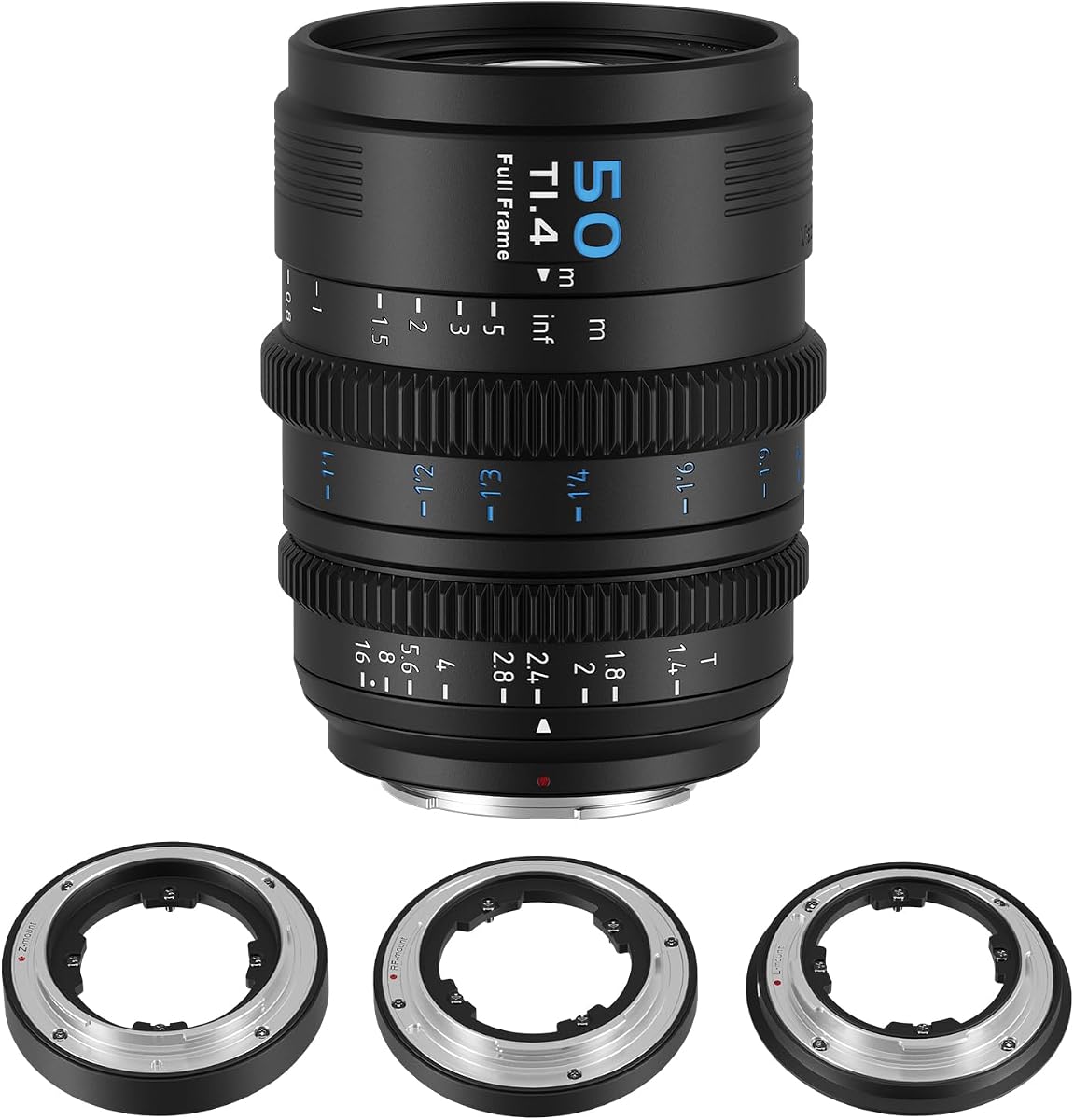


The SIRUI VP-1 Vision Prime 1 50mm T1.4 stands out as the top choice for modern filmmakers seeking versatility and optical excellence. With a perfect rating, this lens delivers stunning sharpness and beautiful bokeh ideal for narrative and documentary work. Its innovative interchangeable mount system allows seamless transitions between Sony, Canon, Nikon, and Panasonic cameras without buying multiple lenses.
We may earn a commission when you buy through this link, at no additional cost to you.
Built for 8K storytelling, this lens integrates aspherical elements and advanced glass to minimize chromatic aberrations and distortion. The fast T1.4 aperture ensures clean images in low light without high ISO noise. The compact design weighs only 600 grams making it easy to stabilize on gimbals or handheld rigs while maintaining a premium aluminum alloy body.
While the lens excels in consistency across the set, users should note it is a prime option which limits focal length flexibility compared to zooms. The investment is significant but justified by the build quality and optical precision. Most users find the trade-off worthwhile given the professional results and workflow efficiency gained during production.
This lens is ideal for independent creators and professional crews needing reliable high-speed glass across different camera systems. If you value sharpness, low-light capability, and mounting flexibility, this is the strongest candidate on our list. We highly recommend it for those aiming to elevate their visual storytelling with consistent and crisp imagery.
The advanced optical design ensures edge-to-edge clarity suitable for 8K capture and downscaling to lower resolutions with maintained detail.
Interchangeable mount rings enable quick swaps between camera bodies making it perfect for productions using multiple brands of cinema cameras.
We may earn a commission when you buy through this link, at no additional cost to you.
The ROKINON CINE DS T1.5 Cinema Lens Kit offers an incredible value for filmmakers needing a versatile set of primes without breaking the bank. Rated highly for its completeness, this kit includes 24mm, 35mm, 50mm, and 85mm lenses all color matched and gear-aligned. It is perfect for indie productions requiring consistent look and interchangeable lenses.
We may earn a commission when you buy through this link, at no additional cost to you.
Each lens features a bright T1.5 aperture that performs well in dim environments while retaining depth of field control. The DS line ensures unified aperture positions which simplifies lens changes on set. The manual focus rings allow precise control and the de-clicked aperture helps during variable lighting scenarios if configured correctly.
Despite its strengths, the kit is heavier than newer lightweight options which might challenge gimbal users. The Canon EF mount limits direct use on mirrorless bodies without adapters. However the optical quality and cohesive design make it a robust starting point for serious video work where budget constraints exist.
We recommend this kit for creators building their first professional lens lineup or those needing reliable full-frame optics quickly. It balances cost and capability effectively making it a smart investment for many filmmakers. If you need multiple focal lengths at once this set provides the most comprehensive solution for the price.
All lenses share consistent color tones and gear positioning ensuring seamless transitions between shots without distracting shifts in look or focus.
Precision focus and aperture rings support repeatable camera for complex shoots requiring exact focus pulls during scene changes.
We may earn a commission when you buy through this link, at no additional cost to you.
The DZOFILM Pictor 50-125mm T2.8 is a high-end zoom lens designed for serious productions where focus consistency across zoom ranges is critical. Rated perfectly by users, this lens maintains focus while zooming thanks to its parfocal design which is rare at this price point. It delivers a smooth cinema experience with minimal breathing during zooms.
We may earn a commission when you buy through this link, at no additional cost to you.
Its constant T2.8 aperture provides reliable light gathering throughout the entire zoom range which simplifies exposure adjustments. The build quality is exceptional with standard cine lens accessories and compatibility with PL and Canon EF mounts. The 16-slat iris helps achieve clean bokeh shapes that enhance the visual quality of your footage significantly.
The cost is a barrier for entry-level creators but professional teams will appreciate the reliability and speed. Weight and size might require a dedicated tripod or rigging system. For those needing zoom flexibility without sacrificing optical integrity this lens offers a premium solution that aligns with high production standards easily.
We suggest this lens for professional crews shooting events or narrative content where zooming on the fly is necessary. It excels in situations requiring quick focal adjustments without refocusing. If you prioritize parfocal consistency and robust build quality over compactness this is the best premium option available today.
Focus remains locked while zooming which prevents the need to readjust focus manually during dynamic shots.
Compatibility with PL and Canon EF mounts ensures it works with a wide range of cinema cameras used in high-end production.
We may earn a commission when you buy through this link, at no additional cost to you.
The Rokinon Cine DS DS85M-C 85mm T1.5 is a dedicated portrait lens designed for full frame Canon EF cameras. With a high rating it delivers soft bokeh and rich contrast ideal for interviews and close-ups. The 85mm focal length provides a natural perspective that flatters subjects while isolating them from the background clearly.
We may earn a commission when you buy through this link, at no additional cost to you.
The T1.5 aperture allows for shallow depth of field which helps draw attention to the main subject effectively. It integrates seamlessly with other Rokinon DS lenses thanks to unified gear positions which simplifies workflow on multi-lens sets. The build is solid with a robust aluminum housing that feels professional in hand.
While the lens is excellent for static shots it may require extra care during handheld movement due to its manual focus nature. The fixed focal length limits versatility compared to zooms but the quality compensates for this restriction in portrait scenarios. Users appreciate the consistent color matching across the lens line.
We recommend this lens for filmmakers focusing on character-driven content where facial detail and emotion are key. It is a reliable tool for achieving cinematic separation quickly. If you need a dedicated portrait glass that fits a cohesive lens set this model is a top contender for Canon users.
The 85mm focal length and T1.5 aperture create a flattering look with smooth background blur perfect for human subjects.
Matches other DS lenses precisely making lens swaps easier without repositioning focus pullers on a rig.
We may earn a commission when you buy through this link, at no additional cost to you.
The Rokinon 35mm T1.5 Cine DS is a versatile wide angle option perfect for environmental storytelling and documentary work. Rated highly for its sharpness it offers a balanced field of view that is neither too wide nor too tight. The Canon EF mount ensures compatibility with many DSLR and cinema camera setups easily.
We may earn a commission when you buy through this link, at no additional cost to you.
Its T1.5 aperture provides sufficient light gathering for indoor scenes without excessive ISO noise. The DS line ensures that it matches other Rokinon lenses in color and gear placement which aids consistency across different shots. The lens features a manual focus ring that is smooth and precise for repeatable pulls.
Users note that the weight might be noticeable during long handheld sessions compared to newer lightweight primes. However the optical performance and build quality justify the heft in many professional scenarios. The wide angle is effective for capturing context while maintaining focus on the subject.
We suggest this lens for creators needing a strong wide prime for narrative or documentary projects. It pairs well with other DS lenses for a full kit. If you want reliable wide-angle performance with professional controls this model is a solid choice for Canon EF shooters.
The 35mm focal length offers a natural perspective that works well for both environmental shots and medium close-ups.
Unified gear and aperture positions make it easy to integrate with other Rokinon Cine DS lenses for a seamless workflow.
We may earn a commission when you buy through this link, at no additional cost to you.
The SIRUI Night Walker 35mm S35 is designed specifically for APS-C cameras offering exceptional low-light performance with a T1.2 aperture. Rated well by users it excels in night scenes and dim environments where high ISO noise is a concern. Its compact 500g weight makes it ideal for mirrorless bodies and portable rigs.
We may earn a commission when you buy through this link, at no additional cost to you.
The optical design delivers sharp images with minimal aberrations even at maximum aperture which is rare for lenses at this price point. The focus ring allows precise manual control and the build quality feels sturdy despite the light weight. It provides a 49mm full-frame equivalent field of view which is versatile for many scenes.
While the lens shines in low light, the S35 coverage means it will vignette on full frame sensors limiting its use to crop cameras. The focus throw is relatively short which may require quick adaptation for focus pullers. However the price and performance balance make it a top choice for Sony E mount users.
We recommend this lens for independent filmmakers using APS-C cameras who need fast glass for documentary or event work. It is a cost-effective way to achieve cinematic looks in challenging light. If you prioritize speed and portability for crop sensor systems this is an excellent option to consider.
The T1.2 aperture allows for cleaner images in low light by letting in more light than standard T1.5 lenses.
Weighing only 500 grams it is easy to balance on gimbals and reduces fatigue during long handheld shooting sessions.
We may earn a commission when you buy through this link, at no additional cost to you.
The SIRUI Night Walker 24mm S35 RF offers a wide angle perspective for Canon RF mount cameras with a bright T1.2 aperture. It is rated for its sharpness and versatility allowing users to capture landscapes and interiors with impressive detail. The close focus distance of 0.3m adds creative flexibility for detail shots.
We may earn a commission when you buy through this link, at no additional cost to you.
The optical performance is controlled to minimize aberrations and breathing which helps maintain clarity during video transitions. The lens is lightweight and fits well on Canon mirrorless bodies like the R7 and R10. It supports S35 coverage ensuring that the full frame is utilized effectively on compatible sensors.
Users should note that this lens is optimized for APS-C sensors so full frame bodies might show vignetting. The focus ring can be stiff for some users which may require a gentle touch. However for those with RF mount systems seeking a fast wide prime this lens delivers professional results at a reasonable cost.
We suggest this lens for Canon RF users who need a lightweight wide-angle option for travel and documentary filming. It works well in low light and provides a cinematic look for video. If you own a Canon mirrorless camera and want fast glass for landscapes or cityscapes this is a strong choice.
Designed specifically for Canon RF mount cameras it provides seamless compatibility and balanced ergonomics on supported bodies.
With a minimum focus distance of 0.3m you can capture detailed close-ups that add texture to your visual storytelling.
We may earn a commission when you buy through this link, at no additional cost to you.
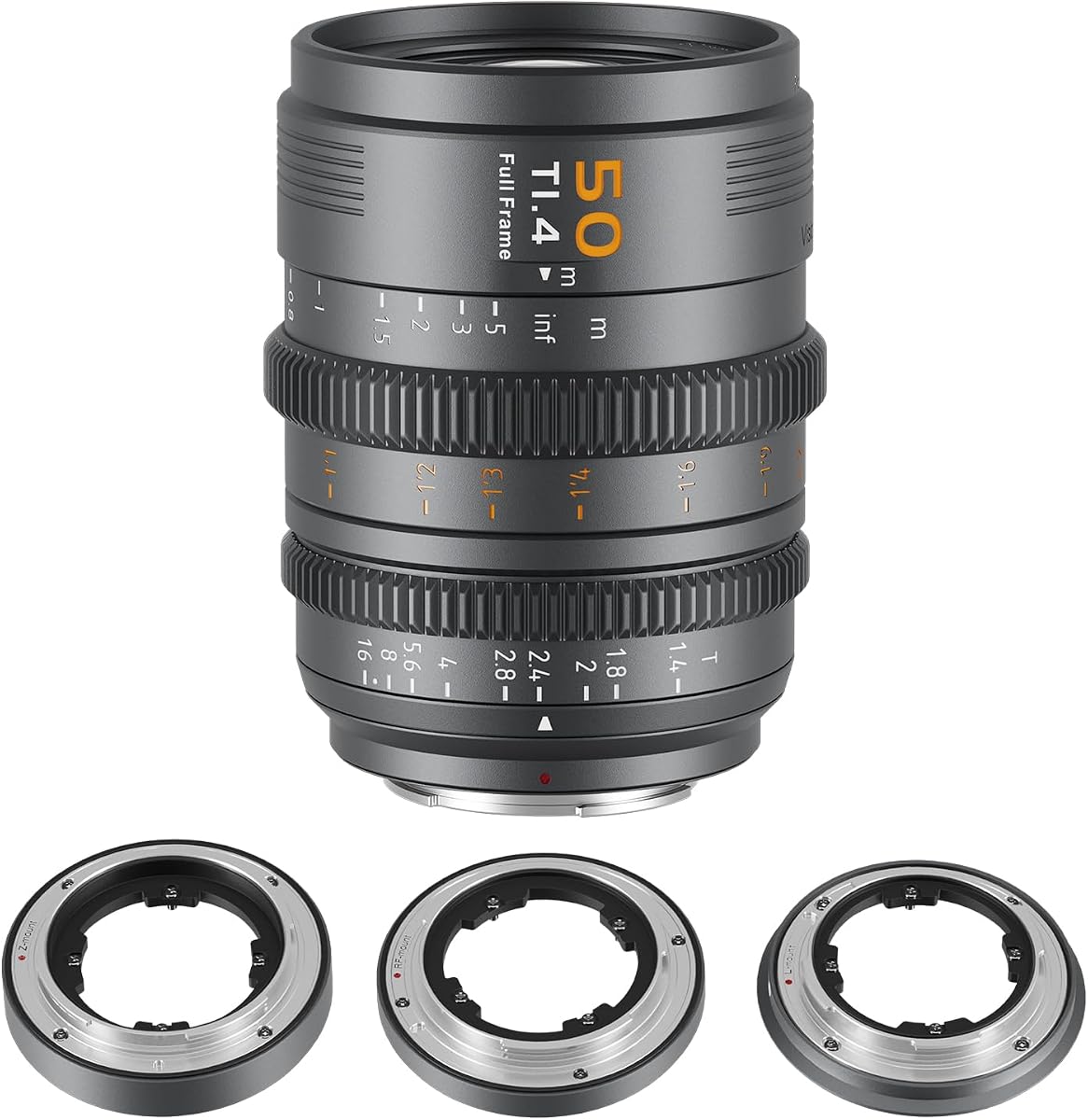
The SIRUI VP-1 Vision Prime 1 50mm T1.4 is an all-purpose prime lens that adapts to multiple camera systems. While similar to the top pick, this version emphasizes travel-friendly build quality with a compact design. Rated solidly it provides a bright T1.4 aperture for excellent low-light performance and subject separation.
We may earn a commission when you buy through this link, at no additional cost to you.
The interchangeable mount system allows users to swap between E, RF, Z, and L mounts as needed. This flexibility makes it a great choice for creators who work across different camera brands. The lens is built with aluminum alloy which keeps it durable yet light enough for handheld or gimbal use.
The trade-off is the need to carry and change mounts which can add steps to the workflow. However the lens quality remains consistent across the set which helps maintain a unified look. For many it is a practical solution to own one high-speed lens instead of multiple fixed mounts.
We recommend this lens for travelers and multi-camera crews who value flexibility without sacrificing optical quality. It delivers sharp images and smooth focus control. If you need a versatile 50mm prime that fits your current and future camera bodies this model offers the best adaptability.
Pre-installed E mount with user-interchangeable options ensures you can use one lens across different brands of mirrorless cameras.
The aluminum alloy body ensures long-lasting performance while the lightweight design makes it easy to carry during travel.
We may earn a commission when you buy through this link, at no additional cost to you.
The SIRUI Night Walker 24mm S35 M4/3 is tailored for Micro Four Thirds and Blackmagic cameras offering a wide angle view with bright T1.2 optics. It has a near perfect rating for its sharpness and build quality making it a favorite among documentary and event shooters. The metal housing is sturdy and protects the lens well.
We may earn a commission when you buy through this link, at no additional cost to you.
Its compact size and weight make it easy to balance on gimbals or handheld rigs for dynamic shots. The optical design minimizes aberrations and focus breathing which keeps the footage clean during transitions. It delivers a 34mm full-frame equivalent field of view which is versatile for environmental storytelling.
Users should be aware that this lens is specific to M4/3 mounts and thus limits compatibility to those systems. However for owners of Panasonic or Blackmagic cameras it provides a reliable and fast wide option. The focus ring is smooth and precise for manual control during critical scenes.
We recommend this lens for filmmakers using Micro Four Thirds systems who need a fast wide prime for low-light work. It is especially suited for BMPCC and GH series cameras. If you want a compact and durable lens that delivers professional quality on your M4/3 camera this is the top choice.
Designed specifically for cameras like the BMPCC4K it offers perfect coverage and compatibility for cinema-focused workflows.
The strong aluminum body ensures durability while keeping the weight low for extended handheld shooting sessions without fatigue.
We may earn a commission when you buy through this link, at no additional cost to you.
The Rokinon DSX85 DSX 85mm T1.5 is a portrait-focused prime lens for Canon EF mount cameras delivering smooth bokeh and sharp subject isolation. Rated highly for its build and optical consistency it is an excellent choice for interviews and close-up work. The ultra multi-coated glass helps reduce flare and improve contrast.
We may earn a commission when you buy through this link, at no additional cost to you.
The lens features nine aperture blades which create a pleasing circular bokeh shape enhancing the aesthetic quality of the background blur. It maintains consistent focus and build quality suitable for professional video production. The lens offers a T1.5 aperture that lets in ample light for dimly lit environments.
While it is a manual lens and lacks autofocus which may slow down quick setups compared to modern options. However the DSX line ensures it matches other Rokinon lenses in color and gear positions which is useful for multi-lens workflows. The price is accessible for the quality offered.
We suggest this lens for filmmakers who prioritize portrait shots and value smooth optical transitions. It is a reliable option for capturing intimate scenes. If you need an affordable 85mm prime that delivers cinematic quality and consistent gear alignment this model is a strong recommendation.
The nine-blade aperture ensures that background blur appears natural and soft which helps subjects stand out clearly in frame.
Unified gear positions and color matching with other DSX lenses simplify workflow when switching between different focal lengths.
We may earn a commission when you buy through this link, at no additional cost to you.
Selecting the right cine lens requires understanding several key factors that affect your footage quality and workflow efficiency.
Ensure the lens mount matches your camera body to avoid needing adapters which can add bulk and limit aperture control. Some lenses like the SIRUI VP-1 offer interchangeable mounts for more flexibility across different camera brands and systems.
A wider T-stop such as T1.2 or T1.4 allows more light to reach the sensor which is essential for shooting in dim environments without raising ISO. This also enables better background separation and shallow depth of field for cinematic looks.
Different focal lengths serve various storytelling needs from wide angles for landscapes to telephotos for portraits. Consider the types of shots you plan to shoot most often to choose the right prime or zoom range.
Cine lenses are designed with durable materials like metal housings which protect internal elements and maintain consistency during use. However heavier lenses may challenge gimbal stability so balance durability with portability based on your shooting style.
Manual focus rings with smooth travel and de-clicked aperture rings allow precise control for video production. These features are critical for repeatable focus pulls and consistent exposure during dynamic scenes.
Parfocal zooms keep focus while zooming which is valuable for events and dynamic shots. Prime lenses offer larger apertures and sharpness but require more physical movement to change framing. Decide based on your need for speed versus optical quality.
Check whether the lens supports full-frame or APS-C sensors to avoid vignetting. Lenses designed for S35 may not work fully on full-frame cameras unless you account for crop factors or specific mounting options.
Cine lenses vary widely in cost depending on optical quality and build. Set a realistic budget but consider long-term value through durability and optical performance. Kits often offer better value than buying individual lenses separately.
Always mount your lens securely on the camera body to ensure alignment and prevent dust from entering. Use the appropriate adapter if your camera has a different mount than the lens requires.
Cine lenses are designed for video production with smooth focus and aperture rings that allow precise manual control. They typically feature consistent color and gear positions across a lens set which helps maintain visual continuity during filming.
Many cine lenses are available with DSLR mounts such as Canon EF which allow them to work on compatible DSLRs. However automatic features may be limited so manual settings are preferred for optimal control.
T-stop measures the actual light transmission of the lens rather than just the physical aperture size. A lower T-stop means more light reaches the sensor which is beneficial for low-light video production.
Using a gimbal is optional but recommended for smooth handheld shots especially with heavier lenses. Lightweight cine options exist that work well without stabilizers depending on your shooting style.
Interchangeable mount lenses typically include removable rings that can be unscrewed and replaced with another mount. Always follow the manufacturer instructions to ensure secure attachment and avoid damaging the lens threads.
Yes for beginners committed to improving video quality cine lenses provide consistent optics and control that regular lenses lack. Starting with a kit can be cost-effective and provides all necessary focal lengths.
We explored ten top-rated cine lenses including standout models from SIRUI Rokinon and DZOFILM. Each offers unique strengths from versatile prime sets to high-performance zooms suitable for diverse shooting scenarios.
Prioritize lens features like mount compatibility and aperture speed based on your specific camera system and shooting needs. Consistent optics and robust build quality ensure your footage meets professional standards across various production environments.
Remember that prices can vary so check current availability before making your purchase decision. Investing in the right cine lens will elevate your video quality and expand your creative possibilities for years to come.