
THUSTAR 8MP Document Camera & Webcam 4K
4.4Editor score
Dual microphones for clear audio
Foldable design for easy storage
3-Level LED lights for brightness control
Document cameras with zoom capabilities have become essential tools for educators and professionals seeking to share visual content effectively. These devices allow users to display documents, objects, and materials in real time with remarkable clarity and detail for any audience.
To compile this list we evaluated ten leading models based on resolution zoom range connectivity options and overall performance. We considered user feedback and technical specifications to ensure each recommendation offers reliable quality for various teaching and presentation scenarios.
Each pick highlights key strengths and ideal use cases to help you find the right fit for your setup. Please note that product availability and pricing may vary so always check current listings before making your final purchase decision.
4.4Editor score
4.5Editor score

4.5Editor score
As an Amazon Associate we earn from qualifying purchases.
This side-by-side comparison showcases the key specifications of all ten selected document cameras to help you quickly identify the model that best fits your specific requirements and budget constraints.


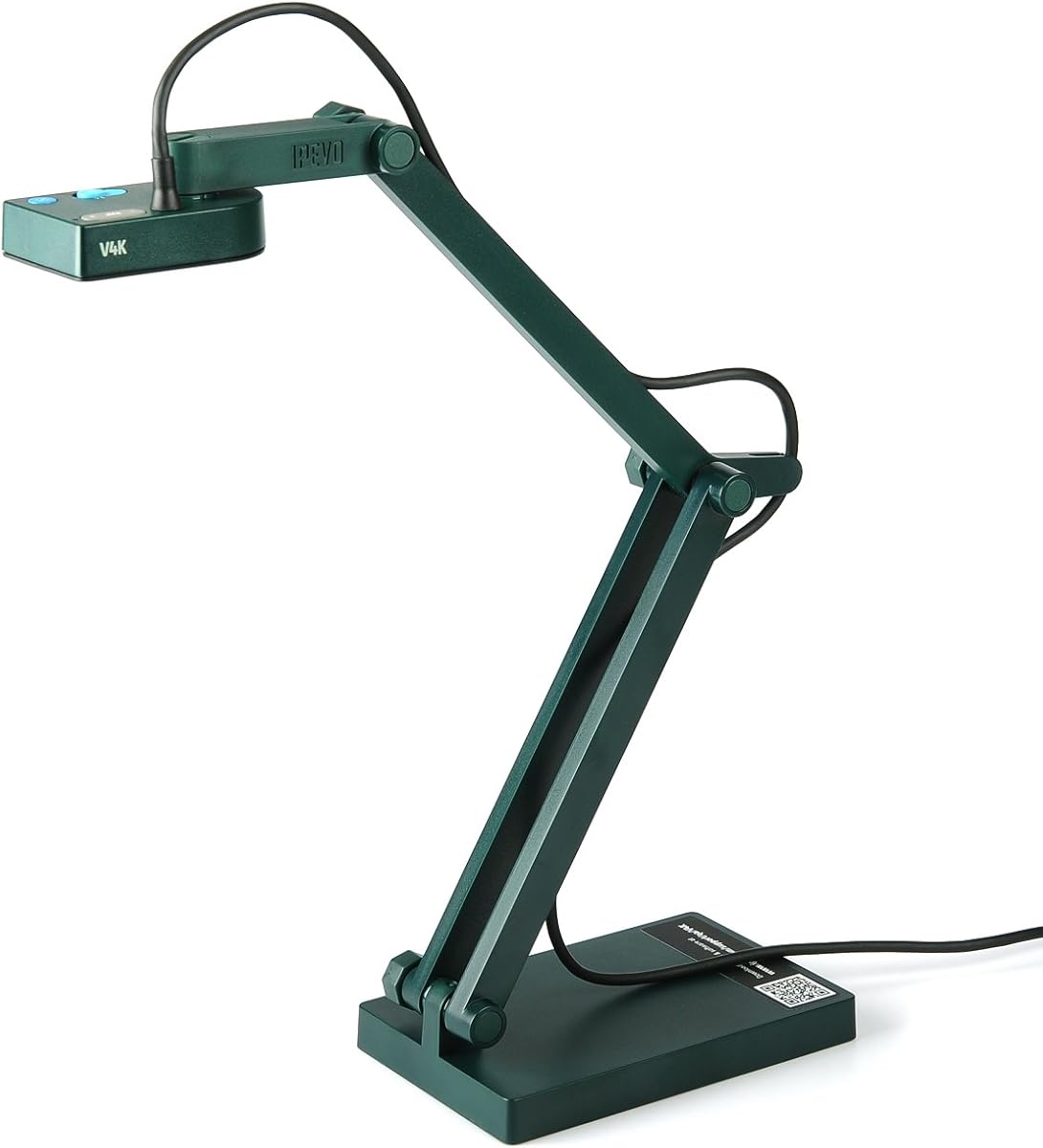
The IPEVO V4K stands out as a top choice for educators needing reliable high definition imaging. Its 8 megapixel camera delivers ultra clear visuals suitable for both live demos and recorded lessons.
We may earn a commission when you buy through this link, at no additional cost to you.
Powered by a Sony CMOS sensor this model excels in noise reduction and color reproduction even in dim lighting. The fast focusing speed ensures smooth transitions between different materials during presentations.
While the multi-jointed stand is sturdy it may require occasional tightening after heavy daily use. Additionally users should note that the HDMI cable is sold separately for direct display connections.
Overall this camera offers an excellent balance of performance and compatibility making it ideal for classrooms and remote teaching environments requiring consistent quality and ease of use.
The 8 megapixel resolution captures text and diagrams with sharp precision ensuring students see every detail clearly.
Compatible with Mac Windows and Chromebook this device fits seamlessly into diverse school IT environments.
We may earn a commission when you buy through this link, at no additional cost to you.
The INSWAN INS-1 offers impressive features for its price point including a dedicated software suite that enhances presentation capabilities. Its 8 megapixel sensor provides smooth video streaming across all resolutions.
We may earn a commission when you buy through this link, at no additional cost to you.
A unique selling point is the bundled INSWAN Documate software which allows for annotation recording and digital zoom. This makes it particularly useful for interactive lessons without needing extra tools.
The multi-joint design saves desk space while offering a generous viewing size. However some users may prefer physical controls for zoom rather than relying solely on software adjustments.
This camera is a strong candidate for educators seeking a feature rich solution that integrates well with webinar software and offers solid performance for daily classroom use.
The Documate software enables image rotation hue adjustment and video recording directly from your desktop interface.
Built-in LED lights and an anti-glare sheet help manage exposure challenges in varying lighting conditions effectively.
We may earn a commission when you buy through this link, at no additional cost to you.
The Epson DC-13 is designed for users who need straightforward high definition output via HDMI. Its 1080p resolution ensures that shared content looks crisp on large screens or projectors.
We may earn a commission when you buy through this link, at no additional cost to you.
A notable inclusion is the microscope adapter which supports many standard microscopes for science education. This expands the utility of the camera beyond standard document sharing to detailed scientific observation.
While it offers smooth video performance at 30 fps the lack of optical zoom limits magnification capabilities compared to other models. The price reflects its specialized build and connectivity options.
Ideal for institutions with existing HDMI infrastructure this model provides a dependable way to share magnified images and lessons without complex setup requirements or driver installations.
The included microscope adapter allows teachers to connect microscopes and display detailed biological or chemical samples instantly.
HDMI digital connectivity ensures high definition video transmission without needing to install additional drivers or software.
We may earn a commission when you buy through this link, at no additional cost to you.
The Elmo TT-12W represents a high end solution for schools requiring advanced features and connectivity. With a 192x zoom ratio it offers powerful magnification options for detailed visual presentations.
We may earn a commission when you buy through this link, at no additional cost to you.
Running on Android this device supports a wide range of educational apps allowing teachers to integrate software directly into their lessons without needing a computer. The included remote dock ensures the remote is always accessible.
While the price is high the extensive connectivity options including HDMI Ethernet and Wi-Fi make it versatile for complex classroom environments. Setup may be more involved than plug and play USB cameras.
This model is best suited for technology rich classrooms where interaction and flexibility are priorities and the budget allows for a professional grade visual presenter system.
Powered by Android this camera can run educational apps directly expanding teaching possibilities without extra equipment.
Multiple ports including HDMI Ethernet and Wi-Fi allow flexible integration into various school network and display systems.
We may earn a commission when you buy through this link, at no additional cost to you.
The THUSTAR 8MP delivers solid performance at a budget friendly price point making it accessible for individual teachers or small classrooms. It supports 4K video output and includes dual microphones for better audio clarity.
We may earn a commission when you buy through this link, at no additional cost to you.
Its foldable multi-joint design allows for easy storage and transport which is ideal for educators who move between rooms. The adjustable LED lights help manage lighting conditions effectively during recordings or streams.
While the build is not as robust as premium models it offers significant value for those needing basic visual sharing capabilities. Users may need to manually adjust settings like image inversion for specific needs.
This camera is a smart choice for those on a tight budget who still require decent resolution and audio features for distance learning or online conferencing sessions.
The foldable design ensures the camera occupies minimal space when not in use making it easy to store or carry.
Dual silicon microphones reduce background noise to improve sound quality during video calls and presentations.
We may earn a commission when you buy through this link, at no additional cost to you.
The PAKOTOO USB document camera is designed for educators needing flexibility in exposure and image orientation. With a 5MP sensor it provides clear images suitable for typical document sharing tasks in virtual classrooms.
We may earn a commission when you buy through this link, at no additional cost to you.
Its 5-level ISO exposure control allows users to adjust brightness settings manually to suit difficult lighting environments. The inclusion of a USB-C cable ensures direct connectivity with modern laptops like MacBook devices.
Although it lacks the high resolution of premium models it offers essential features like image mirroring and dual microphones at a reasonable price. Users must note that it requires selecting USB Camera in system settings.
This model is well suited for teachers who need a reliable webcam alternative for presentations and want more control over exposure settings without spending on high end hardware.
Manual 5-level ISO exposure adjustment ensures perfectly sharp images even in imperfect lighting conditions.
Left and right mirroring function allows students to see text correctly when writing on paper in front of the camera.
We may earn a commission when you buy through this link, at no additional cost to you.
The IPEVO VZ-R offers unique dual mode functionality allowing direct HDMI connection to displays without needing a computer. This feature is invaluable for quick presentations or setups where a PC is unavailable.
We may earn a commission when you buy through this link, at no additional cost to you.
Built with a Sony CMOS sensor and Ambarella SoC it delivers fast focus and excellent color reproduction. The tactile buttons on the body enable instant adjustments to images during live demos.
While it includes a glass fiber reinforced stand for durability users should be aware that power adapters and HDMI cables are not included. This requires checking existing resources before purchase.
This device is perfect for hybrid environments where users switch between computer connected sessions and standalone projections offering flexibility and high image clarity for any audience.
Direct HDMI connection to a TV or projector allows standalone use without any computer interface or software.
Tactile built-in buttons on the body let you adjust images and lighting settings in real time during usage.
We may earn a commission when you buy through this link, at no additional cost to you.
The OKIOCAM S2-4K introduces AI tracking capabilities that can follow a pointer or hand movement during presentations. This dynamic feature helps maintain student focus on the specific details being highlighted.
We may earn a commission when you buy through this link, at no additional cost to you.
Equipped with a Sony Exmor R CMOS sensor it excels in low light environments without needing supplemental LED lights. The captures near-Ledger size documents comfortably making it suitable for larger sheets.
While the AI features are engaging they rely on the bundled software which may require setup time. Additionally the camera supports iPad OS with a USB-C adapter offering mobile teaching flexibility.
Ideal for interactive classrooms this model combines traditional document sharing with modern AI tools to enhance engagement and visual clarity during online or hybrid lessons.
OKIOPoint software zooms in and follows your pointer in real time simplifying teaching focus and student engagement.
Back-illuminated sensor design reduces noise and increases sensitivity for clear images even in faint light.
We may earn a commission when you buy through this link, at no additional cost to you.
The IPEVO V4K PRO features a 120 degree wide angle lens that captures expansive visuals like tabloid size documents easily. This makes it ideal for displaying larger objects or multiple items at once.
We may earn a commission when you buy through this link, at no additional cost to you.
AI noise reduction technology enhances video calls by eliminating background ambient noises which is perfect for work from home setups. Its built-in LED light ensures adequate illumination for materials.
While the wide angle view is beneficial it may introduce slight distortion at edges compared to standard lenses. The compact portable design allows it to fit easily into a laptop bag for travel.
This camera offers a great balance of wide coverage and smart audio features making it a versatile choice for educators and professionals needing to share large visuals remotely.
The 120 degree wide angle lens effortlessly captures expansive visuals perfect for displaying larger documents or objects.
AI noise reduction effectively eliminates background ambient noises to improve call quality during presentations.
We may earn a commission when you buy through this link, at no additional cost to you.
The Elmo TT-12iD is a next generation interactive document camera designed to enhance student engagement and creativity. It features a powerful zoom and smooth moving images for dynamic classroom lessons.
We may earn a commission when you buy through this link, at no additional cost to you.
A key advantage is the HDMI input which allows connection to external sources like laptops for switching between document and screen content. The built-in switcher simplifies managing multiple inputs during a presentation.
Although it has slightly lower optical zoom than the TT-12W model it offers excellent build quality and a high user satisfaction rating. The sleek remote control ensures easy operation from a distance.
This model is ideal for schools seeking an interactive all-inclusive camera that supports modern teaching tech and facilitates dynamic academic performance and student interaction.
The HDMI input allows you to connect external devices and switch sources seamlessly during a lesson.
Smooth moving images at 30 fps ensure that live demonstrations and object movements appear fluid and clear.
We may earn a commission when you buy through this link, at no additional cost to you.
Selecting the right document camera involves evaluating several technical and practical factors to ensure it meets your specific educational or professional needs.
Resolution is a critical factor that determines how clearly text and details are captured. Look for cameras with at least 8 megapixels to ensure that handwritten notes or small print are legible for students or viewers. Higher resolution sensors also perform better in reducing noise which keeps images clean even in less than ideal lighting.
Prioritize models with high resolution sensors to guarantee sharp and clear output for all types of visual materials.
Zoom allows you to magnify objects without losing image clarity. Optical zoom provides true magnification by adjusting the lens while digital zoom enlarges the image digitally which can reduce quality. For detailed work like science or art consider models offering both optical and digital zoom options for flexibility.
Choose a camera with sufficient optical zoom if you need to focus on small details without compromising on image quality.
Connectivity determines how the camera integrates with your existing setup. USB connections are common for computer linked workflows while HDMI outputs allow direct connection to projectors or TVs without a computer. Some advanced models include Ethernet or Wi-Fi for networked classrooms offering more flexibility in large educational environments.
Ensure the camera offers the right ports like HDMI or USB to match your display devices and network setup seamlessly.
Built-in lighting helps capture images in dimly lit rooms ensuring consistent brightness. Cameras with adjustable LED lights or exposure controls allow you to manage glare and shadows effectively. Look for features like image inversion or brightness adjustment to handle various materials and lighting conditions with ease.
Select a model with adjustable lighting and exposure settings to maintain visibility in different environmental conditions.
Some document cameras come with bundled software that offers tools like annotation recording or video editing. These features can enhance lessons by allowing teachers to mark up text or save presentations. Check if the software is compatible with your operating system and if it requires additional downloads to function properly.
Look for cameras with useful software tools if you need interactive features like annotation or recording for your lessons.
Design impacts how easy the camera is to use and store. Foldable or multi-jointed stands save desk space and allow flexible positioning for different angles. For educators moving between classrooms a portable and durable build ensures the device withstands travel and daily use.
Choose a compact and durable design with a flexible stand to maximize desk space and facilitate easy movement.
Compatibility ensures the camera works with your current devices. Most models support Windows and Mac but some offer specific drivers for Chromebooks or iPads. Verify that the required drivers are included or easily downloadable to avoid setup issues during critical teaching moments.
Verify that the camera supports your specific operating system to ensure smooth installation and plug and play operation.
Audio quality can enhance video calls and recorded lessons. Cameras with built-in microphones or dual mic setups reduce background noise and improve clarity. If you plan to use the device for conferencing look for models with noise reduction features to ensure professional sound output.
Opt for cameras with built-in microphones and noise reduction if you plan to use them for video calls and meetings.
To get started connect the camera to your computer via USB or directly to a display using HDMI. Install any necessary drivers or software provided by the manufacturer to ensure full functionality. Launch your preferred conferencing or presentation software and select the camera as the video source.
When using the camera adjust the stand or arm to position the lens over your document or object. Use the built-in buttons or software controls to adjust focus brightness and zoom until the image is clear. If your model supports image inversion use this feature when displaying writing for better student visibility.
Care for your device by keeping the lens clean with a soft cloth and avoiding contact with harsh chemicals. Store the camera in a dry place and if it is foldable fold it gently to prevent wear on joints. Regularly update software and firmware to maintain optimal performance and security.
Yes most modern document cameras are compatible with Zoom. You simply connect the camera to your computer via USB and select it as the video source within Zoom settings. Ensure you have the latest drivers installed for smooth operation during live sessions.
Optical zoom uses physical lens movement to magnify an image which maintains quality at any zoom level. Digital zoom enlarges the image by cropping and scaling which can reduce clarity. For best results use optical zoom as much as possible during your presentations.
Yes some models offer direct HDMI connection to projectors or TVs allowing standalone use without a computer. This is ideal for quick setups or rooms without available PCs. Check if the camera supports HDMI mode before purchasing to confirm this capability.
Blurry images are often caused by improper focus or lighting. Use the camera's autofocus button or manually adjust the focus distance to clear up text. Ensure there is adequate lighting on the document and clean the lens with a soft cloth.
Many cameras are plug and play and do not require drivers on modern operating systems. However some advanced features or software suites may need a specific installation. Always check the system requirements page for the model you purchase to be sure.
For most teaching purposes a resolution of at least 1080p or 8 megapixels is ideal. This ensures that small text and details are legible on large screens. Higher resolutions like 4K are beneficial if you need to display intricate diagrams or artwork.
Glare can be reduced by adjusting the angle of the camera or using built-in LED lights to balance exposure. Some cameras include anti-glare sheets which you can place over the document. Adjust brightness settings in the software to minimize reflections.
Compatibility with iPads depends on the model and available adapters. Some cameras with USB-C connections work directly with iPads while others may require a USB to lightning or USB-C adapter. Verify iPad compatibility and required accessories before purchasing.
We have reviewed ten top document cameras zoom models that offer a range of features from budget friendly options to high end interactive systems. The IPEVO V4K stands out as an overall winner while the THUSTAR 8MP offers great value for those watching their budget.
When making your decision prioritize resolution connectivity and software features that align with your teaching style. If you need advanced zoom and apps consider the Elmo TT-12W but if ease of use is key the INSWAN INS-1 provides a solid software experience.
Remember that technology evolves quickly so always check current product listings and user reviews before buying. Your final choice should balance your specific visual sharing needs with the practicalities of your classroom or office environment.