
SVBONY SV550 AP0 Telescope
4.5Editor score
Triplet ED optics design
Magnesium alloy focuser
Lightweight portable build
Explore our expert comparison of the top apochromatic refractors for 2026, covering optical quality, portability, and astrophotography performance for all
Apochromatic refractors are the gold standard for serious visual astronomy and astrophotography. They use special glass to eliminate color fringing, delivering crisp star dots and accurate colors. This guide helps you find the right scope for your goals and budget.
We compared ten highly rated models from top brands like SVBONY, Explore Scientific, and Askar. Our analysis focuses on optical design, build quality, and real-world performance based on user reviews and expert testing data available online.
Each pick highlights key strengths and trade-offs to help you decide quickly. Remember that availability and pricing can change frequently on major marketplaces. Always verify current stock and deals before finalizing your purchase decision.
4.5Editor score

5.0Editor score

5.0Editor score
This side-by-side comparison outlines the key specifications and features of each model to help you evaluate optical performance, portability, and value at a glance.


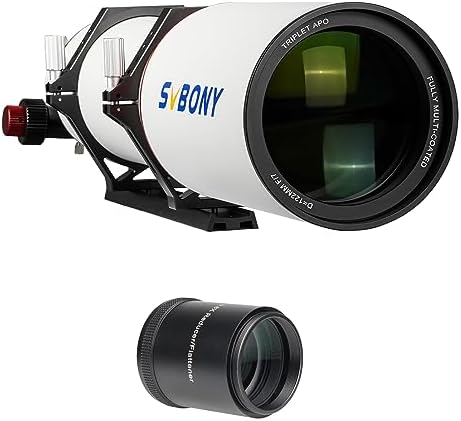


The SVBONY SV550 AP0 stands out as a top choice for beginners and intermediates seeking true apochromatic performance. With a 4.5 rating, it delivers crisp views and sharp astrophotography results. Its triplet design effectively removes color fringing on bright stars and planets.
We may earn a commission when you buy through this link, at no additional cost to you.
The optic design uses S-FPL51 ED glass which significantly improves blue-edge chromatic aberration. The 2.5-inch dual-speed focuser reduces vignetting on full-frame sensors. Extinction measures inside the tube ensure high contrast by blocking stray light effectively.
While it lacks accessories like a finderscope or diagonal, the optical quality is the main focus. The magnesium alloy focus mount reduces weight substantially. Users note that it balances well on most mounts and delivers professional results.
This scope is ideal for those who prioritize optical clarity and portability. It pairs well with existing mounts and accessories. For a reliable entry into apochromatic refractors without breaking the bank, this is a strong recommendation.
The air-spaced triplet design virtually eliminates chromatic aberration for high-contrast images.
Magnesium alloy components reduce overall weight making transport easier for travel.
We may earn a commission when you buy through this link, at no additional cost to you.
The Explore Scientific ED80 Essential Series is a long-standing favorite in the astronomy community. Its 4.2 rating reflects reliable performance for both visual and imaging work. The use of FCD1 HOYA ED glass ensures high contrast and excellent color fidelity.
We may earn a commission when you buy through this link, at no additional cost to you.
Its air-spaced triplet design minimizes chromatic aberrations allowing for detailed planetary views. The push-pull collimation system helps users achieve the tightest stars. USA-based support adds confidence for buyers concerned about long-term maintenance.
Portability is well addressed with a retractable dew shield and compact focal length. However, some users find it slightly heavier than newer alternatives. It remains a robust option for those prioritizing optical glass quality.
This model suits users who value a proven track record and high-quality glass. It performs well for deep sky imaging with minor modifications. Choosing this scope means opting for established reliability in your astrophotography setup.
Enhanced multi-layer coatings on all surfaces produce stunningly detailed views.
Compact design with dew shield allows easy transport for spontaneous sessions.
We may earn a commission when you buy through this link, at no additional cost to you.
This bundle takes the SV550 OTA and adds critical imaging accessories. With a perfect 5.0 rating, it simplifies setup for new astroimagers. The SV209 field flattener ensures sharp stars across the entire frame without complex adjustments.
We may earn a commission when you buy through this link, at no additional cost to you.
The package includes an M63 extension tube and adapter ring to match the conventional back focal length. This reduces trial and error for first-time users. The 45mm large target surface supports half and full-frame cameras effectively.
Magnesium alloy focus seat keeps the weight down for stable mounts. The dovetail plate design allows for versatile accessory mounting options. While the OTA alone is great, the bundle adds immense value for photography.
Buyers focused on deep sky astrophotography will appreciate this ready-to-go kit. It saves time on compatibility checks. For a smooth start into serious imaging with minimal hassle, this bundle is highly recommended.
Includes flattener and adapter rings to ensure correct back focal length.
Extreme extinction measures inside the lens barrel prevent light reflection.
We may earn a commission when you buy through this link, at no additional cost to you.
The SV550 122mm variant steps up aperture size for better light gathering. This allows viewing fainter deep sky objects that smaller scopes miss. The design includes a convenient handle and dovetail base for easy transport.
We may earn a commission when you buy through this link, at no additional cost to you.
Triplet FPL-51 lens structure reduces chromatic aberration while maintaining clarity. The OTA weighs around 14 pounds which is manageable with a sturdy mount. It serves well as a dedicated guide scope or main imaging lens.
Users appreciate the inclusion of a bracket for mounting auxiliary guides. This helps in creating a compact imaging rig. The build quality is solid and the optics perform well in clear conditions.
For those seeking more light grasp without going to massive refractors, this is ideal. It balances portability with performance well. Consider this if you need extra sensitivity for faint targets in your imaging sessions.
122mm aperture gathers more light for better deep sky performance.
Integrated handle makes carrying the large tube safer and easier.
We may earn a commission when you buy through this link, at no additional cost to you.
The Askar 71F is designed for portability and versatility. Weighing only 2.5kg it is easy to carry for spontaneous sessions. Its self-flattened optics mean no extra flatteners are needed for flat fields.
We may earn a commission when you buy through this link, at no additional cost to you.
The entire lens barrel uses high-quality CNC processing and matte interior paint to reduce stray light. The 360-degree field rotator allows easy camera alignment without twisting the tube. This makes framing targets intuitive.
Visual observers and photographers alike will enjoy the sharp images. It is suitable for observing birds and scenery during the day too. The compact size is ideal for limited storage or travel constraints.
If your priority is mobility and simplicity in your astro gear, this is excellent. It delivers high quality results with minimal setup. This scope is perfect for remote locations where weight matters most.
Lightweight build allows easy transport for travel or remote sessions.
Suitable for both planetary viewing and deep sky photography equally.
We may earn a commission when you buy through this link, at no additional cost to you.
The SV503 offers a larger 102mm aperture for brighter deep sky views. Its high contrast images are enhanced by FMC coating which reduces internal reflections. The 90mm focus travel accommodates various imaging accessories like filter wheels.
We may earn a commission when you buy through this link, at no additional cost to you.
A built-in 360-degree field rotator allows precise camera alignment without tube rotation. This saves time during setup. The dual-speed focuser ensures critical focus is easy to achieve and maintain consistently.
Aluminum retractable hood protects the lens and prevents dew formation. It blocks stray light effectively for darker skies. Visual observers appreciate the sharpness and clarity on planets and clusters.
This model balances size and performance well for serious hobbyists. It is a great choice for those needing extra aperture for fainter objects. Consider this if you want more light grasp in a refractor.
Dual-speed focuser makes achieving critical focus effortless for imaging.
Retractable hood shields lens from dew and blocks stray light.
We may earn a commission when you buy through this link, at no additional cost to you.
This bundle combines a 122mm aperture refractor with a specialized 0.8X focal reducer. The field flattener corrects curvature for perfect stars at the edges. It is designed for prime focus astrophotography enthusiasts.
We may earn a commission when you buy through this link, at no additional cost to you.
The 122mm aperture gathers more light for clear detailed images. This allows capturing fainter deep sky objects than smaller apertures. The high limiting magnitude ensures more targets are visible during sessions.
The SV209 reduces field curvature improving shooting efficiency and image quality. This makes it easier to frame large nebulae without cropping. The OTA remains travel-friendly despite its larger size.
For widefield imaging, this kit is a top performer in its class. It removes guesswork regarding flattener compatibility. Choose this for capturing large deep sky targets with maximum clarity.
Focal reducer allows wider field of view for large targets.
Field flattener ensures sharp corners for full sensor imaging.
We may earn a commission when you buy through this link, at no additional cost to you.
This kit focuses on delivering a comprehensive solution for 122mm imaging. It includes the SV209 field flattener and reducer to correct field curvature. This makes it ready for high-quality prime focus photography.
We may earn a commission when you buy through this link, at no additional cost to you.
The portable handle and dovetail base allow easy transport and setup. The tripod adapter allows the large aperture to be moved without disassembly. It is designed for convenience in the field.
Optics include a FPL-51 triplet structure reducing aberration effectively. The clarity and sharpness are enhanced across the frame. This ensures detailed images of planets and galaxies alike.
Ideal for users who want a larger scope without sacrificing portability. It balances performance with travel needs. If you need more light grasp and a modular setup this kit fits well.
Integrated handle simplifies carrying large scopes on location.
Triplet structure ensures detailed images across the entire frame.
We may earn a commission when you buy through this link, at no additional cost to you.
This 80mm kit includes essential accessories like a handle and diagonal. It aims to provide a complete package for both imaging and visual use. The SV209 field flattener improves edge performance significantly.
We may earn a commission when you buy through this link, at no additional cost to you.
The ultra-wide band fully multilayer coated lenses prevent irritating reflections. This results in bright and clear images for observers. The 30mm achromatic optics further aid in delivering sharp views.
Comfortable carrying handle improves safety during installation and transport. The bundle allows quick setup for stargazing. It is a solid choice for beginners wanting everything in one box.
Choose this if you want a ready-to-use scope with essential extras. It avoids extra buying for basic accessories. This kit simplifies the start for new astrophotographers and observers.
Includes handle and flattener to provide everything needed to start.
Coated optics prevent reflections for bright clear images.
We may earn a commission when you buy through this link, at no additional cost to you.
This bundle is designed to be an all-in-one solution. It includes both a guide scope and a guide camera. This simplifies autoguiding and planetary imaging without extra purchases.
We may earn a commission when you buy through this link, at no additional cost to you.
The camera features a 1.23-megapixel CMOS sensor with high peak QE. It allows tight tracking of faint guide stars effectively. The small pixels ensure precision during guiding sessions.
The main refractor offers 122mm aperture for detailed deep sky targets. It pairs well with the guide camera for precise tracking. The kit includes necessary interfaces for auto guiding compatibility.
This option is best for those who want a ready-to-go setup. It removes compatibility worries between components. For a smooth entry into complex imaging this kit provides a complete solution.
Includes guide scope and camera for autoguiding and imaging.
Large aperture refractor ensures sharp detailed imaging capabilities.
We may earn a commission when you buy through this link, at no additional cost to you.
Selecting the right apochromatic refractor requires understanding optical specs and your personal needs. This guide covers key factors to consider before purchasing.
Aperture determines light-gathering power and resolution. Larger apertures like 122mm reveal fainter targets but add weight. Choose based on your transport capabilities and target brightness.
Select aperture based on desired targets and transport limits.
Focal ratio affects exposure times and field of view. Fast ratios like F6 are better for imaging nebulae. Slower ratios suit planetary viewing and high magnification.
Match focal ratio to your preferred target types.
ED glass like S-FPL51 or FCD1 reduces chromatic aberration. Triplet designs usually outperform doublets. Ensure the glass quality matches your budget.
Prioritize ED glass for color correction.
Consider weight and tube length for travel. Aluminum and magnesium alloys affect weight. Check if the scope fits your vehicle and storage.
Optimize weight and length for transport.
Dual-speed focusers offer precision for imaging. 2.5-inch focusers prevent vignetting on large sensors. Check compatibility with your accessories.
Ensure focuser size matches your camera sensor.
Bundles often include flatteners or adapters. Buying separately adds cost. Check compatibility of included accessories.
Prefer bundles with necessary imaging parts.
Ensure the dovetail matches your mount interface. Guide scope mounts add weight. Check tube weight ratings.
Verify dovetail and weight compatibility.
Higher price often reflects better glass. Compare features against total cost. Look for sales on trusted brands.
Balance features with available budget.
Allow the scope to acclimate to outside temperature for 20 minutes before use. This reduces internal air currents that blur images.
Use dew heaters on your tube to prevent moisture during imaging sessions. Clean lenses gently with a microfiber cloth if needed.
Store the refractor in a dry place and cover it when not in use. Check for loose screws regularly to ensure alignment.
Apochromatic refractors use special glass to correct color fringing. They produce sharp star points without purple halos. This makes them ideal for high-contrast imaging.
Most cameras require a flattener for sharp edges. Some OTAs include it or are self-flattened. Check your camera requirements before buying.
Yes, 80mm is a great starting aperture. It is lightweight and versatile. It allows both visual and basic imaging easily.
Absolutely, these scopes provide excellent planetary detail. Their high contrast reveals surface features clearly. They work well with Barlow lenses too.
Use a sturdy mount rated for the tube weight. Most use standard Vixen or Losmandy dovetails. Ensure the mount can handle the accessories too.
No, they are not waterproof. Use dew shields and heaters to manage moisture. Protect them from rain during outdoor sessions.
We highlighted ten top options ranging from compact kits to large aperture systems. Each offers unique strengths for visual or imaging goals.
Prioritize optical quality and portability based on your setup. Consider bundles to save on accessories and ensure compatibility.
Remember to verify current availability and pricing on Amazon. Prices change frequently so check before you buy to get the best deal.