
HiLetgo 5pcs DHT11 Temperature Humidity Sensor Module
4.5Editor score
Single-wire interface
Digital output
Low cost option
This expert guide compares the top Arduino temperature sensors for accuracy, range, and ease of use to help you choose the right module for your next project.
Selecting the right Arduino temperature sensor is crucial for reliable environmental monitoring and industrial control applications. A good sensor offers high precision, a wide operating range, and seamless integration with popular microcontrollers to ensure your data is accurate and consistent.
We evaluated ten leading temperature and humidity modules based on their measurement accuracy, communication protocols, waterproof capabilities, and overall build quality. This comprehensive list covers everything from basic digital outputs to advanced I2C interfaces suitable for diverse DIY and professional projects.
Each pick highlights key specifications, pros, cons, and ideal use cases to simplify your decision-making process. Please note that product availability and pricing can change frequently, so verify current details on the manufacturer or retailer pages before purchasing.
4.5Editor score

5.0Editor score

4.4Editor score
The following comparison table provides a side-by-side overview of the top temperature sensors, highlighting their key specifications and features to help you make an informed decision.

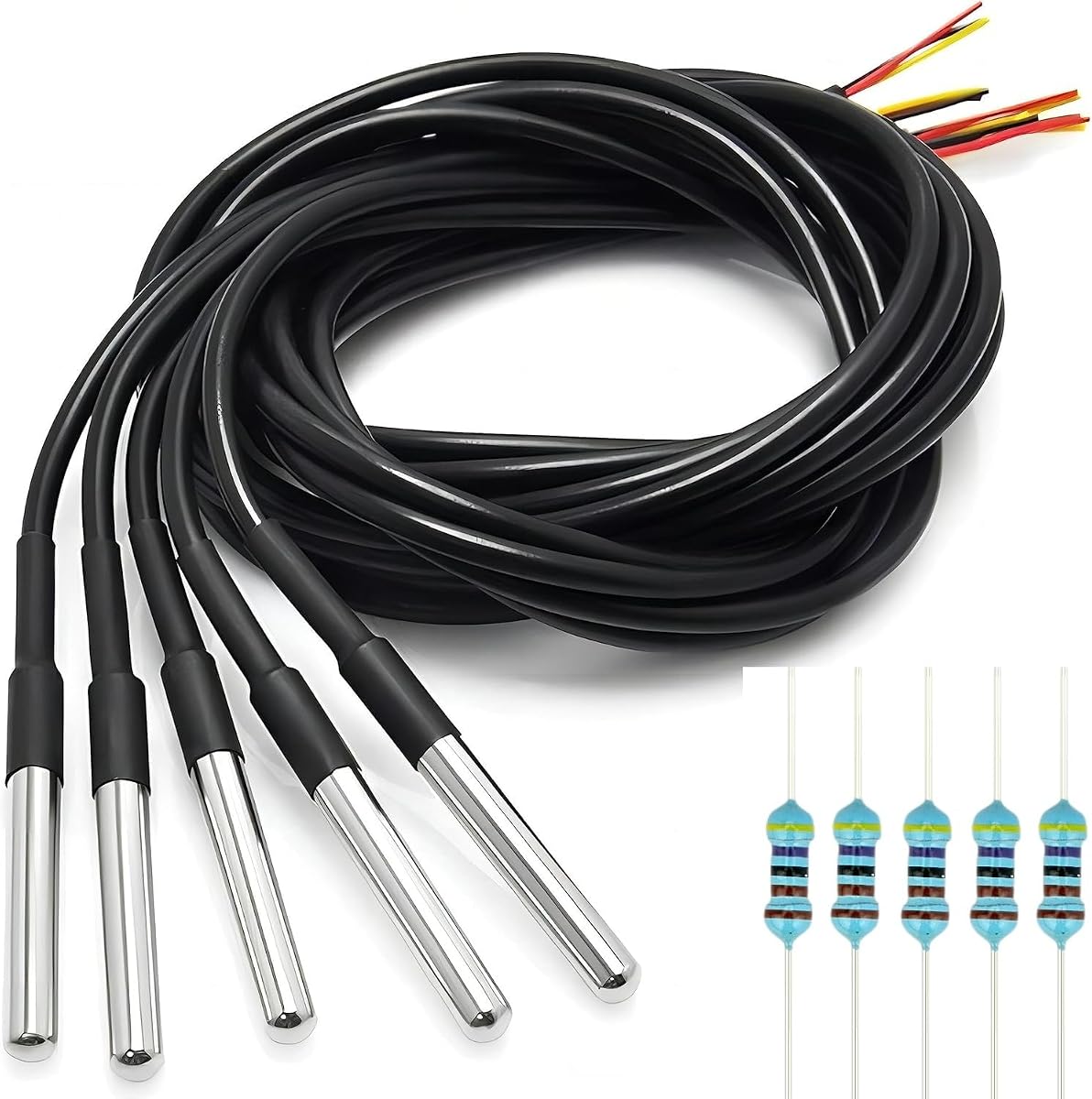


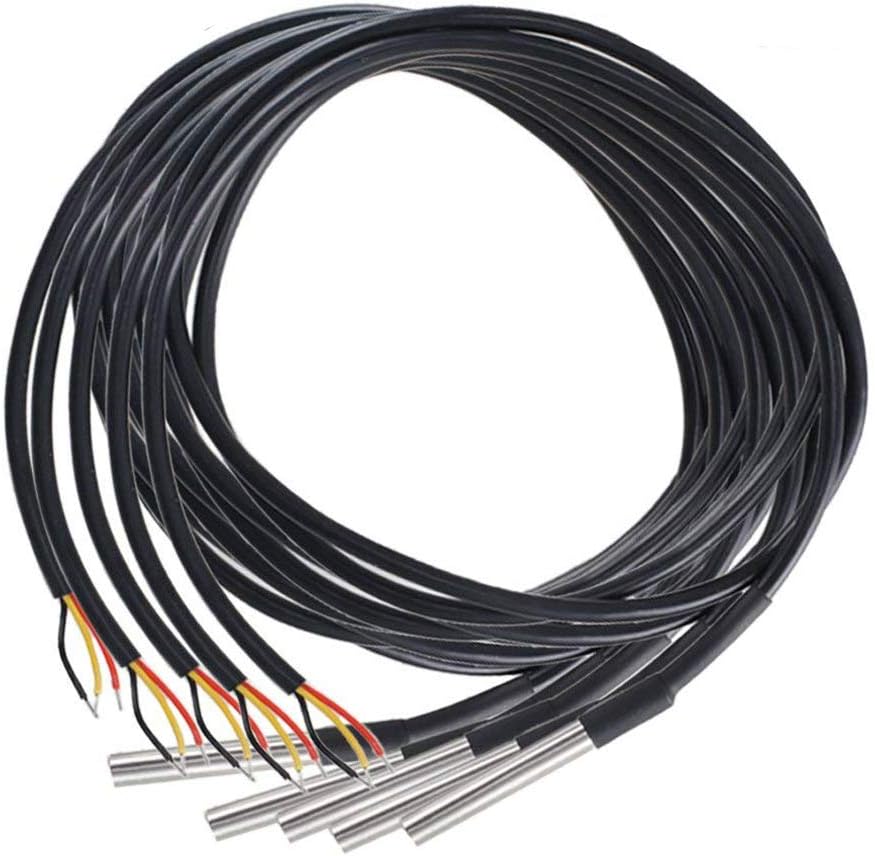
The AHT30 module stands out as a top choice for users needing precise environmental data. With a perfect user rating and I2C communication, it simplifies wiring while delivering accurate temperature and humidity readings for reliable project performance.
We may earn a commission when you buy through this link, at no additional cost to you.
Its key strengths include a wide temperature range of -40 to 85C and an impressive accuracy of +/- 0.3C. The I2C interface allows multiple sensors on one bus, making it ideal for complex setups requiring multiple measurement points across a single system.
While it costs more than basic DHT models, the improved accuracy and faster transmission speed justify the expense. The trade-off is a lower maximum temperature limit compared to industrial sensors, but this fits most standard indoor and outdoor applications effectively.
Buy this if you need high accuracy and multi-sensor capabilities for weather stations or smart home automation. It is highly recommended for intermediate to advanced users who value reliable data and simplified I2C integration.
The I2C interface enables easy connection of multiple sensors without pin conflicts, simplifying circuit design and reducing wiring complexity significantly.
Operating between 2.0V and 5.5V ensures compatibility with most microcontrollers and batteries, offering flexibility for diverse power setups.
We may earn a commission when you buy through this link, at no additional cost to you.
The HiLetgo DHT11 bundle offers an excellent entry point for beginners learning about environmental sensors. Priced affordably, it includes five units and necessary wiring, making it a cost-effective solution for classroom projects or multiple prototype builds.
We may earn a commission when you buy through this link, at no additional cost to you.
Its main advantage is the simplified single-wire wiring scheme that reduces programming effort. The digital output eliminates the need for analog-to-digital conversion, ensuring quick integration with Arduino boards and straightforward code implementation for basic monitoring tasks.
However, the DHT11 has a narrower temperature range of 0 to 50C and lower accuracy compared to newer sensors. This limits its use in extreme environments but is acceptable for general indoor applications like room temperature monitoring.
Buy this for educational purposes or projects with tight budgets. It is ideal for hobbyists who need multiple sensors for different stations and do not require high precision or extreme temperature tolerance.
The single-wire protocol minimizes wiring complexity, allowing users to connect the sensor to a single digital pin for data transmission.
Getting five sensors with included cables provides exceptional value, enabling multiple projects or spare parts without extra expenses.
We may earn a commission when you buy through this link, at no additional cost to you.
The Gikfun DS18B20 waterproof set is perfect for industrial or outdoor monitoring where environmental durability is key. Its stainless steel probe and wide temperature range make it suitable for harsh conditions that would damage standard plastic sensors.
We may earn a commission when you buy through this link, at no additional cost to you.
Its standout feature is the ability to measure temperatures from -55 to 125C accurately. The included adapter module simplifies wiring with onboard pull-up resistors, allowing direct connection to most microcontrollers without external components.
The trade-off is the need for careful handling of the waterproof seal and slightly slower read speeds compared to I2C sensors. However, these are minor issues compared to the robustness required for aquariums or machinery monitoring projects.
Buy this for applications involving liquids, high heat, or industrial environments. It is recommended for users needing a reliable, rugged sensor for continuous monitoring in challenging conditions.
The stainless steel probe is sealed against moisture, making it safe for submersion or exposure to humid and wet environments.
Measuring from -55 to 125C covers almost all standard industrial and outdoor scenarios, ensuring versatility across different climates.
We may earn a commission when you buy through this link, at no additional cost to you.
The Teyleten Robot SHT31 module delivers professional-grade accuracy for demanding environmental monitoring tasks. With a rating of 4.7, it is trusted for applications where precise data is critical for system performance or safety.
We may earn a commission when you buy through this link, at no additional cost to you.
It excels with a temperature range of -40 to 125C and humidity sensing up to 100%. The I2C interface allows multiple sensors on a single bus, making it easy to build complex networks for multi-point monitoring.
The main drawback is a higher cost compared to entry-level sensors, and it requires basic knowledge of I2C protocols. However, the accuracy and versatility justify the investment for serious projects requiring reliable data.
Buy this for climate control systems, greenhouses, or scientific projects. It is best for users who need precise readings and can utilize the benefits of the I2C interface.
Achieving +/- 0.3C accuracy ensures that critical temperature thresholds are met, providing confidence in automated control systems.
Operating from 2.4V to 5.5V allows use with various power supplies and microcontrollers, reducing the need for voltage regulators.
We may earn a commission when you buy through this link, at no additional cost to you.
The WWZMDiB DS18B20 probes are designed specifically for underwater or wet environments. With a rating of 4.4, they provide reliable temperature readings in aquaculture, aquariums, or industrial water monitoring systems.
We may earn a commission when you buy through this link, at no additional cost to you.
Its key strength is the ability to operate safely in wet conditions while offering a wide temperature range of -55 to 125C. The inclusion of 4.7K resistors simplifies the setup, reducing the need for additional components.
The trade-off is the need to ensure seals are intact during installation to prevent water damage. Additionally, read times may be slightly longer than other digital sensors, but this is negligible for most monitoring applications.
Buy this for aquariums, hydroponics, or industrial fluid monitoring. It is ideal for users needing durable probes that can handle continuous exposure to moisture.
The waterproof design ensures safe operation in submerged environments, making it a reliable choice for aquatic temperature monitoring.
Including resistors with the probes reduces the total part count and simplifies assembly for beginners and seasoned builders alike.
We may earn a commission when you buy through this link, at no additional cost to you.
The HiLetgo DHT11 2-pack is an excellent starting point for those new to Arduino sensors. Its simple digital output and bundled wires make it easy to plug into any prototyping board without additional hardware.
We may earn a commission when you buy through this link, at no additional cost to you.
Its main advantage is the simplicity of the single-wire interface and well-documented code examples available for most platforms. This ensures beginners can quickly get their first environmental monitor up and running with minimal frustration.
The main trade-off is a limited temperature range of 0 to 50C and a slower update rate compared to modern sensors. However, for classroom projects or basic indoor monitoring, these limitations are usually acceptable.
Buy this for educational kits or introductory electronics classes. It is best for users who prioritize ease of use and cost over extreme precision or industrial durability.
With wires included and simple wiring diagrams, this sensor removes barriers for those just starting with microcontroller projects.
While limited in range, it provides stable indoor readings that are sufficient for most hobbyist weather stations and smart home sensors.
We may earn a commission when you buy through this link, at no additional cost to you.
The DROK DS18B20 kit is highly rated for outdoor and industrial applications. With a near-perfect user rating of 4.9, it proves reliable in harsh conditions like rain, snow, or extreme temperature fluctuations.
We may earn a commission when you buy through this link, at no additional cost to you.
Its standout feature is the stainless steel waterproof probe combined with included adapter boards and jumper wires. This ensures quick deployment in outdoor weather stations or agricultural monitoring systems without extra components.
The main trade-off is the need to ensure proper sealing and the slower read time typical of 1-Wire sensors. However, the robust build quality and accuracy make it a top choice for continuous outdoor monitoring.
Buy this for agricultural projects, weather stations, or industrial monitoring. It is best for users needing reliable performance in exposed or wet environments.
The corrosion-resistant steel probe protects the sensor from physical damage and moisture, ensuring long-term reliability outdoors.
Including adapter boards and resistors reduces setup time, allowing you to focus on coding and deployment rather than sourcing parts.
We may earn a commission when you buy through this link, at no additional cost to you.
The Gikfun 5-pack of 1-meter DS18B20 probes is ideal for covering large areas or multiple zones. With a 4.5 rating, it is a preferred choice for projects needing extensive temperature mapping like greenhouses or server racks.
We may earn a commission when you buy through this link, at no additional cost to you.
Its key strength is the one-meter waterproof probe length, which allows placement in hard-to-reach or remote areas without additional cables. The single-bus interface supports multiple sensors on one pin, simplifying complex wiring setups.
The main trade-off is the need for an external pull-up resistor and slightly longer read times. However, the durability and coverage provided make it an excellent value for large-scale monitoring projects.
Buy this for extensive monitoring networks or projects requiring long sensor cables. It is best for users needing to measure temperature across large or multi-zone environments efficiently.
One-meter cables allow flexible placement, reaching deep into tanks or across wide spaces without additional splicing.
With five probes included, you can track temperature in multiple locations simultaneously, enabling comprehensive environmental data.
We may earn a commission when you buy through this link, at no additional cost to you.
The HiLetgo DHT22 offers a significant upgrade over the DHT11 with higher accuracy and wider ranges. Its 4.4 rating reflects reliability for users needing better precision without moving to industrial-grade modules.
We may earn a commission when you buy through this link, at no additional cost to you.
Its standout features include a temperature range of -40 to 80C and full 0 to 100% humidity sensing. The single-bus digital signal simplifies wiring while providing more reliable data for climate control systems.
The trade-off is a higher cost and slower update rate compared to some newer sensors. However, for most home automation and weather station projects, the balance of performance and price is highly favorable.
Buy this for home automation or better accuracy than basic models. It is best for users who need reliable humidity data alongside temperature in standard indoor environments.
The DHT22 improves on the DHT11 with tighter tolerances, providing more confidence in your climate measurements and control logic.
Measuring from 0 to 100% humidity ensures accuracy in both dry and very moist environments, making it versatile for diverse settings.
We may earn a commission when you buy through this link, at no additional cost to you.
The HiLetgo 5-pack of DS18B20 sensors provides exceptional value for projects needing multiple waterproof units. With a 4.5 rating, it is a practical choice for users wanting quality without paying premium prices.
We may earn a commission when you buy through this link, at no additional cost to you.
Its main advantage is the combination of stainless steel waterproof probes and a one-meter length, suitable for harsh environments. The single-bus interface simplifies wiring, while the wide temperature range ensures versatility.
The trade-off is the need for an external pull-up resistor for stable operation. However, for bulk projects, the cost savings and reliability make it a top value option for temperature monitoring.
Buy this for multiple sensor deployments or budget-conscious projects. It is best for users needing several waterproof probes for large monitoring networks.
Five waterproof sensors in one package reduce the per-unit cost, making it ideal for multi-point monitoring projects.
The stainless steel probe ensures durability against water and physical wear, making it suitable for tough environments.
We may earn a commission when you buy through this link, at no additional cost to you.
Choosing the right temperature sensor depends on your project needs, environmental conditions, and required accuracy. The following factors help you compare options effectively.
Accuracy is critical for applications where precise data is required. Industrial projects often need sensors with +/- 0.3C or better, while basic indoor monitoring can tolerate +/- 2C or more.
Prioritize models with tighter tolerances if your project relies on precise climate control or safety thresholds.
Ensure the sensor covers your expected environmental conditions. Many modules operate from -40C to 85C, but industrial-grade probes can handle up to 125C or lower.
Check the range specification to avoid failures in extreme cold or high-temperature settings.
Common protocols include 1-Wire, I2C, and single-wire digital outputs. I2C allows multiple sensors on one bus, while 1-Wire is simpler but slightly slower.
Select a protocol that matches your board's available pins and complexity tolerance.
Waterproof stainless steel probes are essential for wet or outdoor applications. Plastic modules are fine for indoor use but may fail under moisture exposure.
Choose waterproof variants for outdoor, aquarium, or industrial monitoring.
Most sensors operate between 3.3V and 5.5V, but some models support wider ranges. Lower power consumption is important for battery-powered projects.
Verify voltage compatibility with your microcontroller and power source.
Modules with onboard pull-up resistors simplify wiring and reduce component counts. Some models include jumper wires and adapters for quick setup.
Look for bundles that include necessary resistors and cables to save time.
Pricing often improves when buying in bundles of five or more. Compare per-unit costs to find the best value for your project scale.
Consider buying extra units for spares or future expansion.
Well-documented libraries exist for popular sensors like DHT11 and DS18B20. Ensure libraries are compatible with your Arduino IDE version.
Check community support and example code availability before purchasing.
Connect the sensor wires to the appropriate pins on your Arduino board. For I2C sensors, use SDA and SCL pins; for 1-Wire, use a digital data pin with a pull-up resistor.
Install the required library for your sensor in the Arduino IDE. Use example sketches to test communication and read initial data before implementing custom code.
For waterproof probes, ensure seals remain intact during installation. Avoid bending cables sharply, and clean probes regularly to prevent buildup that could affect readings.
The SHT31 and AHT30 offer the highest accuracy at +/- 0.3C. They are ideal for scientific or precise industrial monitoring where tight tolerances matter. Basic DHT11 is less accurate but sufficient for casual use.
DHT22 offers wider temperature ranges, higher accuracy, and full humidity sensing compared to DHT11. It updates slower but provides better data quality for home automation and weather stations.
Yes, waterproof DS18B20 probes are designed for submersion. Ensure the stainless steel casing is intact and seals are secure to prevent water damage during prolonged use.
DS18B20 and 1-Wire sensors require a 4.7K pull-up resistor for stable operation. Some adapter modules include this onboard, but you may need to add it separately otherwise.
I2C sensors support multiple units on one bus via unique addresses. DS18B20 1-Wire sensors can connect up to 128 units on a single data line.
The AHT30 or DHT22 are great for general weather monitoring. For extreme durability, the DROK DS18B20 waterproof probe handles harsh conditions well.
DHT11, DHT22, SHT31, and AHT30 measure both temperature and humidity. DS18B20 measures temperature only, so add a separate sensor if humidity is needed.
The DHT11 is the easiest to start with due to simple wiring and abundant code examples. Its lower cost also makes it ideal for classroom projects.
The top picks cover a range of needs from budget-friendly DHT models to industrial-grade DS18B20 probes. Each offers unique benefits depending on your project's accuracy and environmental requirements.
Prioritize accuracy and waterproofing for critical applications, or choose cost-effective bundles for educational use. The I2C models are great for scalability in larger monitoring networks.
Remember to check current product availability and specs before buying. Conditions and prices may change, so verify details directly with the seller to ensure compatibility.