
Digital Barometer Weather Forecast Clock
4.3Editor score
Compact four-inch display
Manual pressure calibration
Battery powered operation
A digital barometer provides essential weather insights by tracking atmospheric pressure changes. These devices help users anticipate shifts in conditions quickly. Choosing the right model ensures reliable data for planning outdoor activities or managing indoor environments effectively.
We evaluated ten leading digital barometers based on accuracy, display quality, and connectivity options. Our analysis considers user feedback, technical specifications, and real-world performance. This list covers diverse needs from basic home monitoring to advanced professional applications requiring precise calibration.
Each selection highlights unique strengths like atomic time sync or wireless sensor support. Prices and availability fluctuate frequently across online retailers. Always verify current details before purchasing to ensure you get the best value and features for your specific requirements today.
4.3Editor score

4.7Editor score
5.0Editor score
As an Amazon Associate we earn from qualifying purchases.
This side-by-side comparison highlights key specifications across all ten selected digital barometer models. Reviewing these details helps identify which device matches your specific monitoring needs and environment requirements best.


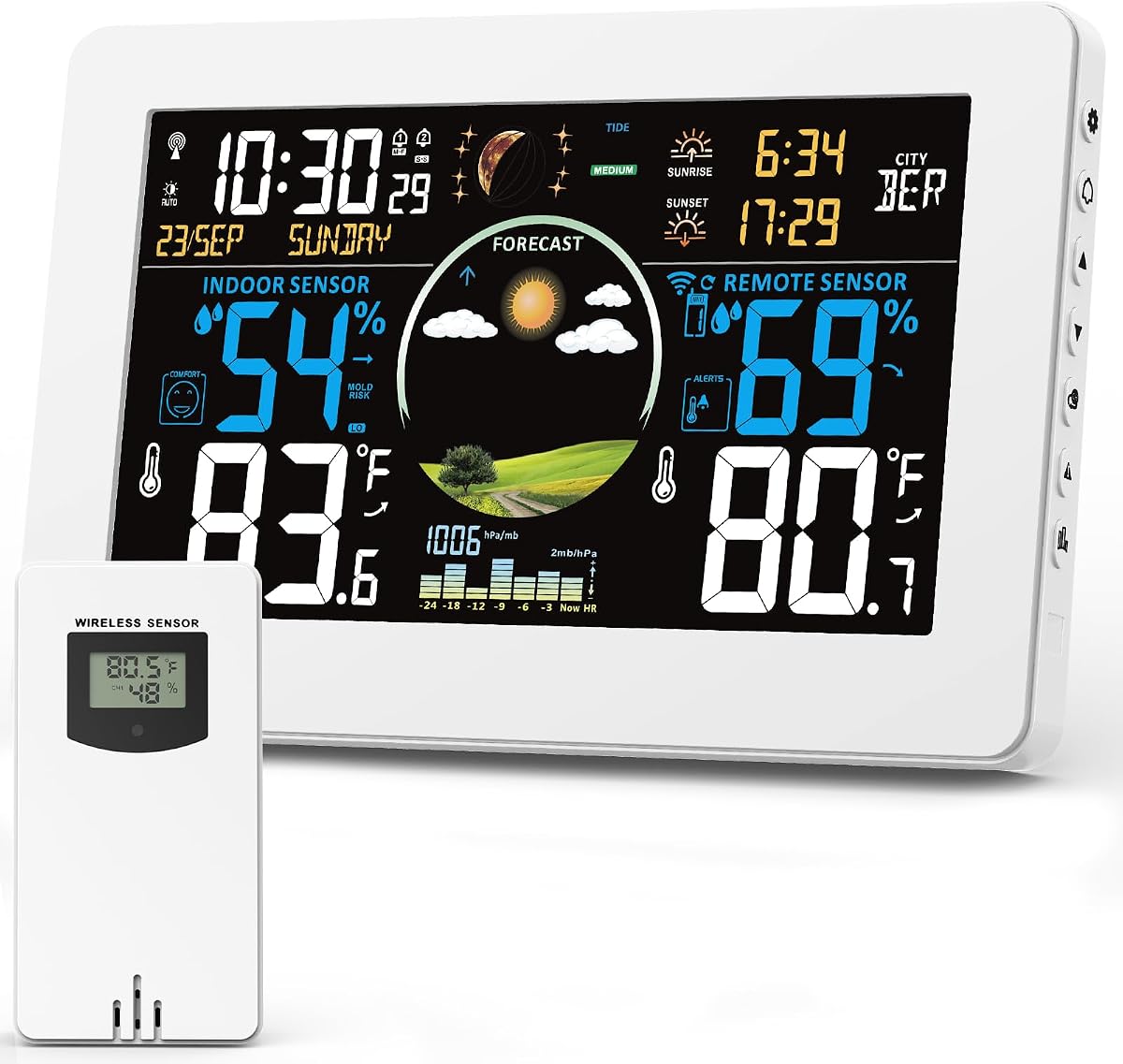
The Newentor Weather Station combines essential weather data with a vibrant color display for easy home monitoring. It holds a solid four point three star rating from users who appreciate its comprehensive feature set and straightforward setup process.
We may earn a commission when you buy through this link, at no additional cost to you.
This unit tracks indoor and outdoor temperature and humidity with a single included remote sensor. The large LCD screen presents all critical data clearly, including daily high and low records, weather forecasts, and barometric pressure trends. You can connect it to a wall outlet for constant display or rely on battery power with an energy-saving mode.
While the battery-only mode dims the screen quickly to save power, the constant-on option ensures visibility at all times. The wireless forecast relies on pressure trends and may require a week of calibration for optimal accuracy. This trade-off is acceptable for most home users seeking a reliable overview of local conditions.
This station is ideal for families wanting a central hub for weather and time. It serves well in living rooms or bedrooms where visual clarity matters. If you need consistent visibility without dimming, plug it into a power outlet for best results.
The color LCD presents data clearly even from a distance. This makes checking weather trends quick and easy without squinting at small text.
Choose between constant AC power or battery backup. The eco-mode saves energy when plugged in is not needed all day.
We may earn a commission when you buy through this link, at no additional cost to you.
The Traceable Calibrated Digital Barometer stands out for professionals needing verified pressure measurements. With a four point seven star rating, it delivers precision suitable for labs or critical environmental monitoring where standard home devices may fall short.
We may earn a commission when you buy through this link, at no additional cost to you.
This device measures pressure, temperature, and humidity with high resolution. It includes a NIST-traceable calibration certificate ensuring reliable readings. Users can set audible and visual alarms for threshold breaches and save hourly max and min data for internal review or reporting.
The specialized nature of this barometer means it costs more than consumer models. However, the included software allows PC data capture from up to eight units simultaneously. This capability justifies the investment for settings requiring documented accuracy and trend analysis.
Choose this model if you work in agriculture, scientific research, or quality control. It excels where regulatory compliance or precise tracking is necessary. Standard home users might find its features excessive but appreciate the reliability it offers.
The NIST-traceable certificate ensures measurements meet industry standards. This is vital for professional applications requiring documented precision.
Optional software connects the barometer to your PC. You can export, print, or merge data into reports easily.
We may earn a commission when you buy through this link, at no additional cost to you.
This wireless barometric pressure station offers extensive range for remote sensor placement. Its four point three star rating reflects satisfaction with its ability to monitor conditions across large properties or distant outbuildings effectively without signal loss.
We may earn a commission when you buy through this link, at no additional cost to you.
The unit connects to sensors up to three hundred thirty feet away in clear conditions. It displays indoor and outdoor metrics alongside barometric pressure trends and a twenty-four hour historical graph. Atomic time synchronization ensures the clock stays accurate without manual adjustment.
Powering the system requires several batteries for both base and sensor units. The display uses a standard LCD rather than color, which keeps costs lower but reduces visual appeal slightly. These factors suit practical users focused on function over form.
Ideal for rural homes or large estates where sensors need to be far from the display. The long-range transmission ensures reliable data collection even in challenging layouts. If signal strength is a priority, this model delivers consistent performance.
The three hundred thirty foot range allows flexible sensor placement. Monitor sheds, garages, or distant garden areas easily.
Review the past twenty-four hours of pressure data. This helps identify trends that predict weather changes more accurately.
We may earn a commission when you buy through this link, at no additional cost to you.
The DreamSky Weather Station delivers a robust feature set at an accessible price. Users rate it four point four stars for its readability and reliable atomic timekeeping, making it a strong contender for general home weather monitoring needs.
We may earn a commission when you buy through this link, at no additional cost to you.
Its large colorful display shows time, temperature, humidity, and forecasts clearly. A built-in USB port allows handy device charging while the weather station runs on AC power. The backlight offers five brightness levels so you can adjust intensity to suit your room lighting.
The included single sensor covers basic needs but supports up to three total if needed. While battery power dims the screen to save energy, the constant AC option keeps it bright. This dual power design offers flexibility for placement anywhere in your home.
Choose this unit if you want a modern look with essential smart features. It works well as a bedside clock or kitchen hub. The USB port adds utility beyond weather tracking, enhancing its value for daily household use.
Charge your phone or tablet directly from the station. This saves outlet space and keeps devices powered near the display.
Set brightness to match your environment. Avoid sleep disruption with dimmer settings while keeping data readable during the day.
We may earn a commission when you buy through this link, at no additional cost to you.
This compact barometer clock focuses on essential pressure and temperature tracking without complex features. It holds a four point three star rating for its straightforward operation and ability to provide local pressure readings that match real-time conditions.
We may earn a commission when you buy through this link, at no additional cost to you.
The four-inch display presents time, temperature, humidity, and local pressure on one screen. You can calibrate the pressure manually to match local airport reports if needed. Controls are located on the front, making setup intuitive without reaching around the unit.
Lack of wireless sensors means it only monitors the immediate location. However, this simplicity keeps costs low and setup minimal. It fits well on a desk or wall in offices, garages, or workshops where space is limited and focus is key.
Select this model if you want basic pressure tracking without extra complexity. It is perfect for small spaces or secondary locations where a full weather station is unnecessary. The manual calibration ensures your local data stays accurate over time.
Adjust the pressure reading to match local conditions. This ensures the data reflects your specific altitude and environment accurately.
Use the built-in stand or mount on a wall. Flexible positioning lets you place it exactly where needed.
We may earn a commission when you buy through this link, at no additional cost to you.
The BTMETER BT-100WM is a portable device designed for outdoor professionals and enthusiasts. Its four point one star rating reflects user appreciation for its versatility in measuring wind speed, pressure, and altitude in field conditions where fixed units cannot go.
We may earn a commission when you buy through this link, at no additional cost to you.
This handheld unit captures multiple weather parameters including wind chill, dew point, and barometric pressure. It logs up to sixteen data groups for later analysis. A built-in tripod hole allows stable mounting when taking readings without holding the device manually.
The compact size makes it easy to carry during activities like sailing or hiking. However, it lacks the passive monitoring of a fixed station. You must hold or mount it to get readings, which suits active data collection better than constant home monitoring.
Ideal for photographers, drone pilots, or sailors needing on-the-spot environmental data. Its logging feature helps analyze trends during a single outing. If you need a mobile weather companion, this tool delivers reliable readings in varied conditions.
Save multiple data sets for comparison. Review how conditions changed throughout an outdoor activity or project phase.
Switch between mph, km/h, knots, and more. Flexible units suit different industries or personal preferences easily.
We may earn a commission when you buy through this link, at no additional cost to you.
This weather station emphasizes accuracy through its high-precision Swiss-made sensor. Users rate it four point two stars for the stability of its readings and the reliability of its wireless transmission across typical home distances.
We may earn a commission when you buy through this link, at no additional cost to you.
The system tracks temperature, humidity, and barometric history. A USB cable powers the main unit continuously while the sensor runs on batteries. The four point five inch display uses bold text for clear readability from across the room.
Wireless technology ensures steady data transmission without interference. However, the monochrome display lacks the visual pop of color models. This trade-off supports reliability and battery life, appealing to users who prioritize data integrity over aesthetics.
Choose this station if sensor accuracy is your top concern. It works well in environments where precise monitoring affects decisions like HVAC settings or plant care. The barometric chart helps track trends over time effectively.
Swiss engineering ensures stable temperature and humidity readings. This reduces fluctuation and increases trust in displayed data.
Patented transmission keeps data steady across rooms. Consistent updates mean you see real-time changes without lag.
We may earn a commission when you buy through this link, at no additional cost to you.
La Crosse Technology offers a reliable color weather station with dynamic forecast visuals. The four point four star rating highlights user satisfaction with its display quality and the brand's reputation for consistent performance in home weather tracking.
We may earn a commission when you buy through this link, at no additional cost to you.
This model shows indoor and outdoor temperature and humidity with custom alerts. The color screen makes icons and graphs easy to interpret. It also tracks dew point and heat index for a more complete environmental picture.
Barometric calibration requires seven to ten days for maximum accuracy. Without a power adapter, the backlight turns off to save energy unless you buy batteries. These details suit users who want visual clarity without complex setup procedures.
Ideal for households wanting an attractive display that informs at a glance. It works well in common areas like living rooms or kitchens. If color visuals help you check weather quickly, this model delivers a pleasing experience.
Visual arrows show pressure trends clearly. This simplifies weather prediction without reading raw numbers.
See dew point and heat index alongside temp. These extra details improve comfort planning during humid days.
We may earn a commission when you buy through this link, at no additional cost to you.
This premium weather station features a massive seven point five inch high-definition screen for maximum visibility. It holds a perfect five star rating, indicating users love its vivid display and accurate hyperlocal weather predictions for daily planning.
We may earn a commission when you buy through this link, at no additional cost to you.
The interface separates data into clear zones for temperature, pressure, and forecast. Atomic clock synchronization keeps time precise without manual changes. You can connect up to three wireless sensors to monitor multiple zones across your property.
The screen stays bright only when plugged into AC power, saving battery life when using portable mode. While the unit is larger than basic models, the clarity it offers justifies the space. This fits modern homes with high-end tech expectations.
Choose this model if visual quality and comprehensive data are priorities. It excels in living areas where a large display serves as a centerpiece. The detailed forecasting supports confident planning for daily activities and travel.
Seven point five inches provide wide viewing angles. Everyone in the room can see data clearly without moving closer.
Predictions cover your specific eight to twelve mile radius. This tailors weather advice to your exact location.
We may earn a commission when you buy through this link, at no additional cost to you.
Taylor brings over a century of experience to this wireless weather station. With a four point one star rating, it delivers dependable readings for users who prioritize brand reliability and straightforward operation over advanced visual features.
We may earn a commission when you buy through this link, at no additional cost to you.
It includes a remote sensor with a two hundred foot transmission range. The display shows indoor and outdoor temperatures alongside barometric pressure history. A built-in timer adds convenience for tracking short-term tasks alongside weather monitoring.
Temperature extremes are supported well, handling deep winter cold to summer heat with proper batteries. However, its design remains simple without color or complex graphs. This suits utility-focused spaces like greenhouses or workshops where function matters most.
Ideal for those who trust traditional brands and need a no-nonsense station. It works well where basic data is sufficient for routine checks. The timer adds practical value for work areas needing quick time references.
Taylor has built instruments since 1851. This history supports confidence in long-term accuracy and durability.
Track cooking or drying times alongside weather data. Extra utility makes this unit useful beyond just weather monitoring.
We may earn a commission when you buy through this link, at no additional cost to you.
Selecting the right digital barometer depends on your specific needs and environment. Consider these factors to ensure the device fits your goals.
Digital barometers come with various screen options from simple LCDs to vibrant color displays. Larger screens offer easier readability from a distance but require more physical space on a shelf or wall. Consider how you interact with the unit; if you glance occasionally, a standard screen works. If frequent viewing is needed, an illuminated color panel may be worth the extra cost.
Prioritize a display size that matches your room layout. Ensure it remains visible without straining your eyes in common lighting conditions.
Accuracy varies significantly between consumer and professional models. Basic home units rely on pressure trends for forecasts which may need days to stabilize. Professional models often include NIST-traceable certificates for verified readings essential for labs or regulated environments. Check if the device allows manual calibration to match local airport data.
Look for calibration options if precise local pressure is critical for your tasks. Professional applications should prioritize certified accuracy over cost savings.
Most digital barometers run on batteries or AC power. Battery-only units save installation time but often dim the display to conserve energy. AC-powered models maintain constant brightness and may offer backup battery slots for outage continuity. Consider how much screen visibility you need versus installation convenience.
Choose AC power for constant visibility and battery backup for uninterrupted operation during outages. Battery operation suits secondary locations where dimming is acceptable.
Wireless range determines how far sensors can be placed from the main unit. Ranges vary from two hundred to over three hundred feet depending on obstructions. If you need to monitor detached buildings or distant yards, ensure the model supports extended transmission distances. Interference from walls can reduce effective range significantly.
Verify range claims based on your home layout. Place the base unit centrally to maximize coverage for outdoor sensors.
Modern barometers often include extra tools like atomic clocks, USB ports, or PC software integration. Advanced models allow data logging for trend analysis or connect to smart home systems. Decide which extras add value versus complexity. Simple units suffice for casual checking but may lack utility for detailed monitoring.
Select features that align with daily usage. If you want to track historical trends, choose a model with logging capabilities.
Durability matters if the unit will be placed in harsh environments like workshops or greenhouses. Look for moisture-resistant designs if humidity is high. Temperature tolerance ranges also differ; extreme cold or heat may require specialized lithium batteries or ruggedized housing for reliable operation.
Match device durability to your placement environment. Protected indoor areas need less ruggedness than garages or outdoor patios.
Ease of use impacts daily satisfaction. Some devices use front buttons for quick adjustments while others rely on menus that take time to navigate. Check if settings like time or units are easy to change. Intuitive controls reduce setup frustration and ensure you access data quickly when needed.
Opt for a model with straightforward controls for daily convenience. Complex menus may deter regular use in fast-paced settings.
Reputable manufacturers often provide technical support and warranty coverage. Check if software updates are available for connected models. A longer warranty suggests confidence in build quality. Responsive support can be crucial if issues arise with wireless connections or calibration.
Prioritize brands with strong support networks and clear warranty terms. This protects your investment against potential hardware failures.
Place your digital barometer in a stable indoor location away from direct sunlight or drafts. Extreme temperature shifts or drafts can affect sensor accuracy. Ensure the unit sits flat on a surface or is securely mounted on a wall to prevent physical damage.
Allow at least seven to ten days for initial calibration. During this period, the device adjusts to your local atmospheric pressure. Do not rely on forecasts until this period concludes for the most accurate predictions of local conditions.
Clean the display with a soft dry cloth to avoid scratches. Avoid using liquid cleaners directly on the screen. Check batteries periodically and replace them promptly to maintain continuous operation and prevent data loss.
A digital barometer predicts weather by tracking changes in atmospheric pressure over time. Rising pressure usually signals clear skies while falling pressure indicates storms are approaching. Combining this with temperature and humidity data improves forecast accuracy significantly for your local area.
Manual calibration is optional but recommended for precise local readings. Compare your unit to a trusted local source like an airport report. Adjusting the offset ensures your data matches real-world conditions for better forecasting and monitoring consistency.
Wireless range depends on physical obstructions like walls or metal structures. Signals weaken when passing through multiple barriers. Place the main unit centrally to maximize coverage. Interference from other electronics can also reduce effective transmission distance.
Most base units are designed for indoor use only. Exposure to rain or direct sunlight can damage electronics and sensors. Outdoor sensors are weather-resistant but must be placed in shaded areas to ensure accurate temperature and pressure readings.
Forecasts fluctuate as the barometer recalibrates based on real-time pressure changes. Rapid shifts indicate unstable weather systems. Allow the unit several days to stabilize so forecasts reflect consistent trends rather than temporary pressure variations.
Battery life varies by usage and backlight settings. Using the display constantly drains batteries faster than dimmed modes. Expect several months to a year of standard use before replacements are needed for alkaline batteries.
We reviewed ten digital barometer models ranging from basic budget options to premium professional tools. Each offers unique strengths depending on whether you prioritize display size, accuracy, or wireless flexibility for your needs.
When choosing, identify your primary use case first. Professional work requires certified accuracy while home users benefit from large color displays and wireless convenience for comprehensive daily monitoring.
Always check current availability and compatibility before purchasing. Prices and stock vary by region and retailer so verify details to ensure you select the model that fits your specific environment best.