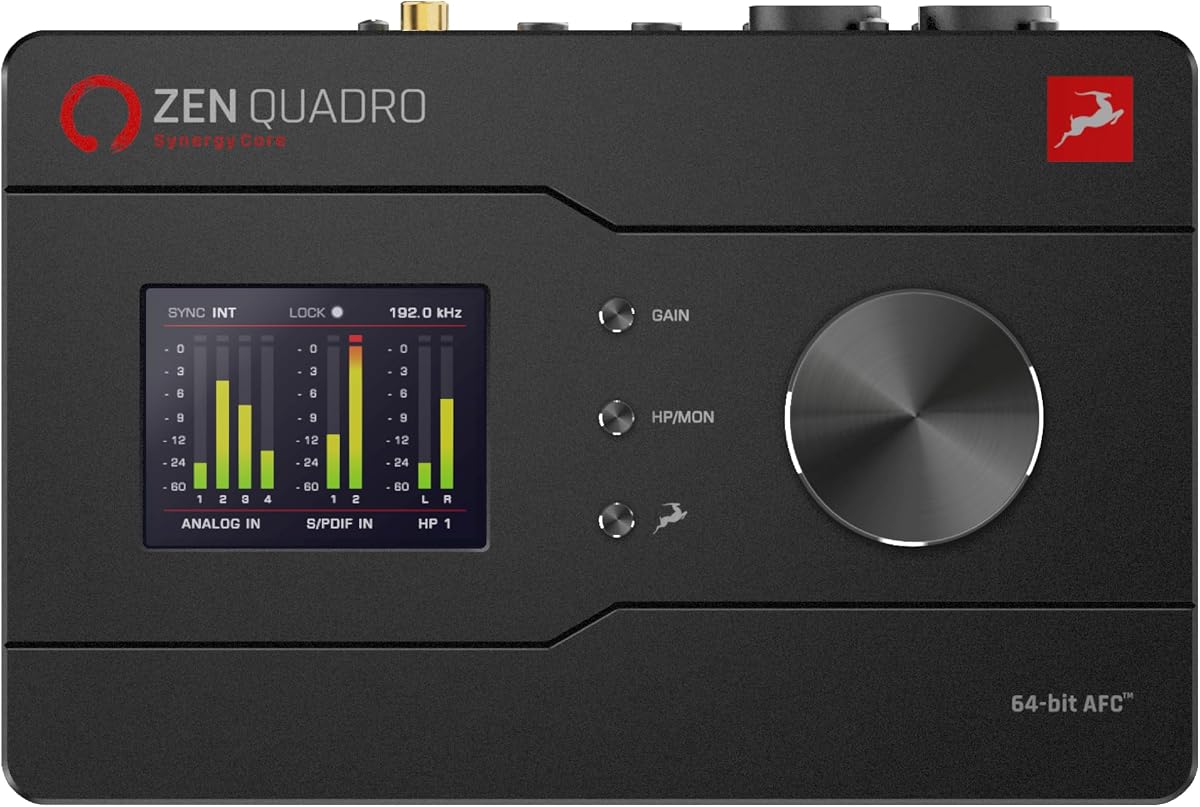
Antelope Audio Zen Quadro Audio Interface with Synergy Core Real-Time FX
4.7Editor score
Real-time Synergy Core FX
Dual USB-C ports
14-in 10-out expandable
This guide compares the top audio interfaces with built in dsp for recording, mixing, and streaming, highlighting latency performance and onboard effects
Choosing the right audio interface is crucial for musicians and content creators who demand professional sound quality. Interfaces with built in dsp allow you to process signals in real time without taxing your computer CPU, ensuring smooth workflows.
We evaluated ten leading models based on sound quality, latency performance, onboard effects, and connectivity. Our analysis focuses on how well each device handles recording, monitoring, and live streaming tasks across various budgets.
Each pick showcases specific strengths like preamp quality, software bundles, or unique features such as touchscreens. Note that pricing and availability may change, so verify current details before purchasing your next interface.
4.7Editor score

4.6Editor score

4.3Editor score
The following table provides a side-by-side comparison of all ten models, detailing key specifications like dynamic range, input counts, and special features to help you decide quickly.




The Focusrite Scarlett Solo 4th Gen USB-C Audio Interface stands out as a top choice for solo artists and streamers. With a 4.6 rating, it delivers studio-quality sound through converters used in flagship interfaces. Its improved Air mode adds presence to vocals, making recordings sound polished immediately.
We may earn a commission when you buy through this link, at no additional cost to you.
Key strengths include the huge 120dB dynamic range and the inclusion of industry-leading software like Pro Tools Intro and Ableton Live Lite. The Air mode is particularly useful for vocals and guitars, adding harmonic drive. The compact design ensures it fits on any desk without taking up much space.
Trade-offs involve the limited number of inputs, which might not suit larger bands. However, for solo work, it is sufficient. The software bundle is excellent, providing essential tools to start recording right away without extra costs.
This interface is ideal for songwriters and podcasters needing professional sound. Its reliability and ease of use make it a solid recommendation for those starting out or upgrading from older models.
Converters match those in flagship interfaces, ensuring wide dynamic range and low distortion for pristine recordings.
Air mode lifts vocals and guitars to the front of the mix, adding rich harmonic drive and presence.
We may earn a commission when you buy through this link, at no additional cost to you.
The Antelope Audio Zen Quadro Audio Interface with Synergy Core Real-Time FX is a powerhouse for professionals needing top-tier DSP. With a 4.7 rating, it features 37 included effects running on dedicated hardware for near-zero latency. This allows tracking through emulations without CPU load.
We may earn a commission when you buy through this link, at no additional cost to you.
Its flagshipsound and clocking use 64-bit AFC technology trusted by Grammy-winning engineers. The 130 dB dynamic range ensures pristine conversion. Dual USB-C ports enable flexible workflows, connecting a computer and phone simultaneously for modern creator needs.
Trade-offs include the higher price point and potentially complex setup for beginners. However, the expandable I/O and standalone presets for stage and mobile make it versatile. The hardware-based effects are a significant advantage for live monitoring.
This interface is perfect for engineers and serious musicians wanting studio-grade sound. The combination of portability and power makes it a standout choice for those needing professional DSP capabilities.
Track through analog-modeled compressors and EQs on dedicated DSP hardware for near-zero latency recording.
Add up to 8 channels over ADAT and route audio through dedicated monitor and line outputs easily.
We may earn a commission when you buy through this link, at no additional cost to you.
The Elgato Wave XLR MK.2 USB Audio Interface and DSP Mixer is designed for streamers and content creators needing easy audio control. With a 4.3 rating, it offers ultra-low-latency monitoring and a massive 80dB gain for any XLR mic. The touch controls make adjustments quick and intuitive.
We may earn a commission when you buy through this link, at no additional cost to you.
Key features include the Wave FX Processor that unifies DSP effects and VST plugins in one signal chain. The LED feedback allows you to see levels and status at a glance. It integrates natively with the Wave Link App for precise routing.
Trade-offs involve the lack of instrument inputs and a focus on PC workflows. However, for podcasting and streaming, it excels. The touch control with LED feedback ensures you never lose track of your audio levels during live sessions.
This interface is ideal for streamers needing simple, effective audio control. Its design prioritizes ease of use and visual feedback, making it a great entry point for content creators.
Experience monitoring like never before with 24bit 48kHz resolution so you hear what your audience hears.
Natively integrated for precise routing, effects, and monitoring to control your audio easily.
We may earn a commission when you buy through this link, at no additional cost to you.
The Universal Audio Apollo Twin X QUAD Gen 2 with UAD Analog Classics Pro Thunderbolt 3 Audio Interface offers access to a massive library of DSP plugins. With a 4.0 rating, it lets you record through authentic emulations of Neve, API, and Avalon hardware using Unison preamps.
We may earn a commission when you buy through this link, at no additional cost to you.
It features the widest dynamic range and lowest distortion of any Apollo unit. The Monitor Correction powered by Sonarworks ensures mixes translate well in any room. Auto-Gain allows you to set levels quickly across inputs.
Trade-offs include the high cost and reliance on Thunderbolt 3, which might not be available on all computers. However, the plugin library is unmatched for professional workflows. The analog emulations provide a classic warmth difficult to achieve elsewhere.
This interface is perfect for producers needing authentic analog sound and DSP power. It supports detailed sound shaping and high-quality mixing, making it a top choice for serious music production.
Record in real time through authentic emulations of Neve, API, Avalon, Manley, Fender, and more.
Access 200+ UAD DSP and Native plug-ins including award-winning titles like Capitol Chambers.
We may earn a commission when you buy through this link, at no additional cost to you.
The Antelope Audio Zenith 2 USB-C Audio Interface is designed for streaming and podcasting with high-end features. With a 4.8 rating, it offers a complete virtual guitar audio interface and a dedicated Smart Vocal Chain. The colorful display makes navigation easy and intuitive.
We may earn a commission when you buy through this link, at no additional cost to you.
It features 123 dB 192 kHz conversion and two independent headphone mixes, which is unique in its class. The onboard DSP allows recording with zero lag and effects in real time. Software control offers complete remote access for precise adjustments.
Trade-offs include the high price and potential complexity of the software interface. However, the included Bitwig Studio Essentials and 75+ plugins add significant value. The dual headphone outputs allow multiple users to monitor separately during sessions.
This interface is ideal for streamers and musicians needing studio-grade sound in a compact package. It prioritizes ease of use while delivering professional results for both music and content creation.
Plug into Hi-Z inputs to access a full studio-grade signal chain including amp and cab simulations.
Take full command with the Studio Wizard screen for precise adjustment of compression, EQ, and more.
We may earn a commission when you buy through this link, at no additional cost to you.
The Universal Audio Apollo Twin X DUO Gen 2 offers similar features to the QUAD version with a focus on DSP power. With a 4.5 rating, it lets you record in real time through authentic emulations of classic hardware using Unison preamps.
We may earn a commission when you buy through this link, at no additional cost to you.
Access to over 200 UAD DSP and Native plug-ins is a major advantage for sound shaping. Bass management allows adding a subwoofer to your monitor setup for detailed low-end control. Monitor Correction ensures accurate mixes in any room.
Trade-offs include the cost and requirement for Thunderbolt connectivity. However, the plugin library remains unmatched for professional mixing and tracking. The hardware integration is seamless and reliable for serious producers.
This interface is perfect for musicians needing authentic analog sound and extensive DSP capabilities. It supports detailed sound shaping and high-quality mixing, making it a top choice for music production.
Add a subwoofer to your monitor setup to hear all the low-end detail in your mixes.
Record in real time through authentic emulations of Neve, API, Avalon, Manley, Fender, and more.
We may earn a commission when you buy through this link, at no additional cost to you.
The Solid State Logic 2 MKII Plus USB-C Audio Interface 2×4 is designed for producers needing high-quality conversion. With a 4.7 rating, it features 32-bit/192 kHz converters and Legacy 4K Analog Enhancement to add presence to recordings.
We may earn a commission when you buy through this link, at no additional cost to you.
It includes stereo loopback, high-pass filters, and MIDI I/O on 5-Pin DIN jacks. The SSL Production Pack software bundle provides essential tools for production. Zero-Latency monitoring ensures you hear your mix without delay.
Trade-offs involve the limited number of inputs which may not suit larger setups. However, for solo artists, it delivers excellent sound. The analog enhancement feature helps mix tracks to stand out in a crowded mix.
This interface is ideal for home studios and musicians wanting classic SSL sound. Its high-resolution conversion and included software make it a strong choice for professional-quality recording.
Add presence to your tracks with the Legacy 4K Analog Enhancement feature included in the interface.
Get essential tools for production with the included SSL Production Pack software bundle.
We may earn a commission when you buy through this link, at no additional cost to you.
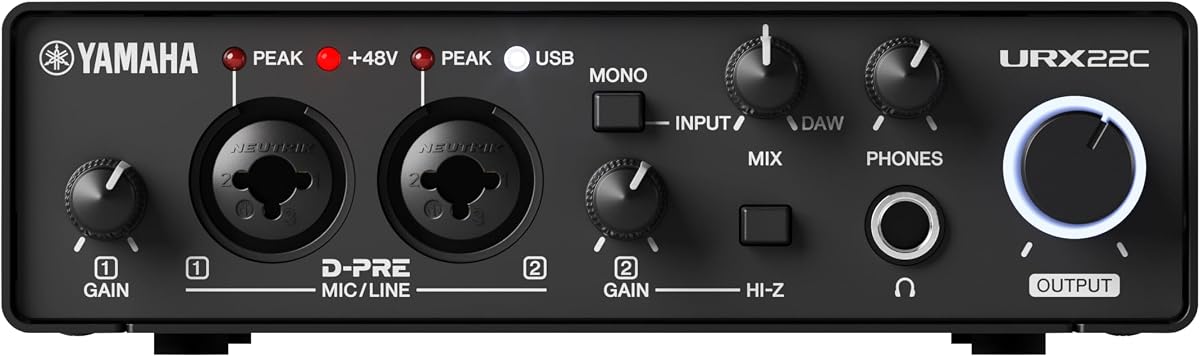
The Yamaha URX22C offers 32-bit integer 192 kHz support with DSP-powered mixing and effects. With a 4.5 rating, it includes latency-free monitoring with REV-X reverb and Channel Strip to enhance your sound without CPU load.
We may earn a commission when you buy through this link, at no additional cost to you.
It features Class-A D-PRE mic preamps and a rugged full-metal housing for ultimate durability. The Steinberg Software Suite includes Cubase AI and dspMixFx application for easy control. This interface is cross-platform compatible with Windows and macOS.
Trade-offs include limited I/O compared to larger interfaces. However, for small setups, it is reliable. The DSP processing ensures your system runs smoothly even with effects applied during recording sessions.
This interface is perfect for small studios and content creators needing quality DSP. Its robust build and included software make it a strong choice for professional-quality recording.
Experience latency-free monitoring with REV-X reverb, Channel Strip, and Guitar Amp Classics included.
Enjoy ultimate durability with the rugged full-metal housing designed to withstand daily use.
We may earn a commission when you buy through this link, at no additional cost to you.
The MOTU UltraLite-mk5 offers 18 x 22 USB audio interfaces with superb analog quality. With a 4.3 rating, it features 125 dB dynamic range on analog outputs and industry-leading low latency drivers for smooth performance.
We may earn a commission when you buy through this link, at no additional cost to you.
On-board effects include reverb, 4-channel parametric EQ, and dynamics processing for inputs and bus mixes. The CueMix 5 app allows you to control mixing from your Mac, PC, or iOS device. Performer Lite provides a workstation with instruments and effects.
Trade-offs involve the physical size and complexity of managing 40 simultaneous channels. However, it is excellent for small bands. The OLED display provides high-resolution metering for all analog I/O at a glance.
This interface is perfect for those needing multiple inputs in a compact design. It supports detailed sound shaping and high-quality mixing, making it a top choice for music production.
Mix live inputs to any analog output pair and create unique mixes for separate outputs.
The high-resolution OLED display lets you view all signal activity at a glance with detailed metering.
We may earn a commission when you buy through this link, at no additional cost to you.
The Yamaha URX22 4-In / 2-Out Dual USB-C Audio Interface offers a unique touchscreen for control. With built-in DSP for professional sound and latency-free monitoring, it is ideal for modern creators needing flexible routing options.
We may earn a commission when you buy through this link, at no additional cost to you.
It features premium microphone preamps with 78 dB gain range and support for 48 V phantom power. The Multi-Stream Audio Driver and dual MAIN/SUB USB ports allow flexible connection to different devices. Cubase Al and WaveLab Cast are included.
Trade-offs include limited DSP slots compared to dedicated models. However, the touchscreen makes adjustments intuitive. It delivers high-quality conversion and supports detailed sound shaping for music and content creation.
This interface is perfect for streamers and small studios wanting unique control options. It prioritizes ease of use while delivering professional results for both music and content creation.
Control parameters with a 4.3 touchscreen and 5 control knobs for easy and intuitive adjustments.
Use Multi-Stream Driver and dual MAIN/SUB USB ports for flexible connection to different devices.
We may earn a commission when you buy through this link, at no additional cost to you.
Selecting the right audio interface with built in dsp requires understanding your recording needs and how DSP impacts your workflow. These interfaces offload processing from your computer to ensure low latency and stable performance.
Built-in DSP allows you to monitor with effects in real time without latency. This is critical for tracking vocals or instruments without the delay caused by CPU processing. Look for near-zero latency specifications for the best experience.
Check for dedicated DSP chips or FPGA hardware in the specs to ensure low latency.
Determine how many inputs you need for microphones and instruments. Interfaces with built in dsp often have varying channel counts. Ensure the interface supports your current setup and allows for future expansion if needed.
Match input counts to your recording needs to avoid limitations during sessions.
DSP interfaces come with effects like reverb, EQ, and compression. These allow you to shape your sound before it hits your DAW. Check the variety and quality of included effects to ensure they meet your sonic goals.
Choose an interface with effects that complement your music style.
Preamp quality affects your recording clarity and noise floor. Look for models with clean gain and sufficient dynamic range. Some interfaces offer advanced preamp features like variable impedance or high headroom.
Select preamps that match the type of microphones you use.
Interfaces with built in dsp support various connections like USB-C or Thunderbolt. Ensure your computer has the necessary ports. USB-C offers wide compatibility and power delivery for bus-powered units.
Verify your system has compatible ports before purchasing.
Many DSP interfaces include control software for routing and effects. Ensure the software is stable and user-friendly. Some models include DAWs or plugins that add value to your purchase.
Look for software that is easy to integrate into your workflow.
High dynamic range converters capture more detail in your recordings. Look for at least 120dB to ensure high fidelity. This factor is crucial for capturing nuanced performances with depth.
Prioritize models with high dynamic range for professional sound.
If you work on the go, consider the physical size and weight. Some DSP interfaces are designed to be portable and bus-powered. This ensures you can record anywhere without needing extra power supplies.
Choose a portable model if you need to move frequently.
Connect the interface to your computer using the provided USB-C or Thunderbolt cable. Install the necessary drivers and control software from the manufacturer. Ensure the connection is secure to avoid audio dropouts during use.
Configure your DSP settings through the control software or onboard knobs. Adjust effects like reverb and EQ to suit your input signal. Monitor the levels to prevent clipping and ensure your gain is set correctly.
Keep the firmware updated for optimal performance and new features. Store the interface in a cool, dry place to avoid damage. Avoid exposing the ports to dust and moisture to ensure long-term reliability.
Interfaces with built in DSP allow you to process audio signals in real time without taxing your computer CPU. This results in near-zero latency monitoring, which is essential for tracking performances with effects applied. Additionally, you can achieve a finished sound before the audio even enters your DAW.
Many modern interfaces are class-compliant and work without drivers on macOS and iOS. However, to access built-in DSP and specific software features, installing drivers is often required. Check the product specifications for driver-free compatibility.
Since DSP handles much of the processing load, these interfaces require less RAM than standard interfaces. While 8GB is generally sufficient, 16GB is recommended for complex projects. This ensures smooth playback even with multiple tracks.
Yes, if you need low latency monitoring and want to save your CPU power for other tasks. They are ideal for professional recording and live streaming. The included effects often provide high quality without needing additional plugins.
Most interfaces require a control panel app to manage DSP effects and routing. These apps run alongside your DAW to adjust signal chains. Ensure you download the latest version for full compatibility with your system.
DSP effects run on hardware within the interface and do not use CPU cycles. Plugin effects run on your computer and consume processing power. DSP ensures consistent latency regardless of project size.
Some models support ADAT or S/PDIF connections to expand input channels. Check the specifications to see if your unit supports these protocols. Expansion allows you to add more mics without upgrading the main unit.
Open the control software and select the DSP effects for your input channels. Ensure the monitoring source is set to the interface and not the computer. Adjust the mix to hear both dry and wet signals.
Choosing an audio interface with built in DSP offers clear advantages for professional recording. The top picks like the Antelope Audio Zen Quadro and Focusrite Scarlett Solo provide unique features for every need. Whether you want analog warmth or modern portability, there is a model for you.
Prioritize latency performance and software ecosystem when selecting a device. Ensure your computer is compatible with the required connectivity. Check the included software to see if it meets your project needs.
Prices and availability may change so verify current details before purchasing. This guide helps you make an informed decision based on the latest options available. Always consider your specific workflow requirements before buying.