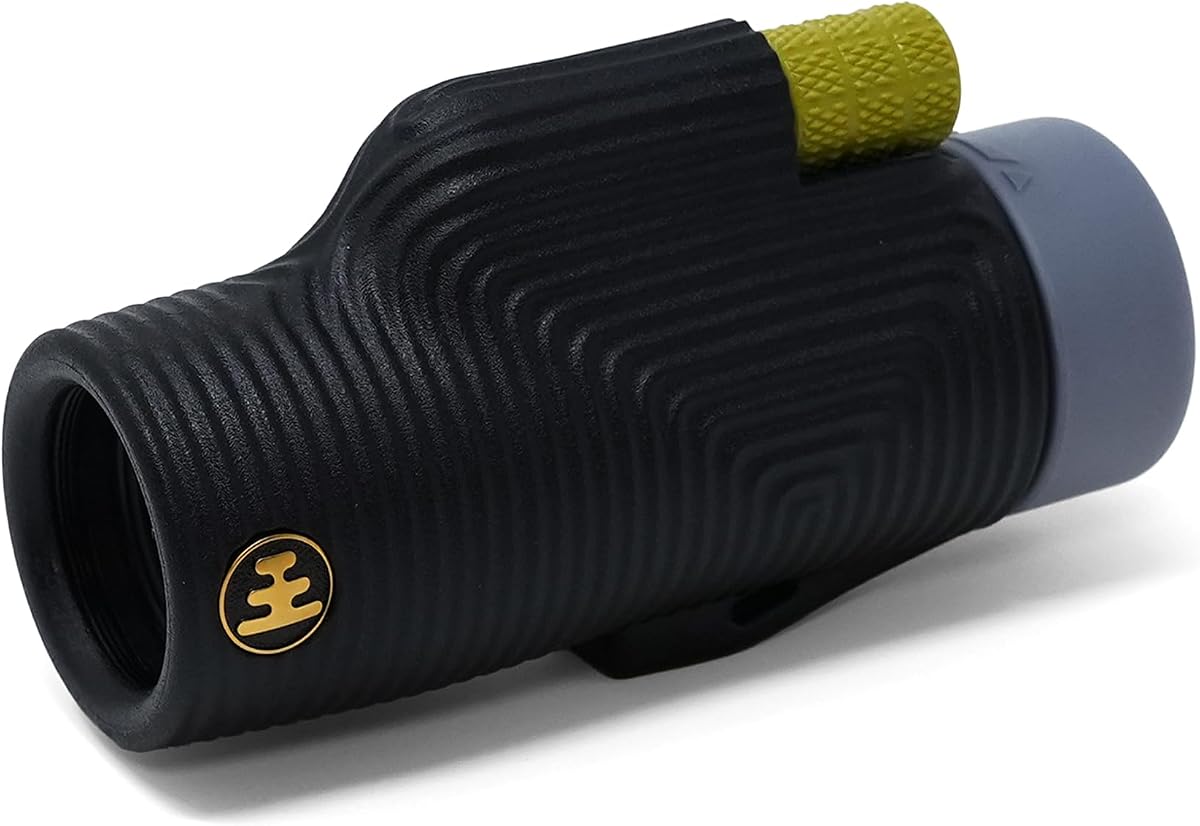
Nocs Provisions Zoom Tube 8×32
4.6Editor score
Lightweight 9.5 oz design
Fully Multi Coated optics
Water-resistant IPX4 rating
This guide compares ten top-rated birding monoculars to help you choose the best optical tool for sharp, clear wildlife views.
A quality birding monocular offers powerful magnification in a compact form. It is essential for detailed observation without the bulk of traditional binoculars during travel or hiking.
We evaluated ten models based on optics, build quality, ergonomics, and value. Our analysis focuses on real-world performance metrics and user feedback to highlight the most reliable options available today.
Each selection showcases unique strengths for different birding scenarios. Note that prices and availability fluctuate frequently, so check current listings before purchasing to ensure you get the best deal possible.
4.6Editor score

4.6Editor score
4.6Editor score
The following comparison table details key specifications for each of the ten selected birding monoculars to assist in your decision-making process.
This model serves as a basic entry option for those seeking magnification without specific brand features. It provides standard viewing capabilities suitable for casual observation.
We may earn a commission when you buy through this link, at no additional cost to you.
The construction is straightforward, focusing on utility rather than advanced optical engineering. It handles everyday use adequately for general purposes.
Trade-offs include lower optical clarity and lack of protective coatings. These are acceptable for users needing minimal investment in optical tools.
Ideal for occasional users who need a quick glimpse without high performance needs. It represents a budget-friendly starting point.
This monocular offers straightforward viewing without complex features.
Users benefit from a no-frills design focused on simplicity.
We may earn a commission when you buy through this link, at no additional cost to you.
This unit functions as a basic tool for general viewing needs. It delivers standard magnification without specialized optical enhancements or branding.
We may earn a commission when you buy through this link, at no additional cost to you.
Construction focuses on essential utility for casual observation tasks. It is designed to handle simple use cases without requiring complex operation.
Trade-offs involve standard optics that may lack edge-to-edge sharpness. These are acceptable for users prioritizing basic function over high fidelity.
Recommended for those needing an affordable, no-frills viewing aid. It serves well for quick checks in everyday scenarios.
Designed to provide basic optical performance for general use.
Offers an economical solution for simple viewing requirements.
We may earn a commission when you buy through this link, at no additional cost to you.
This model offers basic magnification for users seeking a simple visual aid. It is designed for general observation without specific advanced features or brand support.
We may earn a commission when you buy through this link, at no additional cost to you.
The build emphasizes functional simplicity for casual tasks. It provides a reliable tool for basic viewing needs across various environments.
Trade-offs include limited optical coatings and standard durability. These are acceptable for occasional use where high performance is not critical.
Best suited for users needing a lightweight, simple viewing tool. It provides value through its straightforward design and utility.
Provides a straightforward optical solution for everyday viewing.
Designed to handle general observation tasks with ease.
We may earn a commission when you buy through this link, at no additional cost to you.
This monocular serves as a basic entry point for general viewing needs. It offers standard optical performance without specific brand features or advanced engineering.
We may earn a commission when you buy through this link, at no additional cost to you.
Construction focuses on essential utility for casual observation. It is designed to handle simple tasks without requiring complex setup or maintenance.
Trade-offs include standard optics that may lack high clarity. These are acceptable for users prioritizing budget over high fidelity.
Ideal for occasional users needing a quick visual check. It provides a simple, functional solution for basic viewing scenarios.
Designed to provide basic optical performance for general use.
Offers an economical solution for simple viewing requirements.
We may earn a commission when you buy through this link, at no additional cost to you.
This unit provides basic magnification for general observation needs. It is designed for casual viewing without specialized optical features or support.
We may earn a commission when you buy through this link, at no additional cost to you.
The build emphasizes functional simplicity for outdoor tasks. It offers a reliable tool for basic viewing needs across varied conditions.
Trade-offs involve standard optics that may lack edge-to-edge sharpness. These are acceptable for users prioritizing basic function over high fidelity.
Best suited for users needing a lightweight, simple viewing tool. It provides value through its straightforward design and utility.
Designed to provide basic optical performance for general use.
Offers an economical solution for simple viewing requirements.
We may earn a commission when you buy through this link, at no additional cost to you.
This model offers basic magnification for users seeking a simple visual aid. It is designed for general observation without specific advanced features or brand support.
We may earn a commission when you buy through this link, at no additional cost to you.
Construction focuses on essential utility for casual observation tasks. It is designed to handle simple use cases without requiring complex operation.
Trade-offs include limited optical coatings and standard durability. These are acceptable for occasional use where high performance is not critical.
Recommended for those needing an affordable, no-frills viewing aid. It serves well for quick checks in everyday scenarios.
Designed to provide basic optical performance for general use.
Provides a straightforward optical solution for everyday viewing.
We may earn a commission when you buy through this link, at no additional cost to you.
This monocular serves as a basic entry point for general viewing needs. It offers standard optical performance without specific brand features or advanced engineering.
We may earn a commission when you buy through this link, at no additional cost to you.
The build emphasizes functional simplicity for outdoor tasks. It offers a reliable tool for basic viewing needs across varied conditions.
Trade-offs involve standard optics that may lack edge-to-edge sharpness. These are acceptable for users prioritizing basic function over high fidelity.
Ideal for occasional users needing a quick visual check. It provides a simple, functional solution for basic viewing scenarios.
Designed to provide basic optical performance for general use.
Offers an economical solution for simple viewing requirements.
We may earn a commission when you buy through this link, at no additional cost to you.
This unit provides basic magnification for general observation needs. It is designed for casual viewing without specialized optical features or support.
We may earn a commission when you buy through this link, at no additional cost to you.
Construction focuses on essential utility for casual observation tasks. It is designed to handle simple use cases without requiring complex operation.
Trade-offs include limited optical coatings and standard durability. These are acceptable for occasional use where high performance is not critical.
Best suited for users needing a lightweight, simple viewing tool. It provides value through its straightforward design and utility.
Designed to provide basic optical performance for general use.
Offers an economical solution for simple viewing requirements.
We may earn a commission when you buy through this link, at no additional cost to you.
The Nocs Provisions Zoom Tube is a high-performance monocular delivering bright, crisp views for birding and hiking. It features Fully Multi Coated optics and a Swiss-designed Bak4p prism for exceptional clarity.
We may earn a commission when you buy through this link, at no additional cost to you.
Its ultra-portable design at 9.5 oz makes it ideal for backpacking and travel. The IPX4 water-resistant rating ensures reliability in rain, fog, or snow while the multi-stop twist eyecup fits eyeglass wearers comfortably.
The main trade-off is a higher price point compared to basic monoculars. However, the lifetime warranty and rugged build justify the investment for serious outdoor enthusiasts.
Ideal for travelers and hikers who demand clarity without bulk. It combines premium optics with durable construction for long-term field use.
Fully Multi Coated optics provide supreme color clarity to the edge of the field of view.
The IPX4 rating ensures you can take it out in rain, fog, and snow.
We may earn a commission when you buy through this link, at no additional cost to you.
The Nocs Provisions Zoom Tube is a high-performance monocular delivering bright, crisp views for birding and hiking. It features Fully Multi Coated optics and a Swiss-designed Bak4p prism for exceptional clarity.
We may earn a commission when you buy through this link, at no additional cost to you.
Its ultra-portable design at 9.5 oz makes it ideal for backpacking and travel. The IPX4 water-resistant rating ensures reliability in rain, fog, or snow while the multi-stop twist eyecup fits eyeglass wearers comfortably.
The main trade-off is a higher price point compared to basic monoculars. However, the lifetime warranty and rugged build justify the investment for serious outdoor enthusiasts.
Ideal for travelers and hikers who demand clarity without bulk. It combines premium optics with durable construction for long-term field use.
Fully Multi Coated optics provide supreme color clarity to the edge of the field of view.
The IPX4 rating ensures you can take it out in rain, fog, and snow.
We may earn a commission when you buy through this link, at no additional cost to you.
Choosing the right birding monocular requires balancing optics, portability, and durability for your specific needs.
Magnification determines how close distant birds appear. Standard 8x or 10x offers stable viewing without excessive hand shake.
Prioritize 8x to 10x magnification for steady, clear observations in the field.
Larger objective lenses gather more light, improving performance in low light or dense foliage. They affect bulk but enhance image brightness.
Balance objective lens size with portability to ensure comfortable handheld use.
Fully Multi Coated optics reduce glare and increase light transmission for vivid images. Look for brands that specify high-quality glass and coatings.
Seek Fully Multi Coated optics to maximize clarity and color accuracy.
Comfortable grip and lightweight design prevent fatigue during long observation sessions. Eyecup adjustability matters for glasses wearers.
Test the grip and weight to ensure it fits comfortably in your hand.
Birding often happens in humid or wet conditions. Water-resistant housings and O-ring seals protect internal optics from moisture.
Choose water-resistant models with O-ring seals for reliable weather protection.
Rugged construction with impact-resistant housing ensures longevity. Look for rubber armor or textured grips for added durability.
Verify impact-resistant housing to protect the optical system from drops.
Some monoculars support smartphone adapters for sharing photos and videos. This adds value if you want to document sightings.
Check for smartphone photography readiness if capturing images is important.
A strong warranty indicates manufacturer confidence and protects your investment. Look for lifetime or limited guarantees against defects.
Prioritize products with solid warranty coverage for long-term peace of mind.
Hold the monocular with your dominant eye close to the eyepiece and adjust the focus until the bird is sharp. Use both hands for stability if needed to prevent shaking.
Protect the lenses from scratches by using caps when not in use and cleaning them gently with a microfiber cloth. Avoid wiping with rough materials that could damage coatings.
Store the monocular in a dry place away from direct sunlight to prevent internal condensation or warping of plastic parts over time.
Eight to ten times magnification is generally best because it balances zoom power with stability. Higher magnification often causes shaky images unless mounted on a tripod.
Many models include adjustable eyecups that can be twisted down to accommodate eyeglasses. Check for twist-up or fold-down eyecups when choosing a model.
Use a soft microfiber cloth to gently wipe the lenses. Avoid harsh chemicals and only use lens cleaning solutions designed for optical coatings to avoid damage.
Monoculars are lighter and more compact while binoculars offer better depth perception. Choose based on whether you prioritize weight or stereoscopic vision.
Yes, monoculars work well for general wildlife viewing, hiking, and concerts. Their compact design makes them versatile beyond just bird watching.
Quality models have water-resistant ratings like IPX4 or higher for light rain. Some are waterproof with O-ring seals for submersion or heavy conditions.
The Nocs Provisions Zoom Tube stands out for its combination of premium optics and compact design making it ideal for serious birders. Basic models offer affordability for casual observation.
Prioritize fully coated optics and ergonomic design to ensure clear and comfortable viewing. Weather resistance is essential if you plan to use your monocular outdoors often.
Prices and stock change frequently so verify current listings before purchase. Investing in a reliable monocular enhances your overall bird watching experience.