
Verifone VX520
3.5Editor score
Dial and Ethernet connectivity
EMV and NFC support
Proven hardware reliability
This guide compares the top card readers for vending machines, evaluating connectivity, security, compatibility, and management features to help operators
Modern vending operators need reliable cashless payment systems to meet customer expectations. A quality reader accepts cards, mobile wallets, and contactless options seamlessly while maintaining strong security standards for every transaction.
We evaluated ten leading card readers based on their connectivity options, payment methods, durability, and integration capabilities. Each model was assessed for ease of installation, telemetry features, and overall performance in unattended environments.
Each pick highlights key strengths, weaknesses, and ideal use cases for different operator needs. Please note that specifications and availability can change, so verify current details before making your final purchasing decision.
3.5Editor score
3.8Editor score

4.0Editor score
The following table provides a side-by-side comparison of all ten card readers evaluated in this guide. Use this overview to quickly assess key specifications, compatibility, and unique features for each model.


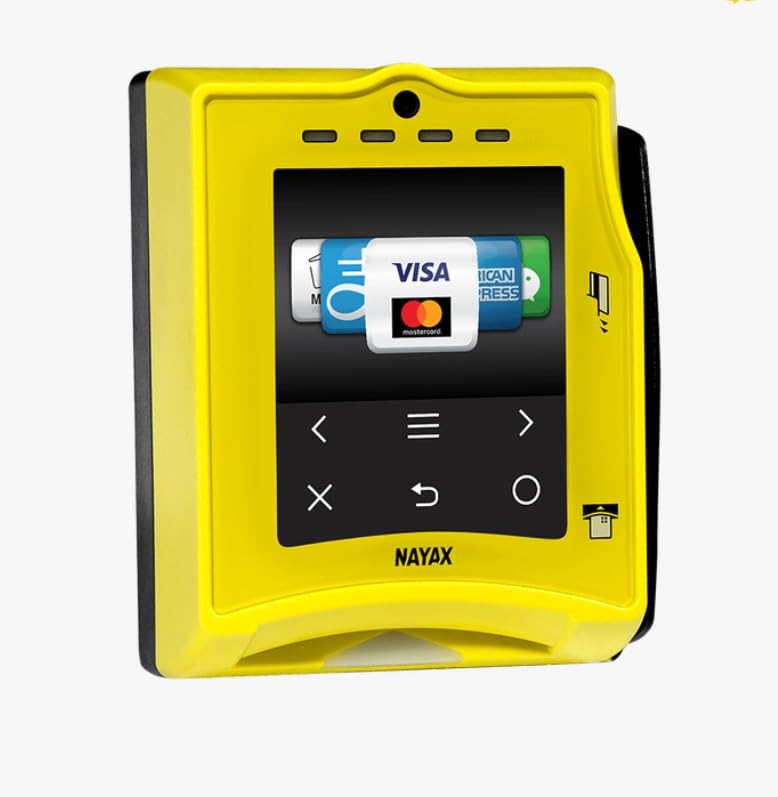
The VPOS Touch is a comprehensive cashless solution designed for modern vending environments. It accepts EMV chip cards, NFC contactless payments like Apple Pay and Google Pay, and magnetic stripe cards. This versatility ensures that customers can pay using their preferred method without hesitation or delays at the machine.
We may earn a commission when you buy through this link, at no additional cost to you.
Its standout feature is the included high-gain 4G LTE antenna, which eliminates the need for separate Wi-Fi or ethernet setups. The device connects instantly using the provided MDB communication harness. Operators can monitor inventory, cash levels, and sales data remotely through the Nayax management suite. Instant mobile alerts keep you informed about machine status and potential issues before they impact sales.
While the device is fully PCI DSS compliant and carries EMV Level 1 and 2 certifications, operators should be aware that activation takes up to ten business days. Additionally, the full functionality relies on the Nayax ecosystem, which may require a service subscription. These are reasonable trade-offs given the robust security and remote management capabilities offered.
This reader is ideal for operators managing multiple machines across different locations who need centralized visibility and control. If you prioritize security, ease of installation, and reliable connectivity without extra cabling, the VPOS Touch is a top recommendation for upgrading your vending fleet to a modern cashless standard.
The built-in 4G LTE antenna ensures your machines stay connected anywhere there is cellular coverage, reducing downtime and installation complexity.
Monitor sales and inventory in real-time from your mobile device, allowing you to restock efficiently and respond to issues quickly.
We may earn a commission when you buy through this link, at no additional cost to you.
This Nayax VPOS Touch model elevates the user experience with a customizable 2.4-inch color LCD touchscreen. It supports a wide range of payment methods including credit and debit cards, mobile wallets, NFC, and even QR codes. Voice prompts and multi-language support make it accessible to diverse customer bases in various locations.
We may earn a commission when you buy through this link, at no additional cost to you.
The device is built for durability with Dragontrail glass and an IP55 rating to resist dust and water. Shock detection helps monitor physical stress on the unit. Beyond transactions, it offers marketing tools like loyalty programs and punch cards to encourage repeat business. Real-time telemetry allows remote monitoring of sales and inventory performance.
While it offers significant features for engagement and durability, it requires a Nayax merchant account and ecosystem integration. Operators should ensure their existing infrastructure supports MDB or Pulse protocols seamlessly. The complexity of setup might be higher than basic readers, but the engagement tools justify the effort for high-traffic locations.
Choose this reader if you want to enhance customer interaction and drive repeat sales through loyalty features. Its robust build quality and extensive payment options make it suitable for arcades, amusement games, and premium vending environments where customer experience is a priority.
Loyalty programs and punch cards help build customer retention by rewarding frequent purchases directly at the point of sale.
IP55 rating and Dragontrail glass ensure the device can withstand harsh environments and potential vandalism in public spaces.
We may earn a commission when you buy through this link, at no additional cost to you.
This generic reader provides a straightforward entry point for operators seeking basic cashless capabilities without a high price tag. While details are sparse, it functions as a standard card reader compatible with common protocols. The box includes a yellow instruction sheet that guides you through the necessary activation process before the device becomes operational.
We may earn a commission when you buy through this link, at no additional cost to you.
The activation process requires submitting information and waiting up to ten business days for approval. This delay means you cannot deploy the unit immediately upon arrival. However, once activated, it should integrate with your existing machine using standard interfaces. It is a viable option for small fleets or test installations where budget is a primary constraint.
Operators should be prepared for potential delays and the need for manual activation steps. Documentation may be less comprehensive than branded solutions, so technical support might require more effort to reach. It is best suited for those who prioritize upfront cost savings over immediate deployment and extensive support.
Consider this reader if you are on a tight budget and have time to wait for activation. It serves as a functional baseline for accepting cards, though larger operations might benefit from more robust, supported solutions to minimize risk and maximize uptime.
A lower upfront cost allows small operators to test cashless functionality without a major investment commitment.
Designed to work with standard vending interfaces, ensuring basic compatibility with most existing machines.
We may earn a commission when you buy through this link, at no additional cost to you.
The Symcode Multi-Function reader is designed for general point-of-sale use but can be adapted for vending with specific setups. It supports reading magnetic cards, SLE4442 chip cards, and contactless NFC. However, it is strictly a read-only device and cannot encode cards, which limits its flexibility for advanced membership systems.
We may earn a commission when you buy through this link, at no additional cost to you.
It offers two-way swipe, insertable chip, and left-side contactless NFC reading modes. The USB connection works as a keyboard emulator or HID device, allowing software integration without specialized drivers. Two lights indicate connection status and activity, providing visual feedback during transactions. This makes it accessible for developers looking to customize a system.
With a lower rating of 2.8, there may be consistency issues or limitations in reliability compared to specialized vending readers. Users are advised to contact support for technical questions. The lack of writing capabilities means it is less suitable for programs that require data updates on the card itself.
This reader is best for developers or operators who need a simple USB input device for custom software integrations. If your machine requires basic card reading without encoding, this budget option provides the necessary hardware at a low cost, provided you manage potential support needs carefully.
Supports three distinct reading modes to accommodate different card types and transaction styles in various environments.
HID mode and software support allow integration into custom applications for specific operational requirements.
We may earn a commission when you buy through this link, at no additional cost to you.
The Verifone VX520 is a well-established terminal that supports dial and Ethernet connectivity alongside smart card reading. It ensures security through EMV compliance and supports contactless options like NFC and Apple Pay. This combination of legacy reliability and modern payment support makes it a versatile choice for operators familiar with traditional POS hardware.
We may earn a commission when you buy through this link, at no additional cost to you.
The device handles both chip and magnetic stripe transactions efficiently. Its Ethernet capability allows for stable internet connections where dial-up might be slow. Verifone is a trusted name in payment processing, which often translates to better support and compatibility with various merchant services. The hardware is designed to withstand high-volume transaction environments.
While it offers solid functionality, the design is somewhat bulky compared to newer dedicated vending readers. Operators will need to secure a merchant account that supports these specific interfaces. Additionally, setup might be more involved than plug-and-play vending-specific units, requiring network configuration or dial settings.
Select this unit if you already have a merchant relationship that supports Verifone hardware and want a proven, secure solution. It is ideal for indoor kiosks or stationary machines where Ethernet access is available and where reliability outweighs the need for compact cellular-only design.
EMV compliance ensures that chip card transactions meet current security standards to protect customer data.
Dial and Ethernet ports provide flexible connection choices depending on the site's infrastructure.
We may earn a commission when you buy through this link, at no additional cost to you.
This multi-function reader is tailored for environments that require both reading and writing capabilities on specific card types. It supports magnetic cards, SLE4442 chip cards, and PSAM cards. The package includes an SDK and software CD to help developers integrate the device into custom membership or checkout systems.
We may earn a commission when you buy through this link, at no additional cost to you.
The device reads all three tracks of magnetic cards but does not write to them. It can read Mifare R.F.I.D cards and contact PSAM cards for deeper authentication. The included testing card helps verify functionality upon arrival. A user guide is available on the CD, which is essential for proper operation and configuration.
Operators should note the distinction between reading and writing functions. While it can read magnetic tracks, it may not encode them depending on the specific card type. If you need to write data, you may need to verify the exact card requirements. Technical support is available if you encounter difficulties with the SDK.
Choose this reader if you need a flexible tool for membership systems or custom kiosks where data integration is key. It is particularly useful for developers who have the technical capacity to utilize the SDK and need to support multiple card formats in one unit.
The included SDK and testing card make it easier to integrate the reader into your own software projects.
Supports magnetic, chip, and PSAM cards to cover a broad range of authentication requirements.
We may earn a commission when you buy through this link, at no additional cost to you.
The E-seek M-260 is specialized for scanning government-issued ID cards and 2D barcodes alongside magnetic stripes. It includes a six-foot USB smart cable for flexible positioning. The bottom mounted interface connector makes it ideal for kiosk applications where the device is fixed in place and needs discreet cable management.
We may earn a commission when you buy through this link, at no additional cost to you.
This reader transfers data via standard USB or RS-232 interfaces, making it compatible with a wide range of host devices. It is particularly useful in environments where age verification or identity authentication is required alongside standard payments. The bottom connector design keeps the setup clean and reduces exposure to damage.
While it offers a high user rating of 4.0, it is more specialized than general-purpose payment readers. Ensure your workflow benefits from ID scanning capabilities before investing. The cost may be higher than basic readers, but the added functionality can be critical for compliance or secure access control.
Select this device if your vending machines operate in environments where ID verification is mandatory or beneficial. Its robust build and versatile interface options make it a reliable choice for high-security kiosks or age-restricted product dispensers.
Scans government IDs and barcodes to verify identity before allowing transactions, reducing legal risks.
The bottom mounted connector allows for clean installation in custom enclosures or kiosks.
We may earn a commission when you buy through this link, at no additional cost to you.
The VP3350 is a compact card reader designed for mobile-friendly environments. It supports contactless payments, EMV contact, and magstripe transactions. Security is handled via PCI P2PE compliance, which protects data during transmission. It also supports surcharge compatibility, which can help operators manage fees.
We may earn a commission when you buy through this link, at no additional cost to you.
A new merchant account with SwyftPAY is required before the device ships. This means you cannot use your existing processor unless it integrates with their system. The hardware comes with a stand, making it suitable for counter displays or portable setups. It integrates with CardPointe Virtual Terminal and Gateway API for software flexibility.
Operators must consider the account requirement carefully. If you already have a preferred processor, switching might add complexity. However, if you need a clean start with a compliant solution, this unit offers a reliable pathway. The surcharge feature can be a financial benefit if local regulations permit it.
This reader is ideal for mobile vending or temporary events where portability is key. If you are open to setting up a new merchant account, the VP3350 provides a secure and flexible way to accept various payment types on the go.
P2PE compliance ensures that payment data is encrypted end-to-end, protecting against interception.
Surcharge compatibility allows operators to pass processing fees to customers where legally allowed.
We may earn a commission when you buy through this link, at no additional cost to you.
The MTMS15 offers multi-technology reading with support for cards and PIN entry, providing multi-factor authentication. It features an open architecture solution that allows integration with various software platforms. Mobile NFC support ensures contactless payments are handled smoothly. Networked real-time data helps operators stay updated on machine status.
We may earn a commission when you buy through this link, at no additional cost to you.
This device is designed for environments where security and flexibility are paramount. The open architecture means you can adapt it to different applications without being locked into a proprietary ecosystem. Real-time networking capabilities allow for immediate transaction processing and status updates without delays.
Operators should be prepared for potentially complex setup requirements to leverage the open architecture fully. Ensure your technical team can support the integration needed to utilize all features. It is best suited for high-security applications or complex systems that require customized transaction flows.
Choose this reader if you need advanced security features like PIN support and want the flexibility of an open architecture system. It is a strong candidate for industrial or high-transaction environments where customization and real-time data are critical.
Open architecture allows developers to connect the reader to a wider range of software systems.
Networked features ensure transaction data is available immediately for faster decision making.
We may earn a commission when you buy through this link, at no additional cost to you.
The Bluetooth X6BT VIP is a versatile card reader writer that connects via Bluetooth to mobile devices. It is USB powered and supports iOS, Android, Windows, and MacOS. The device reads and writes all three tracks on magnetic cards, adhering to ISO 7811-6 standards. Free software is provided for various operating systems to facilitate immediate use.
We may earn a commission when you buy through this link, at no additional cost to you.
Its ability to write data makes it suitable for membership cards and loyalty systems that require encoding. Bluetooth connectivity allows for wire-free operation with smartphones, making it portable for events or outdoor vending. The broad OS support ensures compatibility with most existing mobile setups.
Battery management and wireless security are considerations for outdoor use. Ensure the device is charged and that Bluetooth transmission is secure during transactions. While powerful, it requires software setup to function as a writer, which may be more involved than simple read-only readers.
Select this reader if you need a portable encoding solution that connects wirelessly to mobile devices. It is perfect for operators who want to manage loyalty programs or membership data on the go without needing wired connections to a host computer.
Writes and reads magnetic tracks on the go, ideal for updating membership cards or loyalty data.
Bluetooth connectivity lets you operate the reader from a mobile device without tangled cables.
We may earn a commission when you buy through this link, at no additional cost to you.
Choosing the right card reader requires balancing cost, connectivity, and specific operational needs.
Connectivity is a primary factor when selecting a card reader for vending. Some models include built-in cellular antennas like 4G LTE, allowing for plug-and-play setup without external cables. Others rely on Ethernet or dial-up connections, which may require existing network infrastructure at your site. Consider whether your machine locations have reliable Wi-Fi or if cellular is a safer bet for consistency.
Prioritize cellular connectivity if you manage machines across diverse locations. Wired options are cost-effective where infrastructure exists but may limit mobility.
Ensure the reader supports all payment types your customers expect. Look for devices that accept EMV chip cards, contactless NFC payments, and magnetic stripes. Modern standards include Apple Pay, Google Pay, and Samsung Pay support. Some units also handle QR codes or specific loyalty cards depending on the ecosystem.
Choose a reader that covers the widest range of payment methods to avoid declining valid transactions.
Security must be a top priority to protect customer data and your business from fraud. Look for PCI DSS compliance and EMV Level 1 and 2 certifications. These standards ensure that card data is processed securely and meets industry regulations. Devices with P2PE (Point to Point Encryption) add an extra layer of protection during transmission.
Always verify that the device meets the latest security certifications before purchasing.
The reader must physically and logically connect to your vending machine. Verify that it supports the necessary protocols such as MDB or Pulse. Check if the software ecosystem matches your existing vending management system. Some readers work best with specific merchant accounts or software platforms.
Confirm protocol compatibility with your machine manufacturer to ensure seamless installation.
Vending machines are often exposed to harsh environments, so durability is critical. Look for ratings like IP55 for protection against dust and water. Devices made with tempered glass or shock detection features can withstand vandalism or accidental drops. The form factor should fit securely within your machine's housing.
Select a device with a high IP rating and sturdy materials for outdoor or high-traffic locations.
Remote management capabilities help operators monitor sales, inventory, and machine status. Readers with integrated software suites allow you to track transactions and receive alerts on your phone. This reduces downtime by notifying you of low cash or technical issues immediately.
Prioritize units with real-time telemetry if you manage a large fleet of machines remotely.
Some devices require activation before they can be used, which may take several business days. Others are ready to ship and use immediately. Check the activation process and whether you need to open a merchant account beforehand. Delays can impact your ability to deploy new machines quickly.
Ask about activation times and merchant requirements before placing an order to avoid delays.
Technical support is vital when you encounter issues in the field. Choose brands that offer accessible customer service and warranties. Documentation like user guides and SDKs helps if you need to customize the hardware. Good support reduces downtime and ensures smooth operations.
Verify warranty terms and the availability of technical support for your chosen model.
Install the reader in a secure location within the machine to prevent tampering. Ensure all cables and connectors are properly seated to maintain a stable connection. If your device uses a stand or bracket, tighten it to avoid movement during transactions.
Keep the touch screen and card slots clean from dust and debris. Use a soft cloth to wipe surfaces gently. Avoid spraying liquid directly onto the device to prevent water damage. Regular maintenance ensures that card swipes remain accurate and the interface stays responsive.
Monitor the device for firmware updates and security patches. Some systems update automatically, while others require manual downloads. Check the manufacturer's support portal periodically. Keeping the software current protects against vulnerabilities and ensures compatibility with new payment methods.
Many systems require a monthly subscription to access telemetry and transaction processing features. Some basic readers might not, but they typically lack remote management capabilities. Check with the provider to understand the total cost of ownership before purchasing.
This depends on the reader's compatibility with your current processor. Some specialized vending readers work with specific ecosystems like Nayax or SwyftPAY. Contact your merchant provider or the manufacturer to confirm if they can integrate with your existing setup.
Activation times vary by model and provider. Some devices are ready immediately, while others may take up to ten business days to process your application. Always check the specific activation requirements in the product details before ordering.
Most modern readers have offline modes or store transactions temporarily until connectivity is restored. If you rely on cellular, ensure you have a strong signal. Check if your device supports SMS fallback or local caching to prevent transaction losses.
Most modern models support NFC and contactless wallets like Apple Pay. However, older or basic units may only read magnetic stripes. Verify the product specifications to ensure it supports the contactless methods your customers use.
Start by checking the physical connection and ensuring the card slot is clean. Verify that the device is activated and connected to the network. If issues persist, contact the manufacturer's technical support for specific error codes and solutions.
Some specialized readers offer writing capabilities for loyalty or membership cards. However, many vending readers are read-only for standard payment security. Check the product specifications carefully to confirm if writing is supported.
Plug-and-play models like the VPOS Touch simplify installation with pre-wired harnesses. Others may require technical setup for Ethernet or protocols. Review the installation guide to assess the technical effort required for your specific machine.
We reviewed ten top card readers ranging from budget-friendly units to premium models with advanced telemetry. The VPOS Touch stood out for its all-in-one connectivity and security, while the Verifone VX520 offers a reliable option for traditional setups.
Prioritize compatibility with your machine's protocols and security certifications before focusing on price. A reader that integrates smoothly and protects data effectively will pay for itself in reduced downtime and customer trust.
Remember to check current availability and activation requirements before purchasing. Prices and features can change, so verifying the latest details ensures you get the right solution for your business needs.