
AENBUSLM 40W Module
4.6Editor score
5500mW optical output
High RPM fan cooling
Plug-and-play compatibility
Compare top 10 diode laser modules for engraving and cutting. This guide reviews power, focus, and compatibility to help you choose the right tool.
Selecting the right diode laser module is essential for anyone looking to enhance their DIY engraving or cutting projects. These devices convert electrical energy into focused light beams capable of marking surfaces with precision. Whether you are a hobbyist or a professional, understanding the nuances of wavelength, power output, and compatibility will ensure you achieve the best results for your specific applications.
We have evaluated ten distinct diode laser modules based on their technical specifications, user feedback, and overall performance in real-world scenarios. Our comparison considers factors such as optical power, wavelength accuracy, ease of integration with CNC machines, and built-in safety features. This rigorous process helps us identify which units offer the most value and reliability for diverse crafting and industrial needs.
Each pick in this list highlights unique strengths that cater to different user requirements, from budget-friendly options for simple tasks to high-power units for industrial cutting. We provide detailed insights into installation, operation, and maintenance to help you make an informed decision. Please note that product availability and pricing may fluctuate, so always check the latest details before purchasing.
4.6Editor score

4.4Editor score

4.3Editor score
This side-by-side comparison outlines the key specifications and capabilities of each diode laser module to help you quickly identify the best fit for your project requirements.
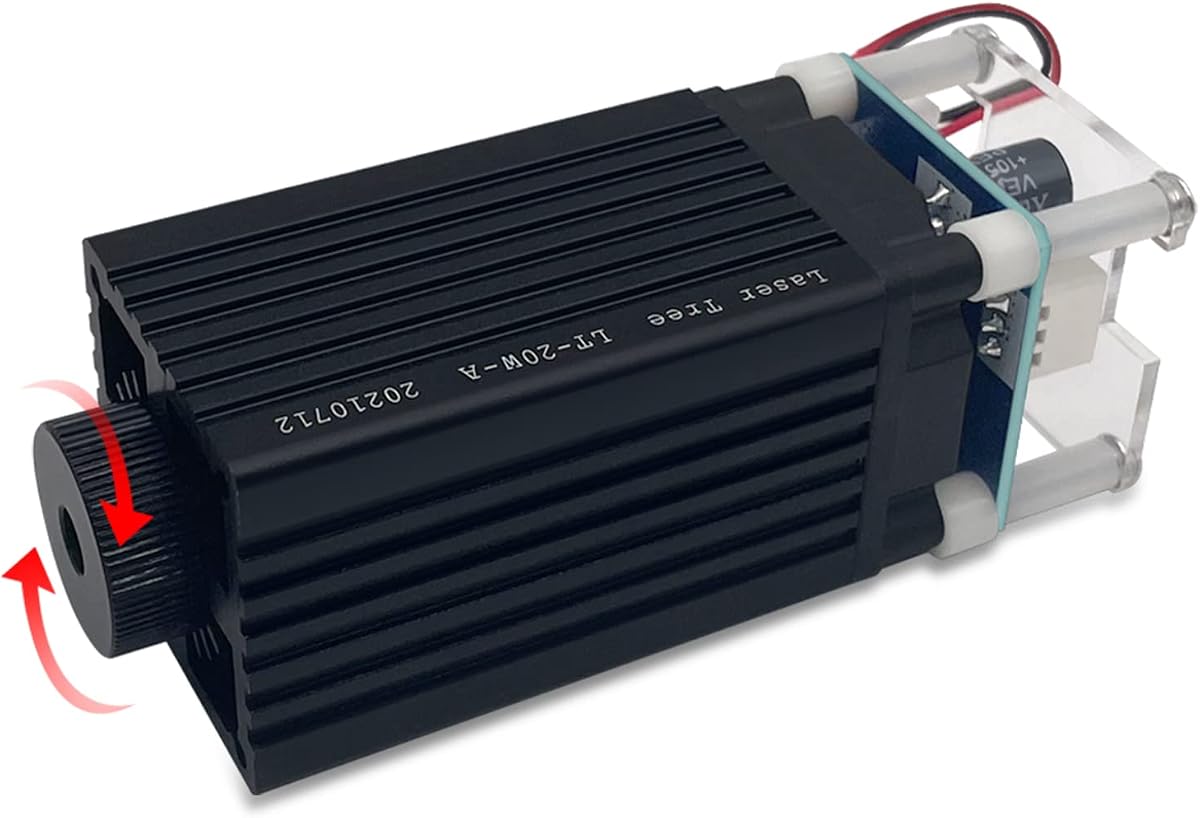




The LASER TREE 4W module stands out as an excellent entry point for hobbyists looking to upgrade their CNC or laser engraving setups. With a solid 4.3 rating from users, it delivers reliable performance for basic engraving tasks on wood and leather.
We may earn a commission when you buy through this link, at no additional cost to you.
Its 4000mW optical output is sufficient for cutting through 1-2mm plywood in a single pass, making it ideal for small projects. The adjustable focus head allows users to fine-tune the beam for precision, while the compact size ensures it fits easily on most frames.
While it lacks advanced features like built-in air assist, the straightforward design minimizes potential points of failure. Users appreciate the clear instructions and the ability to mount it on various machine types without extensive modification.
This module is best suited for beginners who need a cost-effective solution for light engraving and cutting. It balances performance and simplicity, offering a trustworthy start into the world of diode laser applications.
The adjustable focus range from 20mm to 50mm lets you optimize beam density for different material thicknesses and engraving depths.
It handles common materials like MDF, paper, and leather effectively, though reflective surfaces require additional treatment.
We may earn a commission when you buy through this link, at no additional cost to you.
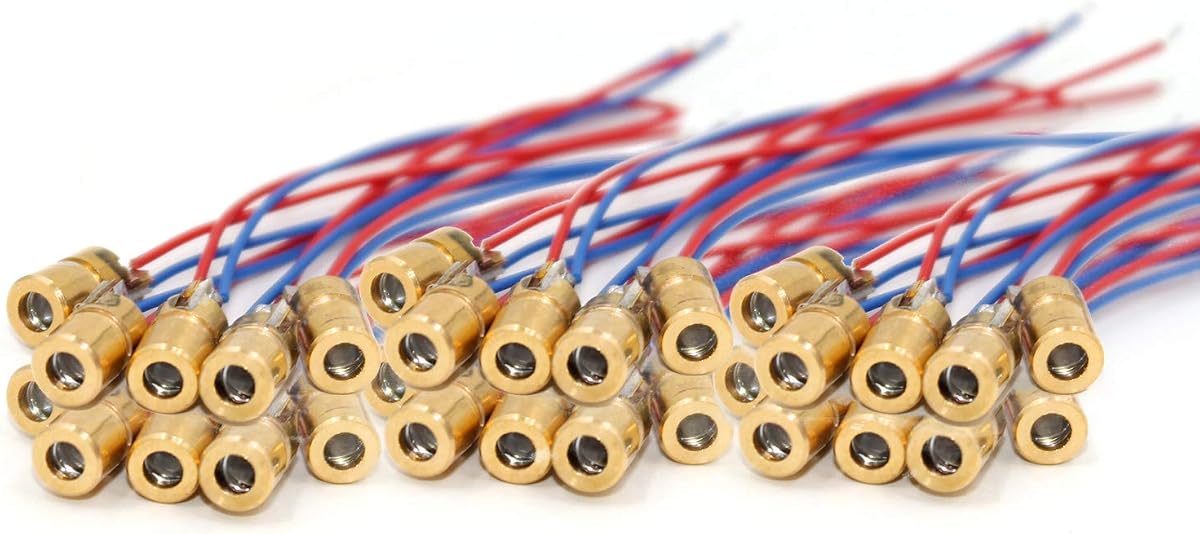
This pack of ten HiLetgo red laser diodes is perfect for makers needing multiple units for various small-scale experiments or alignment tools. With a 4.3 rating, users appreciate the bright red dot produced by the 650nm wavelength.
We may earn a commission when you buy through this link, at no additional cost to you.
Operating at just 5V and 5mW, these diodes are safe for low-risk applications like water level meters or simple laser pointers. The 6mm diameter makes them easy to integrate into custom enclosures or Arduino projects.
The main limitation is the lack of a protective housing, requiring some soldering and assembly skills. However, for educational purposes or indicator lights, they provide excellent value and reliability.
Ideal for students and hobbyists building prototypes, these diodes offer a flexible and affordable way to incorporate laser technology into diverse electronic designs without high costs.
These diodes operate reliably between -10°C and +40°C, ensuring stability in varied workshop environments.
The leaded design simplifies connection to breadboards or custom PCBs for rapid prototyping.
We may earn a commission when you buy through this link, at no additional cost to you.
This 2-pack of diode modules produces a clear red line at 650nm, making it highly useful for alignment and leveling projects. Users rate it 4.1, noting its reliability for basic construction or craft alignment needs.
We may earn a commission when you buy through this link, at no additional cost to you.
The 5mW output ensures safety while still providing visible contrast on most surfaces. These modules are often used in DIY setups where a straight reference line is needed for cutting or marking.
While not designed for cutting, their primary value lies in precision layout work. The compact design allows easy mounting on rails or custom jigs without adding bulk.
Best for those needing a cost-effective way to ensure straight cuts or placements, these modules deliver consistent performance for non-industrial alignment tasks.
The lens creates a sharp, continuous line that aids in precise alignment during woodworking or assembly.
Its small form factor fits into various mounts, allowing flexible positioning for different projects.
We may earn a commission when you buy through this link, at no additional cost to you.
Green laser modules like these 532nm units are prized for their visibility, even in brighter conditions. With a 4.2 rating, users find them effective for applications requiring a clear dot indicator.
We may earn a commission when you buy through this link, at no additional cost to you.
The 50mW output offers a balance between visibility and safety, though it should still be handled with care. They are commonly used in surveying tools or as alignment aids in larger workshops.
One caveat is the need for preheating in temperatures below 15°C, which can delay startup. Despite this, their performance makes them a solid choice for professional or serious hobbyist use.
Ideal for users who need a visible reference point that stands out against various backgrounds, these modules provide reliable operation when properly maintained.
The 532nm wavelength appears brighter to the human eye compared to red or blue lasers of similar power.
Ensure a warm environment before use in winter to avoid performance issues during the initial startup phase.
We may earn a commission when you buy through this link, at no additional cost to you.
This LASER TREE module is a powerhouse for serious DIYers, featuring 10000mW output and built-in FAC technology. With a 4.4 rating, it delivers professional-grade results on stainless steel and thick wood.
We may earn a commission when you buy through this link, at no additional cost to you.
The air assist system ensures cleaner cuts by blowing away debris, while the compressed spot increases power density significantly. Users report speeds up to 300mm/s on metal, proving its industrial capability.
Although it comes at a higher price, the included adapter board and safety covers add value. The robust build quality and long lifespan make it a worthy investment for frequent users.
Best for advanced users needing rapid cutting and high precision, this module offers a complete solution for complex engraving and cutting tasks.
Built-in Field Aspheric Correction keeps the beam size small at focus, boosting precision and engraving speed by up to 5x.
The magnetic nozzle reduces resistance and helps maintain consistent cut quality across thicker materials.
We may earn a commission when you buy through this link, at no additional cost to you.
With a high 4.6 rating, this bulk pack offers unbeatable value for those building multiple devices or needing spares. The 5mW output is safe yet visible for electronic projects.
We may earn a commission when you buy through this link, at no additional cost to you.
Users love the compatibility with microcontrollers like Arduino and Raspberry Pi. The copper plastic material ensures durability while keeping costs low for large-scale experiments.
Since they lack housing, you will need to solder and mount them yourself, which may challenge beginners. However, experienced makers appreciate the flexibility to design custom fixtures.
Best for educational kits, prototypes, or large installations requiring multiple indicators, these diodes provide reliability and versatility at a minimal cost.
These diodes work seamlessly with common microcontrollers, making them a staple in the maker community.
The 6mm size fits into tight spaces, perfect for embedding in custom electronics or small devices.
We may earn a commission when you buy through this link, at no additional cost to you.
This violet module operates at 405nm, offering a unique wavelength useful for curing resins or specialized marking. Users rate it 3.8, noting that initial alignment can be tricky.
We may earn a commission when you buy through this link, at no additional cost to you.
The 5mW power is modest, but the violet light interacts differently with certain materials compared to standard blue or red. It requires a DC input of 3 to 5 volts, making it flexible for battery or USB power.
You may need to adjust the front cap to achieve a perfect dot, which adds a learning curve. Despite this, it provides a cost-effective way to experiment with UV-range optics.
Best for hobbyists working with UV-curable materials or unique optical effects, this module offers specialized utility at an accessible price point.
The 405nm wavelength is closer to UV, useful for fluorescent reactions or resin curing applications.
Rotating the front cap allows fine-tuning of the focal point to suit different working distances.
We may earn a commission when you buy through this link, at no additional cost to you.
Rated 4.6, this module offers a robust balance of power and features for advanced DIY cutting. The 5500mW output combined with FAC technology delivers precise, clean cuts on metals and woods.
We may earn a commission when you buy through this link, at no additional cost to you.
Its cooling system maintains efficiency with a 12000 RPM fan, ensuring stable operation even under heavy load. The air assist kit included simplifies setup and enhances cut quality by removing debris.
While it requires a stable power source, the plug-and-play compatibility with 12V and 24V machines reduces wiring complexity. Users appreciate the durable build and detailed support from the manufacturer.
Best for experienced users seeking high-speed cutting and professional finishes, this module stands out for its engineering and reliability.
High-speed fan keeps the diode cool, maintaining consistent output and extending the module's operational life.
The integrated nozzle directs airflow to the cut zone, improving edge quality and cutting depth significantly.
We may earn a commission when you buy through this link, at no additional cost to you.
This 2-pack of red dot modules is ideal for simple signaling or basic alignment tasks. With a 3.8 rating, users find them functional for low-power applications without extra complexity.
We may earn a commission when you buy through this link, at no additional cost to you.
Operating on 3V to 5V, they are easy to power from batteries or USB ports. The adjustable front allows you to sharpen the dot for better visibility at different distances.
They lack advanced features but serve well as visual markers or educational tools. The compact size makes them easy to hide or integrate into small prototypes.
Best for budget-conscious users needing basic optical indicators, these modules provide straightforward performance without unnecessary complications.
Running on just 3 to 5 volts, these modules consume minimal power, suitable for portable setups.
Manual adjustment ensures the dot remains crisp at your specific working distance for better precision.
We may earn a commission when you buy through this link, at no additional cost to you.
This single 532nm module offers a bright green dot suitable for visual indicators. With a 3.9 rating, it is a straightforward choice for basic visibility needs.
We may earn a commission when you buy through this link, at no additional cost to you.
The green wavelength stands out well against dark surfaces. However, users should note the preheating requirement in cold temperatures to ensure consistent startup.
Sold individually, it is a good spare or starter option for those needing just one unit. The solder wires allow for easy integration into custom circuits.
Best for simple green light indicators or basic projects, this module provides reliable performance at a very affordable price.
The 532nm green output is highly visible, making it suitable for indicators or simple alignment tools.
In colder conditions, allow the module a few seconds to warm up for optimal brightness and stability.
We may earn a commission when you buy through this link, at no additional cost to you.
Choosing the right diode laser module depends on your specific needs, budget, and technical capabilities. Consider these key factors to ensure you select a unit that performs reliably for your projects.
Optical power determines how fast and deep the laser can cut or engrave. Higher wattage allows for cutting thicker materials like wood or metal, but also increases safety risks and requires better ventilation.
For hobbyists, 4W to 10W is usually sufficient for engraving and light cutting. Professionals should look for modules with 10W or more to handle industrial-grade tasks efficiently.
Different wavelengths interact with materials in unique ways. Blue light (450nm) is excellent for cutting wood and engraving metals, while green (532nm) is better for visibility and specific marking tasks.
Choose a wavelength that matches your primary application. Blue is versatile for most general DIY work, while violet or green suits specialized needs like resin curing or high-contrast indicators.
A high-quality focus lens ensures the beam stays tight, improving precision and speed. Look for modules with FAC (Field Aspheric Correction) for smaller focal spots and better density.
Adjustable focus heads give you flexibility to change the beam size for different materials. This feature is essential if you work with varied thicknesses or need precise detail work.
Laser modules generate heat during operation, so adequate cooling is crucial for longevity. Built-in fans or heat sinks prevent overheating, while air assist systems clear debris for cleaner cuts.
If you plan to run long jobs, choose a module with active cooling and an air assist kit. This reduces wear on the diode and improves the quality of your finished projects.
Ensure the module voltage matches your machine's driver board, typically 12V or 24V. Check if the connector type matches your system to avoid custom wiring or adapter issues.
Universal compatibility with PWM control allows you to use the module across various brands and machines. This flexibility saves time and money when upgrading or modifying your setup.
Laser modules emit harmful radiation, so safety glasses and protective enclosures are mandatory. Look for Class 4 units with safety covers and interlock systems to protect eyes and skin.
Always wear appropriate eye protection rated for the specific wavelength. Avoid using modules without safety gear, as reflections can cause permanent eye damage even from lower power units.
A compact design with multi-hole mounting options simplifies integration into existing frames. Some modules come with brackets or adapter boards to fit common CNC machines.
Check the physical dimensions to ensure the module fits your machine's carriage. Easy plug-and-play installation reduces setup time and minimizes the need for custom fabrication.
Diodes have a rated lifespan, often around 20,000 hours. A longer lifespan indicates higher quality components and better manufacturing standards for long-term use.
Choose vendors that offer after-sales support and clear warranty terms. Access to technical assistance ensures you can troubleshoot issues quickly without interrupting your workflow.
Before operation, always wear safety glasses rated for your laser's wavelength. Mount the module securely on your machine frame and ensure all wiring connections are tight and insulated.
Adjust the focus height according to the material thickness using the provided scale or manual measurement. Run a test pattern on scrap material to verify beam intensity and cutting speed settings.
Clean the lens regularly with a soft cloth to maintain optimal performance. Store the module in a dry environment and avoid leaving it powered on for extended periods without use.
Optical power refers to the actual laser output measured in milliwatts, while machine power is the electrical input. Higher optical power means more effective cutting, so focus on optical specs when comparing modules.
No, diode lasers generally cannot cut clear, blue, purple, or white transparent materials because the light passes through without heating. You may need to spray a coating on these surfaces to absorb the laser energy.
Yes, high-power diode lasers can engrave anodized or raw metals. For cutting metal, you typically need a power output of 10W or more along with air assist to prevent oxidation.
Green diodes are sensitive to cold temperatures. Below 15°C, they require a short warm-up period to achieve stable output and prevent erratic beam behavior during startup.
With proper cooling and ventilation, most modules last around 20,000 hours. Replace them if the output dims significantly or the beam becomes uneven, indicating diode degradation.
You need glasses specifically rated for the laser's wavelength. For 450nm blue, use OD5+ protection for the blue spectrum. Never use generic sunglasses as they may not block the specific laser frequency.
Yes, many modules support PWM control via GPIO pins. You may need a transistor or driver board to handle the current, so check the voltage requirements before connecting to a microcontroller.
FAC stands for Field Aspheric Correction. It improves beam quality by making the focus spot smaller and rounder, which significantly increases cutting speed and engraving precision.
The LASER TREE 10W module leads our list as the best all-around choice for balancing power and features. The AENBUSLM 40W offers premium performance for those needing faster speeds and better cooling.
Prioritize optical power and safety features when selecting your unit. A reliable cooling system and proper voltage compatibility will ensure you get the most out of your investment over time.
Prices and availability change frequently, so always check the latest deals before finalizing your purchase. With the right module, you can unlock new creative possibilities in your DIY workshop.