
THUSTAR 8MP Document Camera & Webcam 4K
4.4Editor score
Foldable portable design
Dual microphones included
Adjustable LED brightness
Compare the top 10 document cameras for teachers and professionals in October 2026. This guide evaluates image quality, connectivity, features, and compatibilit
Document cameras have become essential tools for modern classrooms and professional presentations. They allow educators and speakers to display physical objects, documents, and 3D items in high definition to remote or in-person audiences seamlessly.
We evaluated ten leading models based on resolution, frame rate, connectivity options, and software features. Our analysis focuses on real-world usability for distance learning, web conferencing, and live demos across various operating systems.
Each pick highlights specific strengths like portability, low-light performance, or advanced annotation tools. Please note that product availability and pricing may change frequently, so verify current details before making your final purchase decision.
4.4Editor score
4.5Editor score

4.6Editor score
This side-by-side comparison highlights key specifications across all ten selected models. Review image sensors, resolution capabilities, connectivity types, and unique features to find the device that best fits your specific teaching or presentation needs.


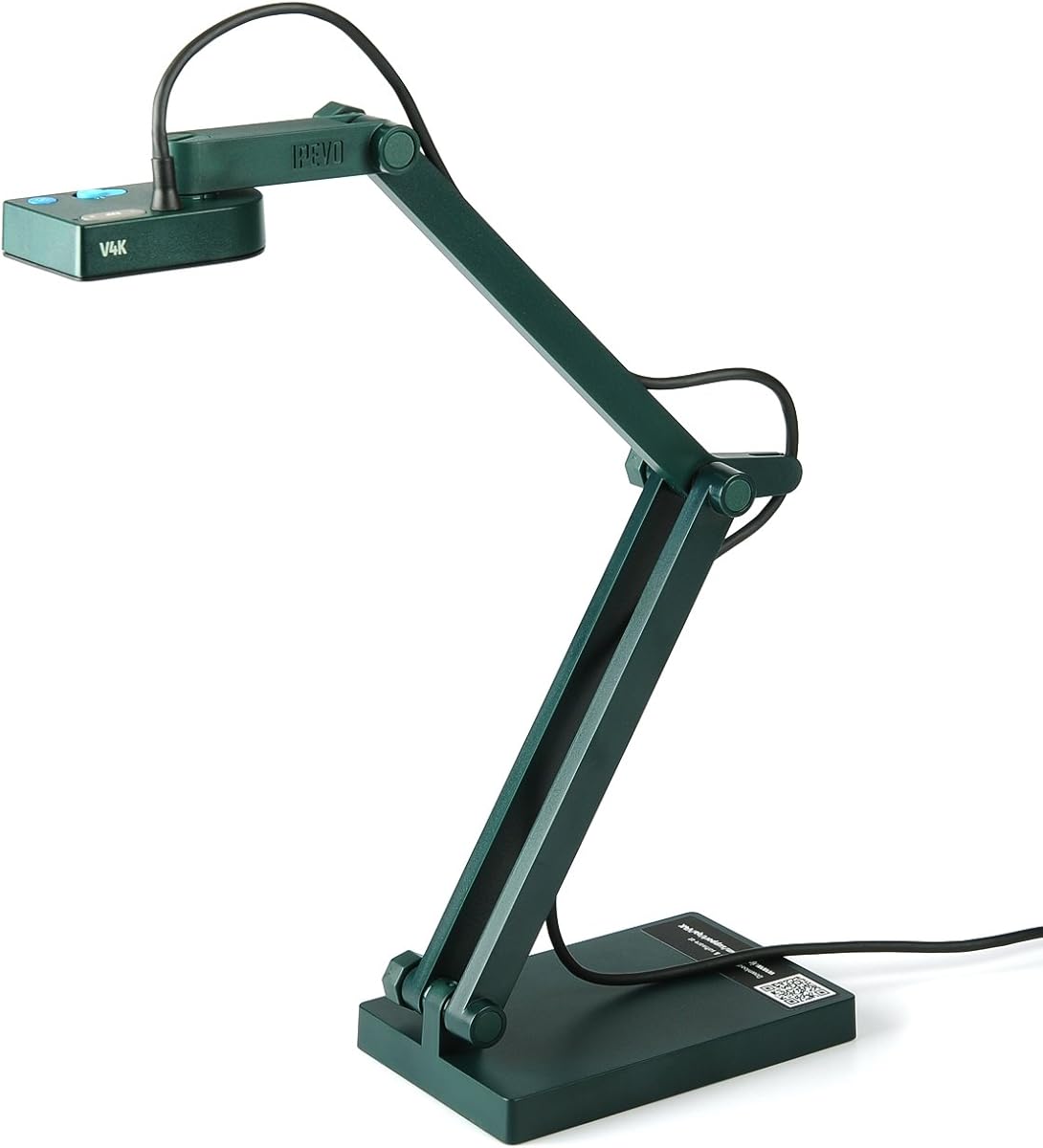
The IPEVO V4K stands out as the top pick for its balance of image quality and reliability. With an 8MP Sony CMOS sensor, it delivers crystal-clear visuals up to 3264 x 2448 pixels. Its rating of 4.5 stars reflects consistent performance across various teaching scenarios.
We may earn a commission when you buy through this link, at no additional cost to you.
This camera excels in live streaming, maintaining up to 30 fps at full HD without lag. The fast focusing speed minimizes interruptions when switching between materials, making it ideal for dynamic lessons. The multi-jointed stand allows flexible positioning for capturing 2D and 3D objects effectively.
While the stand covers a decent area, some users might prefer a larger base for bigger documents. Additionally, it relies on wired USB connections, which could limit mobility compared to wireless models. However, these trade-offs are acceptable given the high image fidelity and robust build quality.
Teachers and presenters who prioritize sharp visuals and stability should choose the V4K. It works seamlessly with Mac, Windows, and Chromebook systems, ensuring broad compatibility. For most educational and professional needs, this model offers the best overall value.
The Sony CMOS sensor ensures exceptional noise reduction and color reproduction, making details pop even in dimly lit environments.
Designed for daily use, the multi-jointed stand offers a simple fix for tightening loose joints, ensuring long-term durability.
We may earn a commission when you buy through this link, at no additional cost to you.
The INSWAN INS-1 offers a classic and reliable solution for document sharing. Its 8MP Ultra-High definition SONY camera captures live images at up to 3264 x 2448 pixels with lag-free video streaming at 30 fps. This model has a strong 4.6-star rating for its consistent output.
We may earn a commission when you buy through this link, at no additional cost to you.
Designed for desktop setups, it features a space-saving multi-joint design with a generous viewing size of 14.72 x 11 inches. The bundled INSWAN Documate software provides digital zoom, image annotation, and video recording, enhancing its utility for presentations and remote teaching sessions.
While it lacks advanced wireless connectivity, the plug-n-play operation simplifies setup for most users. The built-in mic and anti-glare sheet help manage lighting challenges, though users cannot adjust brightness levels beyond the fixed LED output. These limitations suit static classroom environments well.
Educators looking for a straightforward, high-quality camera with useful software tools will appreciate the INS-1. It works seamlessly with PC, Mac, and Chromebook systems. For those needing basic but powerful document capture, this model is a solid investment.
The bundled Documate software allows for advanced features like digital zoom and video recording without requiring third-party tools.
Its compact multi-joint design makes it perfect for desktop set ups, saving valuable desk space while maintaining flexibility.
We may earn a commission when you buy through this link, at no additional cost to you.
The THUSTAR 8MP camera delivers impressive value for budget-conscious educators. With 8MP resolution and support for up to 2448P output, it provides clear images for live transmission. Its 4.4-star rating highlights its effectiveness for distance learning and live demos.
We may earn a commission when you buy through this link, at no additional cost to you.
A key feature is its foldable design, which occupies a small space after folding and is easy to carry. The multi-joint support with multi-angle rotation allows capturing 2D and 3D objects better. Additionally, built-in dual silicon microphones reduce noise and improve sound quality during video chats.
While it includes 3-level LED lights for varying lighting conditions, the build relies on plastic which may feel less premium than other options. Users also have limited control over advanced software settings. However, the manual image reversal and plug-and-play compatibility make it highly accessible.
For those seeking a cost-effective solution with essential features like dual mics and portability, this camera is an excellent choice. It is compatible with Windows, Mac, and Chromebooks. Its practicality for remote teaching justifies its position as a top budget pick.
The embedded design ensures the camera occupies a small space after folding, making it easy to carry between classrooms or home.
Built-in dual silicon microphones reduce noise, improving sound quality without requiring external microphones during conferencing.
We may earn a commission when you buy through this link, at no additional cost to you.
The Kitchbai Visualiser is designed with teachers in mind, offering a robust set of features at a competitive price. It captures ultra-high-definition images up to 2448P with a 30 fps frame rate. This model has earned a 4.5-star rating for its reliable performance in education.
We may earn a commission when you buy through this link, at no additional cost to you.
It features an adjustable image reversal function, allowing users to manually correct reversed images without software. The 3 levels of brightness adjustable help eliminate shooting problems under difficult lighting. Its foldable design allows it to occupy a small space after folding, making it easy to carry.
Despite its strong hardware, users may find the software support somewhat generic compared to specialized document camera software. The lack of specific low-light sensor details means results may vary in dark environments. However, the inclusion of a USB-C cable and dual mics adds modern convenience.
This visualiser is suitable for teachers needing a portable and feature-rich tool for online teaching. Its plug-n-play compatibility with Windows, Mac, and Chromebooks ensures easy integration. For versatile classroom use, it provides a strong balance of functionality and cost.
Comes with a USB-C cable for instant plug-and-play operation, aligning with modern device interfaces.
Users can manually adjust the reversed image that appears in the device to a normal image easily.
We may earn a commission when you buy through this link, at no additional cost to you.
The PAKOTOO Document camera focuses on simplicity and core functionalities for classroom use. It supports manual image reversal via buttons, eliminating the need for software intervention. With a 4.3-star rating, it serves basic distance teaching needs effectively.
We may earn a commission when you buy through this link, at no additional cost to you.
Its foldable design means it takes up little space after folding, which is beneficial for portable setups. The multi-joint supports multi-angle free rotation, which can better capture 2D and 3D objects. Additionally, the 3 levels of brightness adjustment ensure clearer images in various lighting.
However, it requires users to select USB Camera in the system settings, meaning it is not plug and play. The camera does not support zoom and HDMI features, nor is it compatible with iPad, which limits some modern device connectivity. These constraints might be challenging for some users.
For users who prefer hardware controls and do not need iPad compatibility, this is a practical choice. It connects via USB-C and works with Windows, Mac, and Chromebooks. Its straightforward operation makes it a solid option for dedicated classroom environments.
The image reversal function can be realized through the button, removing the need to pass through software settings.
Multi-joint supports multi-angle free rotation, which can better capture 2D and 3D objects efficiently.
We may earn a commission when you buy through this link, at no additional cost to you.
The OKIOCAM S-4K stands out for its smart tracking capabilities. Featuring an 8MP Sony Exmor R Sensor, it captures real-time images at Ultra High Definition up to 3264 x 2448p. It has a strong 4.5-star rating for its engaging interactive features.
We may earn a commission when you buy through this link, at no additional cost to you.
It includes the OKIOPoint visual pointer on the OKIOCAM Live software, which allows you to point using OKIOPoint and the camera will zoom in and follow. This feature brings lessons to life by making them fun and engaging. The hinges are tested for over 10,000 rotations for durability.
While it offers lag-free streaming and excellent low-light performance, the camera relies on software for advanced features which may require subscriptions. It also lacks HDMI output for direct projector connection without a computer. These are trade-offs for its portability and smart AI functions.
Teachers who want interactive engagement tools will find the S-4K valuable. It is compatible with Windows, Mac, iOS, Chrome and interactive display operation systems. For modern educational needs that prioritize interaction, this model offers compelling technology.
The OKIOPoint pointer zooms in and follows your pointing gesture, simplifying teaching focus and enhancing student engagement.
All hinges endured over 10,000 rotations in lab testing, ensuring durability for daily classroom use.
We may earn a commission when you buy through this link, at no additional cost to you.
The IPEVO VZ-X offers unparalleled flexibility with its three connectivity modes: Wi-Fi, HDMI, and USB. The 8 MP Camera captures images in high definition and near 4K quality in USB mode. Its 4.6-star rating reflects its premium performance and versatility.
We may earn a commission when you buy through this link, at no additional cost to you.
It features 9-12 hours of battery life, ensuring a complete class or presentation session without interruptions. Up to 33-feet of wireless range allows teachers to capture different objects all over the room. The swiveling head and multi-jointed stand allow free movement from different height and angle.
The higher cost is a significant consideration, but the freedom of wireless presentation is often worth the investment. Users need to monitor battery levels, which adds a maintenance step. However, the ability to connect to Apple TV, projector, or monitor directly makes it a top premium choice.
Educators who need to move around the classroom freely will find the VZ-X indispensable. It works wirelessly with iOS, tvOS, and Android devices. For professional and advanced teaching environments, this model delivers the ultimate in presentation freedom.
Up to 33-feet of wireless range lets teachers and presenters capture different objects all over the room.
Works wirelessly with iOS, tvOS, and Android, making it compatible with a wide range of devices.
We may earn a commission when you buy through this link, at no additional cost to you.
The OKIOCAM S2 Pro offers true 4K resolutions up to 3840×2160. With a 13MP 4K UHD CMOS IMAGE SENSOR, it provides true-to-life colors and minimal graininess in low light. It carries a 4.2-star rating for its professional-grade output.
We may earn a commission when you buy through this link, at no additional cost to you.
It features a high quality metal weighted base and glass-fiber reinforced arm made in Taiwan. The hinges endured over 10,000 rotations in lab testing. Including OKIOPoint smart pointer enhances presentations by making them interactive and engaging with real-time zoom and focus.
Although the camera delivers exceptional detail, the price is higher than standard options. Users rely heavily on the OKIOCAM Live software for full features, which requires installation. However, the true 4K resolution and robust build quality make it a strong contender for professional presentations.
For those needing maximum resolution and interactive tools, the S2 Pro is a solid choice. It is plug and play and compatible with Windows, Mac, Chrome and interactive display operation systems. Its high-definition output ensures detailed materials are displayed clearly.
High quality metal weighted base and glass-fiber reinforced arm made in Taiwan provide stability and longevity.
OKIOPoint Live software makes presentations interactive by following your pointer and zooming in on details.
We may earn a commission when you buy through this link, at no additional cost to you.
The OKIOLABS T-4K captures full Ledger-size materials or both pages of an open book at once. Featuring an 8MP Exmor R sensor, it provides vibrant color reproduction and enhanced low-light performance. Its 4.5-star rating reflects its suitability for online teaching and video calling.
We may earn a commission when you buy through this link, at no additional cost to you.
It offers lag-free streaming at up to 30fps in full HD. The OKIOPoint visual pointer on the OKIOCAM Live software lets you navigate presentations effortlessly. The compact design allows you to show large images like maps and blueprints without occupying much desk space.
Users may need to install the comprehensive software to unlock features like stop-motion and timelapse. Physical button controls are limited, meaning most adjustments happen via software. However, the ability to capture large materials in a portable form factor is a significant advantage.
Educators needing to display large documents should consider this model. It is plug and play and compatible with Windows, Mac, iOS, Chrome and interactive display operation systems. Its balance of size and resolution makes it a practical tool for varied classroom needs.
Capture full Ledger-size materials or both pages of an open book at once with this portable choice.
OKIOPoint allows you to navigate presentations and zoom in on any part of the screen with ease.
We may earn a commission when you buy through this link, at no additional cost to you.
The OKIOCAM S2-4K excels in low-light environments without extra lights. With the Exmor R CMOS sensor’s back-illuminated design, it doubles light sensitivity and reduces noise for sharp images even under faint projector light. It has a 4.3-star rating for its reliable performance.
We may earn a commission when you buy through this link, at no additional cost to you.
It captures a 15.1 x 11.2 in area, including letter-size portraits and near-Ledger documents. This eliminates glare and uneven brightness common with LED lights. OKIOPoint AI-tracking on OKIOCAM Live software simplifies teaching focus by zooming in and following your pointer in real-time.
Some users may need to buy a USB-C adapter for iPad connection. The build quality is high with metal-weighted base and glass-fiber reinforced arm. While it costs more than basic models, the advanced imaging technology provides professional results in challenging conditions.
For hybrid classrooms where lighting is suboptimal, this camera is ideal. It works with Windows, Mac, iOS, Chromebook, and interactive displays. Its ability to capture fine details without supplemental LED support makes it a top-tier choice.
The Exmor R CMOS sensor doubles light sensitivity and reduces noise, eliminating glare and uneven brightness.
OKIOPoint AI-tracking zooms in and follows your pointer in real-time, enhancing student engagement.
We may earn a commission when you buy through this link, at no additional cost to you.
Selecting the right document camera depends on several critical factors including image quality, connectivity, and portability. This guide outlines key considerations to help you make an informed decision for your specific needs.
The camera sensor determines the clarity and detail of your output. Look for models with at least 8MP resolution and Sony CMOS sensors, which provide better color reproduction and low-light performance. Higher resolutions like 4K are beneficial for displaying fine details in diagrams or text.
Prioritize sensors with back-illuminated designs if you often present in dimly lit environments to ensure vibrant colors without grain.
Connectivity dictates how easily you can integrate the camera into your existing setup. USB models are plug-and-play and reliable for wired connections. For flexibility, consider cameras with HDMI for direct projector connections or Wi-Fi for wireless presentations to large screens.
Choose the connectivity that matches your primary presentation environment; classrooms with limited outlets benefit from wireless or HDMI options.
Smooth streaming requires high frame rates to avoid motion blur during live demonstrations. Aim for cameras that support 30 fps at full HD or higher. Lag-free performance is essential for interactive sessions where immediate visual feedback is required.
Ensure the camera supports consistent frame rates across the resolutions you plan to use for uninterrupted teaching or meetings.
A multi-joint stand allows flexible positioning to capture various angles of 3D objects and documents. Foldable designs save space and make transport easier for presenters moving between rooms. Weighted bases provide stability during adjustments.
Select a model with a footprint that fits your desk size but offers enough reach for your typical presentation materials.
Advanced software can enhance your presentations with annotation tools, video recording, and interactive pointers. Some models include proprietary software with AI tracking to highlight specific areas on the screen. Compatibility with third-party conferencing tools is also critical.
Verify that the included software supports your operating system and offers features like zoom and annotation without additional costs.
Built-in LED lights help illuminate documents in dark environments but can cause glare. Look for cameras with adjustable brightness or sensors that perform well without artificial light. Some models offer anti-glare sheets to improve contrast.
If you frequently present in variable lighting, choose a camera with excellent sensor sensitivity or adjustable lighting controls to maintain image quality.
Built-in microphones can reduce the need for external devices in simple setups. Dual microphones generally provide better noise reduction and clarity. Check if the mic supports noise cancellation features for cleaner audio during web conferences.
Ensure the audio quality matches your presentation needs to avoid distracting background noise during calls.
Confirm the camera works with your primary devices such as Windows PCs, Macs, or Chromebooks. Some models offer specific support for iPads via USB-C adapters. Check system requirements like RAM and processor speed for optimal performance.
Always test compatibility with your specific operating system version before purchasing to avoid driver or connection issues.
Start by connecting the camera via USB or establishing a wireless connection. Ensure the drivers are installed if required. Launch your video conferencing or presentation software and select the camera as the input device.
Position your documents or objects on the viewing area. Adjust the focus button if the image is unclear. Use the multi-joint stand to tilt the camera for the best angle, and adjust LED brightness if the lighting is too dim or harsh.
To maintain the device, wipe the lens gently with a soft cloth to remove dust. Avoid bending the joints excessively when not in use. Regularly update the software to ensure access to the latest features and security patches.
A document camera is specifically designed to capture physical objects and documents placed on a desk surface with top-down lighting. Regular webcams usually face forward and focus on people or front-facing subjects. Document cameras often include adjustable stands and macro capabilities for detailed viewing.
Most modern document cameras support plug-and-play functionality without extra software. They work directly with conferencing apps like Zoom or Teams. However, proprietary software often provides extra features like annotation or recording that enhance the presentation experience.
Yes, many newer models support iPad connectivity via USB-C adapters or Wi-Fi. You may need to download specific apps like OKIOCAM Live to access advanced features. Always check the manufacturer's system requirements for iOS compatibility.
Blurry images often result from incorrect focus or lighting. Press the autofocus button to reset the focus. Ensure the object is within the recommended distance range. Adjust the LED light intensity if the area is too dark or causing reflections.
Yes, most document cameras with multi-joint stands can capture 3D objects effectively. You can tilt the camera to show height and depth. Macro modes allow for detailed views of small objects like coins or specimens.
Check that the USB cable is securely connected and try a different port. Restart your computer and ensure drivers are installed if required. Verify that the device is selected in your software settings. Contact support if the issue persists.
Choosing the right document camera depends on your specific needs for resolution, connectivity, and portability. Models like the IPEVO V4K and INSWAN INS-1 offer reliability, while the THUSTAR 8MP provides excellent value for budget-conscious buyers.
Prioritize features such as image sensors and software compatibility to ensure seamless integration with your existing setup. If mobility is key, consider wireless options like the IPEVO VZ-X. For high-detail presentations, models like the OKIOCAM S2 Pro deliver superior quality.
Always verify current prices and availability before purchasing as they may change frequently. We hope this guide helps you select the best tool to enhance your teaching or professional presentations with clarity and confidence.