
Seagate IronWolf 4TB
4.5Editor score
5400 RPM efficiency
Up to 8 bays
Rescue Data Recovery
Choosing the right internal hard drive for your network attached storage system is critical for data safety and performance. You need drives built to handle continuous operation and multiple users accessing files simultaneously without failure.
We compared ten top models based on their durability, speed, capacity, and specific NAS optimizations. Our analysis focuses on real-world performance metrics and manufacturer reliability data to ensure you get a drive that lasts.
Each pick below highlights key features and potential trade-offs for different user needs. Prices and availability change frequently so verify current details before purchasing to ensure you get the best value for your setup.
4.5Editor score

4.7Editor score
3.9Editor score
As an Amazon Associate we earn from qualifying purchases.
The following table provides a side-by-side overview of the top ten internal hard drives designed specifically for network attached storage environments.



This Seagate IronWolf drive stands out as a top choice for serious NAS users needing high capacity and speed. Its 4.7 rating reflects strong customer satisfaction regarding durability and performance under load.
We may earn a commission when you buy through this link, at no additional cost to you.
The 7200 RPM speed ensures fast data transfer rates which is vital for multi-user environments. The integrated IronWolf Health Management system allows for proactive monitoring to prevent data loss before it happens.
While it commands a premium price compared to standard drives its reliability and workload capacity justify the cost for businesses. The included rescue service adds an extra layer of security for critical files.
You should buy this if you need a robust 10TB drive for a busy NAS setup. It is the ideal choice for those who prioritize performance and data safety over initial cost savings.
Designed for workloads up to 180TB per year this drive handles continuous access without performance degradation.
The integrated management system alerts you to potential issues allowing you to replace drives before failure occurs.
We may earn a commission when you buy through this link, at no additional cost to you.
This budget-friendly option offers excellent value for small home NAS setups without sacrificing essential reliability. It maintains the core IronWolf features while being more accessible for smaller storage needs.
We may earn a commission when you buy through this link, at no additional cost to you.
The 5400 RPM speed class reduces power usage and noise making it great for home offices. CMR technology ensures data integrity during RAID operations which is critical for data safety.
Trade-offs include slower transfer speeds and less cache which may bottleneck heavy multitasking. However for file storage and backup tasks these limitations are often negligible in daily use.
Ideal for users building a first NAS or expanding on a budget. It balances cost and reliability effectively for those who do not need maximum throughput.
Delivers reliable NAS performance at a lower price point ideal for budget-conscious builders needing essential capacity.
Runs cooler and consumes less energy which helps keep your overall system electricity costs down over time.
We may earn a commission when you buy through this link, at no additional cost to you.
This variant of the IronWolf series provides robust performance for shared storage environments with consistent reliability. The inclusion of rescue data recovery adds significant value for peace of mind during operations.
We may earn a commission when you buy through this link, at no additional cost to you.
It handles file sharing and multi-user access efficiently thanks to its high cache and rotational vibration sensors. The drive is built to minimize wear and tear ensuring long term availability for your data.
The main drawback is the standard warranty period which is shorter than premium models offer. Still the overall balance of capacity and performance makes it a strong contender for general NAS use.
Recommended for users needing a dependable 10TB drive for collaborative work. It fits well in environments where consistent access is more important than maximum speed.
Built to handle multiple users accessing files simultaneously without significant latency or performance drops.
Includes a service plan that helps recover data if drive failure occurs reducing the risk of permanent loss.
We may earn a commission when you buy through this link, at no additional cost to you.
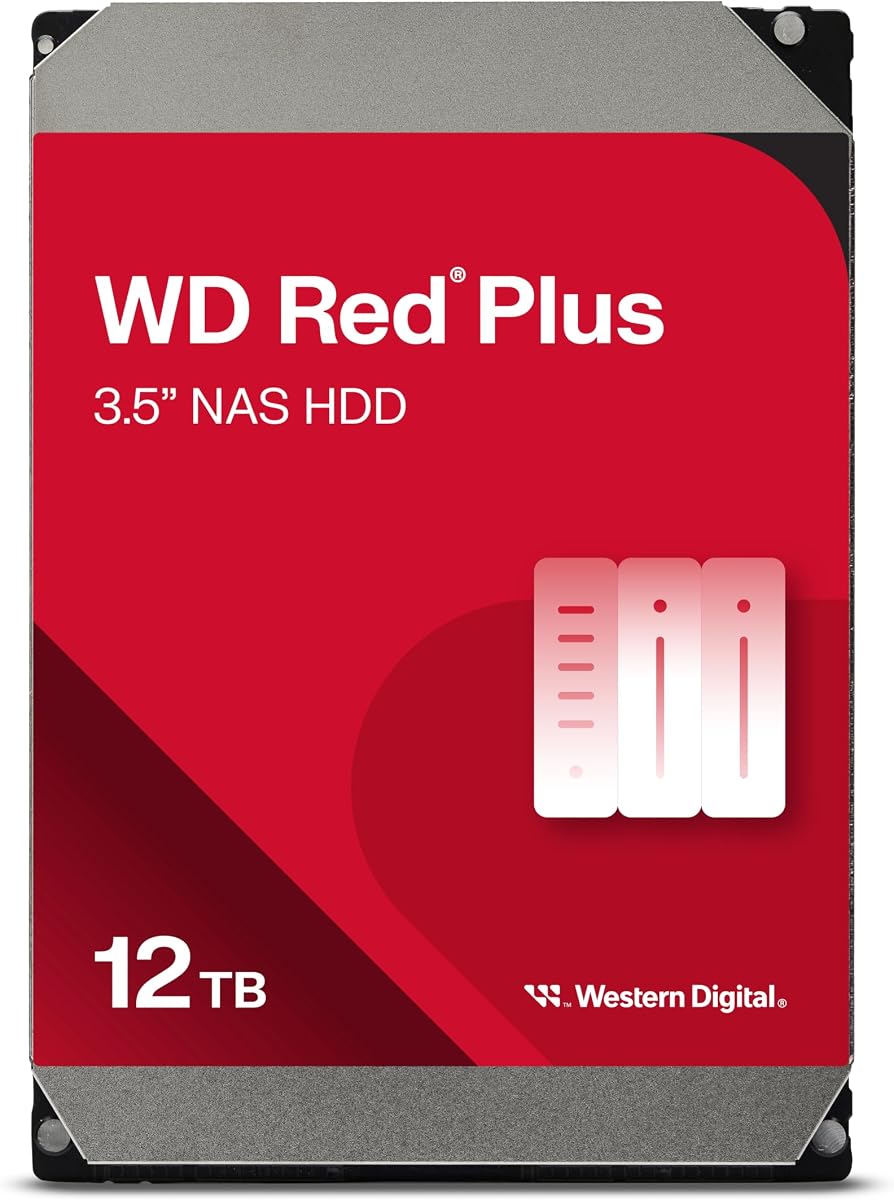
Western Digital offers this high capacity drive for those needing substantial storage for media or archives. It features NASware firmware designed specifically for compatibility with various NAS operating systems.
We may earn a commission when you buy through this link, at no additional cost to you.
The 512MB cache helps smooth out data transfers during heavy write operations. It supports workloads up to 180TB per year making it suitable for small businesses or power users.
Despite strong specs user reviews are mixed potentially due to specific vendor firmware nuances. The higher price point is a consideration for budget focused buyers looking for value.
Best for users requiring 12TB in a Red Plus form factor. It provides a reliable storage foundation if you prioritize capacity and WD ecosystem integration.
Offers ample space for growing data needs without sacrificing the reliability expected from NAS specific drives.
NASware firmware ensures the drive works smoothly with your NAS system reducing potential configuration issues.
We may earn a commission when you buy through this link, at no additional cost to you.
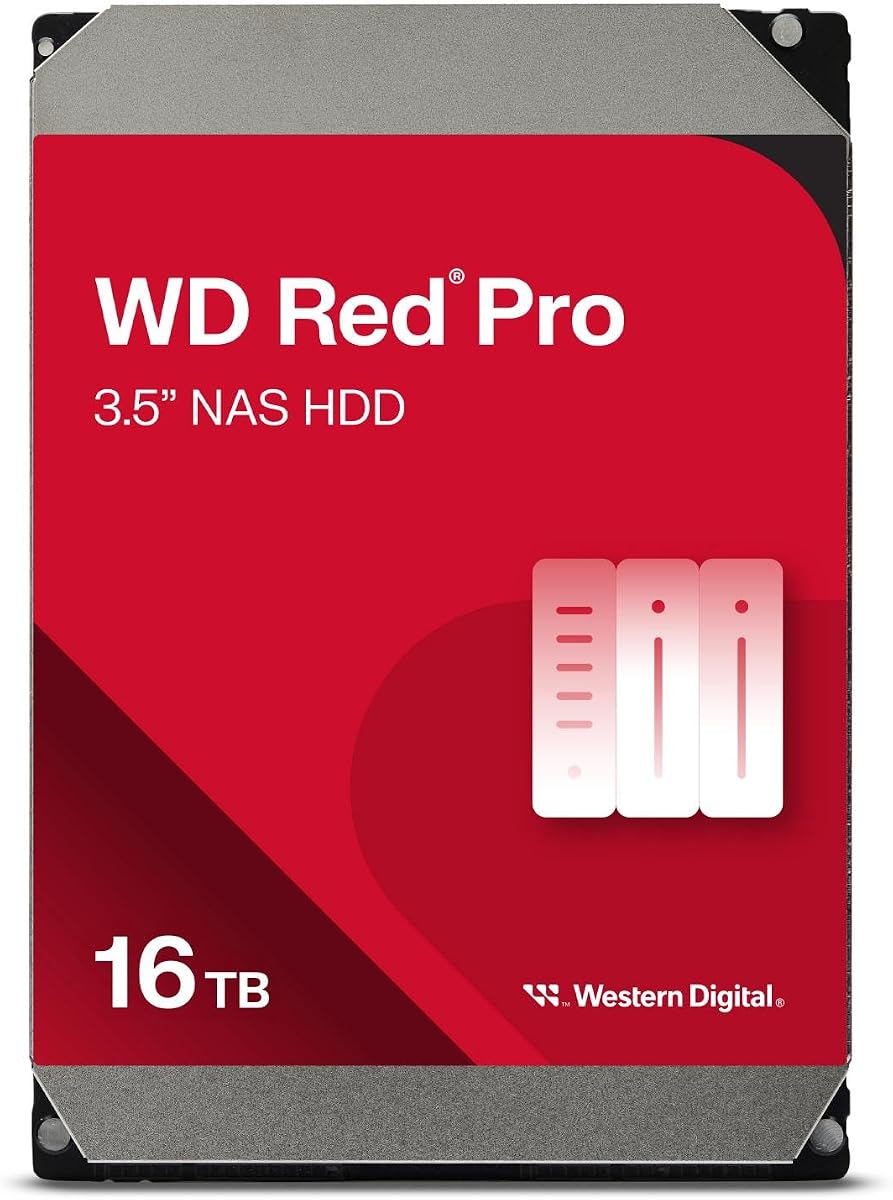
This premium drive is built for intensive workloads requiring massive storage and unlimited bay scalability. It is designed to handle up to 550TB of annual transfers which is far above standard consumer needs.
We may earn a commission when you buy through this link, at no additional cost to you.
The unlimited bay support makes it ideal for large scale deployments. Its robust construction ensures it can withstand the demands of professional multi-user environments with heavy daily usage.
The price is significantly higher than other options and user ratings are average suggesting potential variability in quality. This limits its appeal to specific enterprise use cases.
Choose this for large enterprise NAS setups needing 16TB per drive. It is the right tool for professionals who need maximum capacity in a single drive.
Built to handle extreme workload rates ensuring longevity even under constant high-intensity usage in data centers.
Supports unlimited bays allowing you to build massive storage arrays without being limited by drive count constraints.
We may earn a commission when you buy through this link, at no additional cost to you.
This is a desktop drive that can work in NAS environments but lacks specific NAS optimizations. It is a strong option for home users who want high capacity without a dedicated NAS drive price.
We may earn a commission when you buy through this link, at no additional cost to you.
The drive offers standard reliability and includes Acronis True Image for easy data migration. It is built for everyday computing tasks and handles large files effectively.
Lacking vibration sensors and NASware it is not ideal for multi-bay arrays or 24×7 heavy use. It is best suited for single bay or light duty NAS configurations.
Consider this for single bay home storage if budget is a concern. It provides good performance for general use where continuous 24×7 loads are not expected.
Provides a large 12TB storage pool at a lower price point than dedicated NAS specific drive models.
Offers standard Western Digital reliability suitable for single user or occasional access NAS scenarios.
We may earn a commission when you buy through this link, at no additional cost to you.
This renewed drive offers a massive 14TB capacity at a very low price point. It targets hyperscale users or those needing cost-effective bulk storage for less critical data sets.
We may earn a commission when you buy through this link, at no additional cost to you.
The 5 year warranty helps mitigate the risks associated with renewed products. It is tested for high density storage making it suitable for cloud data centers or large personal archives.
You must format the drive yourself and it comes without screws or cables. While the warranty is generous renewed drives carry inherent variability in their condition and prior use.
Best for budget builders needing maximum capacity for archives. It is a viable option if you are comfortable with the renewed status and have tools to install it.
Provides a huge 14TB capacity pool at a price that significantly undercuts new drives with similar specs.
Includes a 5 year warranty plan that extends protection well beyond the standard term for renewed items.
We may earn a commission when you buy through this link, at no additional cost to you.
The IronWolf Pro series is built for professional server environments needing reliable 24×7 operation. This 4TB model delivers high speeds and a 5 year warranty for long term security.
We may earn a commission when you buy through this link, at no additional cost to you.
It features rotational vibration sensors and lower power consumption for efficient operation. The included rescue data recovery service adds critical protection for important business files.
The price is high relative to the capacity and cache is lower than larger models. However for business users the warranty and recovery service provide essential operational safety.
Recommended for professional servers needing fast reliable 4TB storage. It is a solid choice for critical systems where downtime must be minimized at all costs.
Designed for 24×7 server environments ensuring consistent performance without thermal throttling or data loss.
Includes a 5 year warranty and data recovery service to protect your investment over extended usage periods.
We may earn a commission when you buy through this link, at no additional cost to you.
This variant is tailored for home server environments requiring high sustained transfer rates for streaming or media. Its halogen free design meets modern environmental and safety standards for electronics.
We may earn a commission when you buy through this link, at no additional cost to you.
The rotational vibration sensor helps maintain data integrity in multi-bay setups. It delivers speeds up to 210MB/s making it fast enough for most high bandwidth applications.
The main limitation is the standard warranty compared to Pro models. Still the performance and reliability ratings make it a trustworthy choice for demanding home users.
Perfect for home media servers or personal cloud storage. It balances speed and capacity well for users needing fast access to large media libraries.
Delivers high transfer speeds ensuring smooth streaming of 4K video to multiple devices on your network.
Equipped with sensors that reduce read errors when multiple drives are operating next to each other.
We may earn a commission when you buy through this link, at no additional cost to you.
This drive focuses on efficiency and quiet operation with its 5400 RPM class. It is ideal for users prioritizing low noise and power consumption over maximum raw transfer speed.
We may earn a commission when you buy through this link, at no additional cost to you.
It features CMR technology and NASware firmware for reliable RAID performance. The drive supports workloads up to 180TB per year ensuring consistent availability for your files.
Speed is slower than 7200 RPM models which can be a bottleneck for heavy data tasks. However for file archives or backups the speed trade-off is often acceptable.
Best for quiet home office setups where low noise matters. It provides a solid reliable storage solution for users who want efficiency and quiet operation.
Runs cooler and quieter than higher speed drives making it ideal for living rooms or quiet offices.
Consumes less power while maintaining reliable performance for steady workloads and background tasks.
We may earn a commission when you buy through this link, at no additional cost to you.
Selecting the right NAS drive requires understanding several technical factors that affect reliability and speed.
Drives designed for NAS often include special firmware like NASware to handle multi-drive environments. They also feature sensors to detect vibration from neighboring drives which prevents read errors.
Always choose a drive explicitly marketed for NAS use to ensure longevity and reliability in an enclosure.
Conventional Magnetic Recording (CMR) writes data in permanent tracks which is reliable for RAID rebuilds. Shingled Magnetic Recording (SMR) overwrites tracks and can slow down significantly during rebuilds.
Verify that the drive uses CMR technology to avoid performance issues when replacing failed drives.
7200 RPM drives offer faster data transfer speeds ideal for media streaming and multi-user access. 5400 RPM drives are quieter and use less power which is better for archives.
Choose based on whether speed or noise is your higher priority for your environment.
Cache acts as a buffer for data transfers allowing for smoother operations during peak times. Larger cache sizes like 256MB or 512MB improve performance under heavy multi user loads.
A larger cache is beneficial if your NAS will host multiple users simultaneously.
Ensure your drive capacity matches your current needs plus future growth. Larger drives reduce the need to add multiple disks which simplifies management.
Consider 10TB or larger drives if you anticipate storing large media files or extensive archives.
This metric defines how much data can be transferred per year. A higher workload rate like 180TB/year ensures the drive handles heavy daily usage without wear.
Check the workload rate to confirm the drive matches your daily data access volume.
Most NAS drives come with a 3 year warranty while Pro models offer 5 years. Look for included data recovery services which can save critical data in case of failure.
A longer warranty and data recovery included provide financial protection against expensive data loss.
Most NAS systems use 3.5 inch drives for desktops. Ensure your enclosure supports this size and has enough bays for your needs.
Check the physical size and bay count compatibility before purchasing a new drive.
Install the drive carefully into the bay to avoid vibration damage. Ensure it is firmly seated and connected to power and data cables securely.
Use your NAS software to format and initialize the drive before adding data. Select a RAID level that matches your redundancy needs.
Keep the enclosure in a cool ventilated area to prevent overheating. Monitor drive health regularly using built-in tools to catch issues early.
You can use a desktop drive in a NAS but it is not recommended for 24×7 use. NAS drives have better vibration sensors and firmware designed for continuous operation and multiple users. Using a desktop drive may lead to premature failure or data loss in a multi-bay setup.
IronWolf Pro drives are built for higher workloads and support more bays than standard IronWolf drives. Pro models typically include a 5 year warranty and data recovery services while standard IronWolf drives often come with a 3 year warranty.
CMR ensures that data is written in a stable way that supports RAID rebuilds efficiently. SMR drives can be very slow during rebuilds which increases the risk of data loss if another drive fails during the process.
NAS drives require adequate airflow but do not need special cooling beyond standard case fans. Ensure your NAS enclosure is not in a hot environment and has proper ventilation to maintain safe operating temperatures.
It is best to check drive health weekly or use automated alerts to notify you of issues. Many NAS systems provide built-in health dashboards that show temperature and error rates automatically.
RAID is recommended to protect against drive failure by keeping data redundant across multiple drives. While not strictly required it adds a layer of security that prevents data loss if a single drive stops working.
If a drive fails in a RAID array the data is often still accessible from the remaining drives. You should replace the failed drive and let the system rebuild the data from the remaining disks automatically.
We found that the Seagate IronWolf 10TB offers the best balance of speed and reliability for most users. For budget builders the 4TB IronWolf provides excellent value without sacrificing essential NAS features.
Prioritize drives with CMR technology and high workload ratings to ensure your data stays safe under continuous use. Avoid standard desktop drives for critical storage tasks where uptime is vital.
Prices fluctuate often so verify current offers before buying to get the best deal. Always check your NAS compatibility list to ensure the drive works smoothly with your system.