
Orbit Rain and Freeze Sensor
4.5Editor score
Water-absorbing disks expand
Built-in thermistor detects cold
Adjustable trigger threshold
This comprehensive guide compares the top irrigation controllers with rain sensors to help you choose the smartest system for your lawn and garden needs.
Smart irrigation technology helps homeowners save water while keeping landscapes healthy. Controllers with rain sensors automatically skip watering during precipitation preventing waste and protecting plants from over saturation or freeze damage.
We evaluated ten leading models based on ease of use compatibility with existing systems weather integration capabilities and build quality. Our analysis covers both standalone sensors and integrated controllers for varied property sizes.
Each selection highlights key strengths ideal use cases and potential limitations to guide your decision. Prices and availability change frequently so verify current details before purchasing your next irrigation upgrade.
4.5Editor score

4.6Editor score
4.5Editor score
This table provides a side-by-side overview of key specifications and features across all ten selected products to help you identify the best fit for your specific irrigation setup and climate needs.




The Hunter Rain-Clik stands out as a top choice for homeowners seeking reliable automatic water savings without complex installation. With a rating of 4.6 stars it delivers instant shutoff when rain begins or temperatures drop to 37 degrees Fahrenheit.
We may earn a commission when you buy through this link, at no additional cost to you.
Its wireless maintenance-free design eliminates the need for trenching or wiring making it ideal for busy property owners. The adjustable vent allows fine-tuning of reset times based on local soil drainage and climate conditions.
While the unit costs more than basic sensors the convenience and reliability justify the investment for many. The universal compatibility ensures it fits most standard residential irrigation systems with open or closed ports.
Homeowners looking for a set-and-forget solution that protects lawns from freeze damage and overwatering should prioritize this model. Its balance of performance and ease of use makes it the editor's top pick for rain sensing.
The built-in battery means you can mount it anywhere on a wall or gutter without drilling into electrical boxes or running cables through walls.
The adjustable vent lets you control how long the system waits before resuming watering after rain ensuring plants dry properly before the next cycle.
We may earn a commission when you buy through this link, at no additional cost to you.
The Rain Bird TM2-6 offers a straightforward solution for yards needing up to six zones with basic rain sensor integration. Its familiar interface simplifies programming for users transitioning from older mechanical timers.
We may earn a commission when you buy through this link, at no additional cost to you.
Built to handle indoor or outdoor mounting it includes a dedicated rain sensor input with a bypass option for manual override when necessary. The master valve pump start circuit supports more complex system layouts.
While it lacks advanced connectivity like WiFi it remains a dependable workhorse for regions where simple automated scheduling suffices. The bypass feature ensures flexibility during maintenance or unexpected weather events.
Ideal for homeowners who prioritize reliability over smart features this controller pairs well with external rain sensors for efficient water management. Its durability and ease of use support long-term irrigation needs.
The intuitive dial and display reduce programming time allowing you to focus on setting zones and start times without navigating complex menus.
The dedicated input terminal accepts standard rain sensors enabling automatic water suspension during precipitation without requiring additional adapters.
We may earn a commission when you buy through this link, at no additional cost to you.
The TRU6I model provides flexible program-based settings allowing specialized schedules for different yard areas. It stores programming permanently during power outages ensuring your schedule remains intact after electrical disruptions.
We may earn a commission when you buy through this link, at no additional cost to you.
With up to twelve distinct start times per zone and customizable watering days it supports complex landscaping needs. The rain delay feature suspends watering manually or via an external sensor for automatic operation.
Although WiFi capability requires a separate module the controller supports future upgrades for remote monitoring. Season adjust lets you scale watering times across all programs based on changing weather patterns.
Gardeners needing detailed control over watering schedules without immediate smart features will find this controller practical. Its blend of program flexibility and rain sensor support makes it a strong mid-range option.
Individual programs per zone allow precise timing for flowers lawns and shrubs ensuring each area receives optimal hydration without overlap.
The ability to add a WiFi module later means you can enhance connectivity without replacing the entire controller unit as needs evolve.
We may earn a commission when you buy through this link, at no additional cost to you.
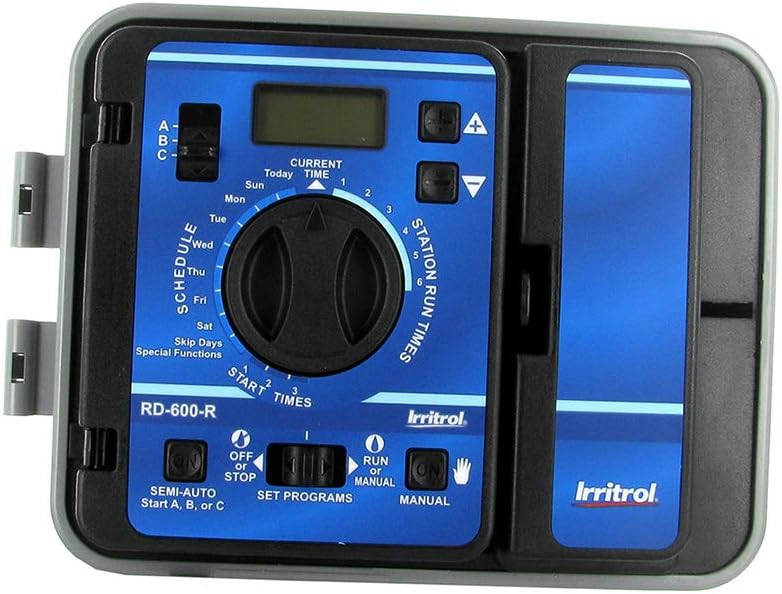
The Irritrol RD600-EXT-R is designed for outdoor use with rain sensor ready terminals and a bypass switch for manual control. It supports three independent programs to meet diverse landscape watering requirements.
We may earn a commission when you buy through this link, at no additional cost to you.
Remote control compatibility expands management options without wiring new cables. Water well recovery delays between stations help maintain pump performance and system stability during high use periods.
While it lacks smart app features the mechanical reliability and outdoor housing suit regions with harsh weather. The rain sensor terminal ensures integration with external sensors for automatic pauses.
Landscapers and homeowners needing a durable outdoor controller with room for remote expansion will appreciate this unit. Its simplicity and sensor readiness balance cost with functional irrigation control.
Adding a compatible remote allows control from a distance reducing the need to walk to the controller for manual starts or schedule changes.
The water well recovery option helps prevent pump burnout by introducing delays between station operations during demanding irrigation cycles.
We may earn a commission when you buy through this link, at no additional cost to you.
The ARC8 model brings app-based control to eight zones with EPA WaterSense certification promoting efficient water use. You can set monitor and adjust schedules from anywhere using the Rain Bird mobile app.
We may earn a commission when you buy through this link, at no additional cost to you.
Local weather forecasts help skip or adjust daily watering to save up to 30% water. Compatibility with Amazon Alexa and Google Assistant allows voice commands for manual runs or delays.
Despite a lower overall rating the convenience of remote monitoring and shared access for professionals adds value. The app interface simplifies complex tasks like viewing upcoming schedules or checking system status.
Tech-savvy homeowners wanting centralized control and environmental efficiency will find this controller appealing. While connectivity reliance is a trade-off the potential water savings justify consideration for smart landscapes.
Managing your system from a smartphone means you can react quickly to unexpected rain or temperature changes without being physically present.
EPA WaterSense certification indicates the system meets strict criteria for water efficiency helping you reduce utility bills and environmental impact.
We may earn a commission when you buy through this link, at no additional cost to you.
The ESP-TM2 supports eight zones with a large back-lit LCD for visibility in sunlight or dark sheds. It includes a factory-installed outdoor-rated power cord simplifying initial setup and placement.
We may earn a commission when you buy through this link, at no additional cost to you.
Programming a schedule takes just three steps making it accessible for beginners. Internet-based weather information adjusts schedules daily to save water without manual intervention when paired with a WiFi module.
Contractor default features let you save and restore custom schedules ensuring consistency across maintenance visits. The delay watering option allows up to two weeks of suspended watering for repairs or drought.
Homeowners seeking a balance of capacity visibility and weather intelligence will appreciate this model. Its reliability and clear interface make it a popular choice for medium-sized residential irrigation systems.
The back-lit display ensures you can read settings clearly even in low light reducing errors during nighttime or early morning programming.
Internet-based weather data helps the system adapt to local conditions automatically reducing the need for manual adjustments throughout the season.
We may earn a commission when you buy through this link, at no additional cost to you.
The ESP4ME3 starts with four zones but expands to twenty two with optional modules making it ideal for growing properties. Non-volatile memory preserves settings indefinitely even after long power outages.
We may earn a commission when you buy through this link, at no additional cost to you.
Flow monitoring compatibility alerts you to issues like leaks or high flow preventing property damage. The optional LNK WiFi module enables remote access and monitoring via mobile devices.
Power cord inclusion allows quick plug-in or hardwiring to a junction box for permanent setups. This flexibility suits both temporary and permanent installations across residential and light commercial sites.
Property owners planning future landscape expansion will benefit from the modular design. Its robust memory and flow features add layers of protection and reliability for long-term system integrity.
Expanding zones without replacing the controller saves money when adding new plant beds or extending irrigation to other yard sections.
Flow monitoring notifications can alert you to bursts or leaks early minimizing water waste and potential water damage to structures.
We may earn a commission when you buy through this link, at no additional cost to you.
This ESPME3 controller offers station count flexibility from four to twenty two making it suitable for varied project sizes. LED alerts and app notifications keep you informed of electrical or flow issues.
We may earn a commission when you buy through this link, at no additional cost to you.
The color-coded dial positions and large three inch screen improve readability in dark garages or sheds. Adding station modules allows expansion without powering down the controller reducing downtime during upgrades.
Compatible with WR2 rain sensors it supports automatic water suspension. The package includes a power plug and outdoor cabinet for immediate indoor or outdoor installation.
Landscapers and property managers needing a scalable robust controller with clear status indicators will find this model practical. Its build quality and modular support ensure long service life.
LED messages and app alerts quickly highlight electrical programming or flow issues helping you address problems before they cause significant damage.
Adding station modules during operation keeps your system running smoothly while accommodating new irrigation zones without lengthy shutdowns.
We may earn a commission when you buy through this link, at no additional cost to you.
The Orbit sensor offers an affordable way to add rain and freeze detection to existing controllers. Water-absorbing disks expand when wet causing the system to suspend watering automatically.
We may earn a commission when you buy through this link, at no additional cost to you.
A built-in thermistor detects low temperatures preventing freeze damage. Weather-resistant wire runs from the controller to an open area ensure reliable detection without complex mounts.
Adjustable settings let you change the threshold for triggering delays to suit local rainfall patterns. Compatibility spans Orbit Hydro-Rain and other major brands making it versatile.
Budget-conscious homeowners seeking essential protection against overwatering will find this sensor effective. Its simplicity and low cost make it an accessible entry point for automated water conservation.
The physical expansion of disks in moisture offers a straightforward and durable method to detect rain without electronic components that might fail.
Working with multiple controller brands means you can add this sensor even if you are not tied to a single ecosystem manufacturer.
We may earn a commission when you buy through this link, at no additional cost to you.
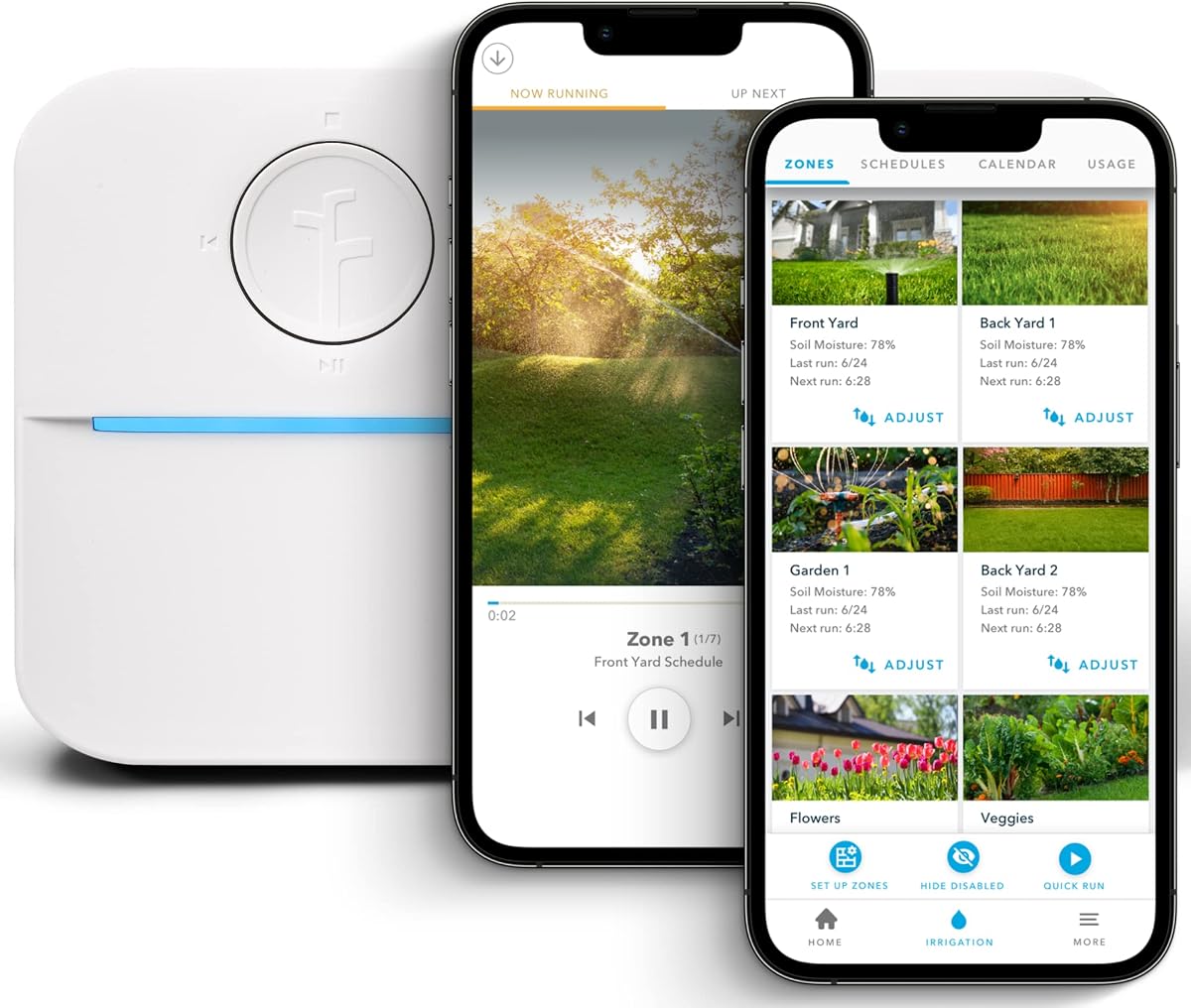
The Rachio 3 replaces dials with smart app control offering patented Weather Intelligence that skips watering for rain wind and freeze. Adaptive schedules help yards thrive through seasonal changes.
We may earn a commission when you buy through this link, at no additional cost to you.
You can create custom schedules or let the system adjust automatically. Management from anywhere includes viewing schedules and tracking estimated usage. Installation typically takes thirty minutes or less.
Compatible with most existing sprinkler systems it minimizes retrofitting needs. Grow-in options support new plantings ensuring adequate hydration while reducing waste on mature vegetation.
Tech-oriented homeowners wanting precision and automation will value this controller. Its balance of smart features and ease of installation makes it a top choice for modern landscapes.
Patented Weather Intelligence analyzes conditions to skip unnecessary watering saving water and reducing utility costs without manual intervention.
Fast DIY installation ensures you can start using the smart features within an hour reducing downtime and complexity during upgrades.
We may earn a commission when you buy through this link, at no additional cost to you.
Selecting the right controller depends on your yard size desired automation level and budget. This guide outlines key factors to consider for an informed purchase.
Determine how many zones your landscape requires to match the controller's maximum zone count. Controllers range from four to twenty two zones depending on model and expandability options.
Choose a unit that meets current needs and allows future expansion if you plan to add plant beds or modify the irrigation layout.
Check if the controller includes a rain sensor input terminal or if you must buy a sensor separately. Some models support bypass switches for manual overrides during maintenance.
Prioritize controllers with clear sensor terminals and compatibility with sensors you prefer to ensure seamless automatic water suspension.
Decide whether WiFi or mobile app control is necessary for your routine. Some units require separate modules to enable remote access and weather-based adjustments.
Evaluate if app features justify the cost based on how often you plan to adjust schedules or monitor usage remotely.
Look for models using internet-based weather data to adjust schedules automatically. This feature can reduce water use by skipping cycles during rain or high wind.
Verify the system supports local forecast integration for accurate savings and healthy plant growth throughout the season.
Confirm whether the controller needs indoor wiring or can operate outdoors with an included power cord. Outdoor-rated units reduce vulnerability to indoor humidity or pets.
Consider installation ease and whether your current electrical setup supports the required voltage or hardwiring options.
A large back-lit screen improves readability in dark garages or direct sunlight. Color-coded dials and simple menus reduce programming errors.
Select an interface that matches your technical comfort to avoid frustration when setting zones or adjusting watering times.
For growing landscapes choose controllers that accept station modules for additional zones without replacing the main unit. Some brands allow modules to be added while the system runs.
Ensure future module availability to avoid compatibility issues if you expand your irrigation network later.
Outdoor units should have weather-resistant housing and long warranties to protect against elements and wear. Check reviews for reliability in local climate conditions.
Invest in reputable brands offering customer support to resolve any technical or compatibility issues quickly after purchase.
Begin by mounting the sensor in an open area free of sprinkler spray or shade to ensure accurate rainfall detection. Connect the sensor wires to the controller's designated rain input terminal following the manual's color code.
Program your watering schedules based on plant types and soil conditions. Use the season adjust feature to scale times as temperatures rise or fall to maintain optimal hydration.
Regularly clean sensor disks or vents to prevent debris buildup that might cause false triggers. Check battery levels or wired connections annually to ensure continuous automatic protection.
Most modern controllers include a dedicated rain sensor input terminal but some budget or older models may lack this feature. Always verify the controller manual for compatibility before purchasing a separate sensor unit.
Rain sensors detect moisture or freeze conditions and send a signal to the controller to suspend watering cycles. This automatic pause prevents water waste and protects plants from excess moisture.
Yes many smart controllers accept external sensors but may require specific compatible models for seamless integration. Check the app or manual to confirm supported sensor types for automatic weather-based adjustments.
Quality sensors often last several years with minimal maintenance. Disk-based models may need periodic cleaning or replacement if mechanical parts wear out from constant exposure to weather.
Sensors should be placed outdoors in an open area away from direct sprinkler spray or shade. Indoor installation is not effective since the sensor needs exposure to actual rain or outdoor temperatures.
Review your schedule monthly or seasonally to adjust for plant growth and weather changes. Use the season adjust feature to scale times without rewriting full programs for efficiency.
Most controllers include a bypass switch or mode allowing manual watering during rain if needed. This override ensures flexibility for tasks like watering new plantings during brief dry spells.
Some regions mandate rain sensors to meet water conservation laws. Check local regulations to confirm if they are required for your installation to avoid fines or penalties.
The Hunter Rain-Clik and Orbit sensors offer excellent standalone options for automatic water savings without complex upgrades. For full control consider smart controllers like Rachio or Rain Bird ESP-TM2 with WiFi features.
Prioritize zone capacity sensor integration and ease of use to match your landscaping needs. A unit that balances reliability with smart adjustments will yield the best long-term results for your garden.
Always check current prices and availability before purchasing since deals change frequently. Investing in a quality controller with rain sensing helps protect your lawn and reduce utility costs.