
Neoteck 10kHz LCR Meter Tweezers with Auto Identification, D/Z/Q/X ESR Test
4.7Editor score
Auto component ID
Rotatable display screen
USB Excel export
This guide compares the top Lcr Meter Tweezer models for precision SMD testing, featuring accurate measurements, auto identification, and portable designs for
Finding the right Lcr Meter Tweezer can transform how you handle electronic repairs and component testing. These compact tools combine precision measurement with ease of use, making them essential for hobbyists and professionals alike.
We evaluated ten top models based on accuracy, frequency range, display quality, and overall usability. Each product was analyzed for its ability to handle SMD components and provide reliable data during diagnostic tasks.
Each pick highlights key strengths, limitations, and ideal use cases to help you choose wisely. Prices and availability may change, so verify current listings before making your final purchasing decision.
4.7Editor score

4.7Editor score

5.0Editor score
Below is a side-by-side comparison of all ten models featured in this guide. We highlight key specifications and unique features to help you quickly identify the best match for your specific testing needs.



The Smart Tweezers ST5S stands out as the top choice for professionals needing reliable precision. With a rating of 4.7 stars, it delivers 0.1 percent accuracy that few competitors match in this form factor.
We may earn a commission when you buy through this link, at no additional cost to you.
Its automated component identification saves significant time during troubleshooting. The ClearValue OLED display ensures readings remain visible even in varying light conditions, while the Swiss-made gold-plated leads maintain consistent contact resistance.
While the price is higher than budget models, the accuracy and build quality justify the investment for serious work. The included spare test leads and warranty add further value to this professional tool.
If you require consistent results for SMD repair or calibration tasks, this model is the best investment. It balances portability with the performance needed for demanding electronic diagnostics.
The 0.1 percent accuracy ensures that even small components are measured correctly without drift over time.
Swiss-made 24K gold-plated test leads minimize contact errors and ensure reliable long-term performance.
We may earn a commission when you buy through this link, at no additional cost to you.
The Neoteck 10kHz LCR Tweezers offer exceptional value for hobbyists and casual repair technicians. With a 4.7 rating, it provides six-in-one testing capabilities including resistance, capacitance, inductance, diodes, continuity, and automatic component ID.
We may earn a commission when you buy through this link, at no additional cost to you.
One standout feature is the rotatable display, allowing easy reading from different angles. The ability to export data via USB to Excel makes it suitable for light inventory management or project logging tasks.
It may lack the ultra-high frequency options of premium models, but for standard repairs, it performs well. The multi-point calibration helps reduce errors from parasitic effects without requiring expensive equipment.
This model is ideal for those entering electronics repair without breaking the bank. It delivers solid performance for SMD component verification and PCB troubleshooting at a very accessible price point.
Built-in data hold and storage allow results to be saved and transferred to a computer easily.
Open, Load, and Short calibration modes help minimize measurement errors caused by stray capacitance.
We may earn a commission when you buy through this link, at no additional cost to you.
The Pro1-100KHz LCR Meter earns a perfect 5.0 rating for its comprehensive feature set and reliability. It covers five test frequencies ranging from 100Hz to 100kHz, making it versatile for everything from RF to large electrolytics.
We may earn a commission when you buy through this link, at no additional cost to you.
Accuracy is paramount in professional settings, and this device delivers with 0.1 percent for resistance. The wide measurement range ensures you can test components from tiny SMD resistors to large inductors without switching devices.
While it comes at a premium price, the inclusion of lifetime support adds significant value. It is a robust tool designed for long-term use in workshops or labs where reliability is non-negotiable.
Choose this if you need a versatile instrument that handles a broad spectrum of components accurately. Its durability and extensive range make it a top choice for advanced users.
Five selectable frequencies allow testing across diverse component types without accuracy loss at high frequencies.
Three test voltage options provide flexibility for sensitive components or standard measurements.
We may earn a commission when you buy through this link, at no additional cost to you.
The FNIRSI LCR-ST1 is designed for portability without sacrificing essential functionality. It supports precise measurement of resistance, capacitance, inductance, and diodes with three selectable frequencies suitable for standard components.
We may earn a commission when you buy through this link, at no additional cost to you.
It features a 1.14 inch HD color display that provides clear readings. Auto recognition of electronic components simplifies the workflow, while data storage allows for easy tracking of test records over time.
The included storage bag and data cable for PC connection add to its utility. However, the fixed screen design means you cannot rotate it, which may limit ergonomics for some users.
This is a solid choice for those needing a compact tool for fieldwork or light bench testing. It offers a good balance of features for the price point.
Automatic recognition speeds up testing by identifying components without manual mode switching.
Records can be saved automatically and exported to Excel for future reference or reporting.
We may earn a commission when you buy through this link, at no additional cost to you.
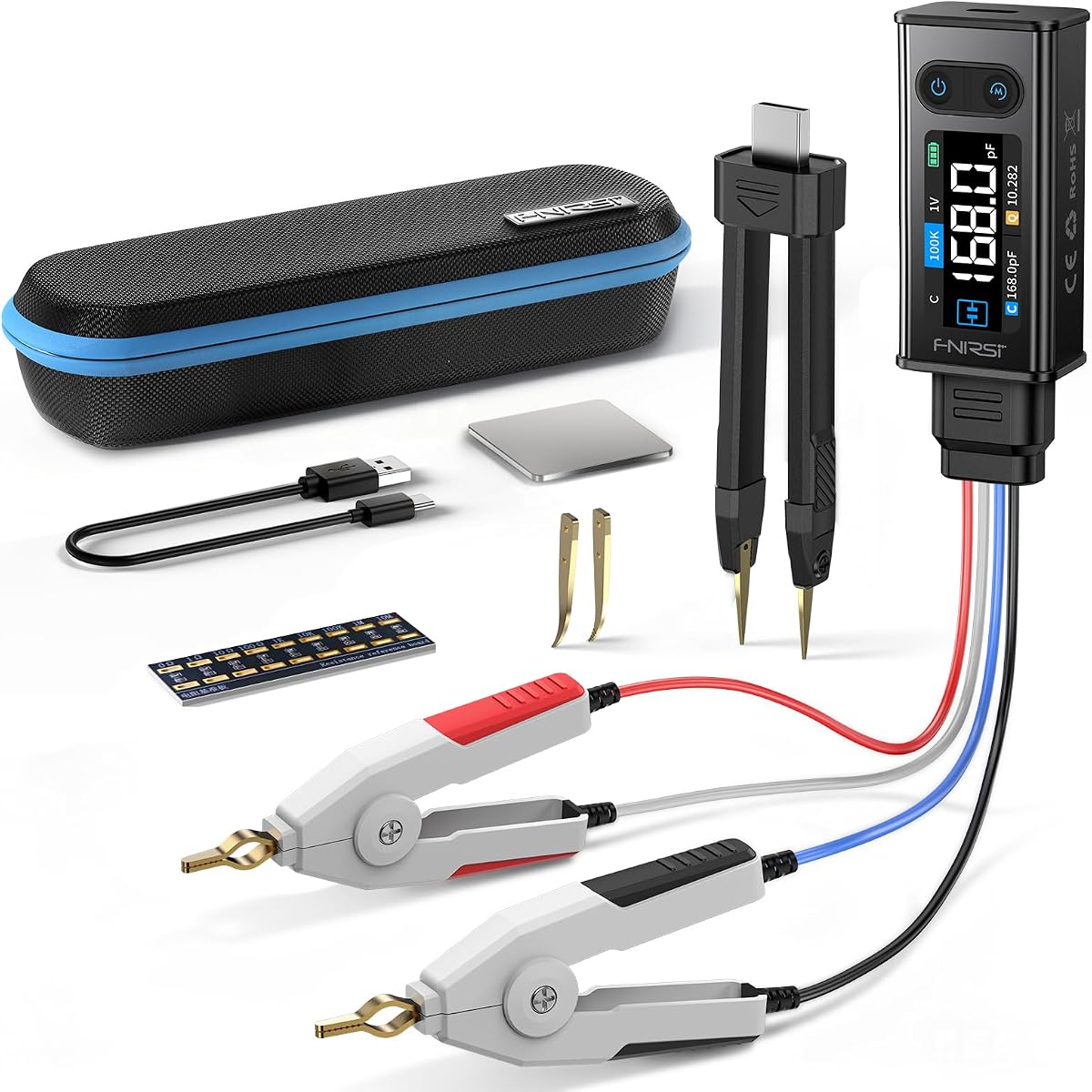
The FNIRSI LCR-ST2 expands on the ST1 by supporting through-hole parts and offering higher frequencies up to 100kHz. This makes it suitable for a wider array of electronic diagnostics and component verification.
We may earn a commission when you buy through this link, at no additional cost to you.
It includes Kelvin clips and gold-plated tweezers, enhancing precision for larger components. The four RMS test levels help reduce parasitic effects, ensuring more reliable results during complex testing scenarios.
The built-in magnet on the rear helps secure the device during use, saving workspace. Brightness adjustment ensures readability across different lighting conditions without straining the eyes.
Ideal for workshops handling both SMD and through-hole repairs, this model provides enhanced versatility. The additional accessories make it a comprehensive kit for more advanced repair tasks.
Series and parallel modes help isolate component characteristics accurately during testing.
Multiple probe types allow quick switching between tiny SMD and larger through-hole components.
We may earn a commission when you buy through this link, at no additional cost to you.
The DM103 LCR Tweezer stands out for its user-defined calibration capability, addressing accuracy drift over time. With 0.5 percent basic accuracy, it offers a strong middle ground for enthusiasts wanting better precision than entry models.
We may earn a commission when you buy through this link, at no additional cost to you.
The detachable gold-plated tips ensure durable low-contact resistance for small components. The HD flip OLED screen and adjustable brightness enhance usability in various environments and orientations.
Users can calibrate with standard resistors across ten selectable ranges to maintain long-term precision. This feature extends the device's life and reliability without needing professional recalibration services.
This tool is perfect for DIYers who want to maintain precision over years of use. The adjustable frequency and voltage options add flexibility for testing diverse electronic components accurately.
Exclusive calibration options fix common accuracy drift issues found in standard LCR meters.
Detachable tips allow for replacement or customization, ensuring a comfortable grip and better contact.
We may earn a commission when you buy through this link, at no additional cost to you.
The LT1 Mini LCR Meter distinguishes itself with a built-in signal generator, offering square, sine, triangle, and step waves. This dual functionality turns it into a versatile tool for both measurement and circuit stimulation.
We may earn a commission when you buy through this link, at no additional cost to you.
Automatic component recognition and intelligent left-right hand detection improve the user experience. The clear LCD display ensures readings are visible even in low light, while the 400mAh battery supports long continuous use.
With the ability to view frequency characteristic changes, it becomes a powerful diagnostic tool for complex circuits. This feature is rare in portable testers and adds significant value for engineers.
Best for those who need more than just component ID in the field. The signal generator and battery life make it a reliable companion for extended repair sessions.
Built-in waveforms allow you to test circuit responses without needing an external signal generator.
Screen rotation adapts to your hand position, reducing fatigue during prolonged use.
We may earn a commission when you buy through this link, at no additional cost to you.
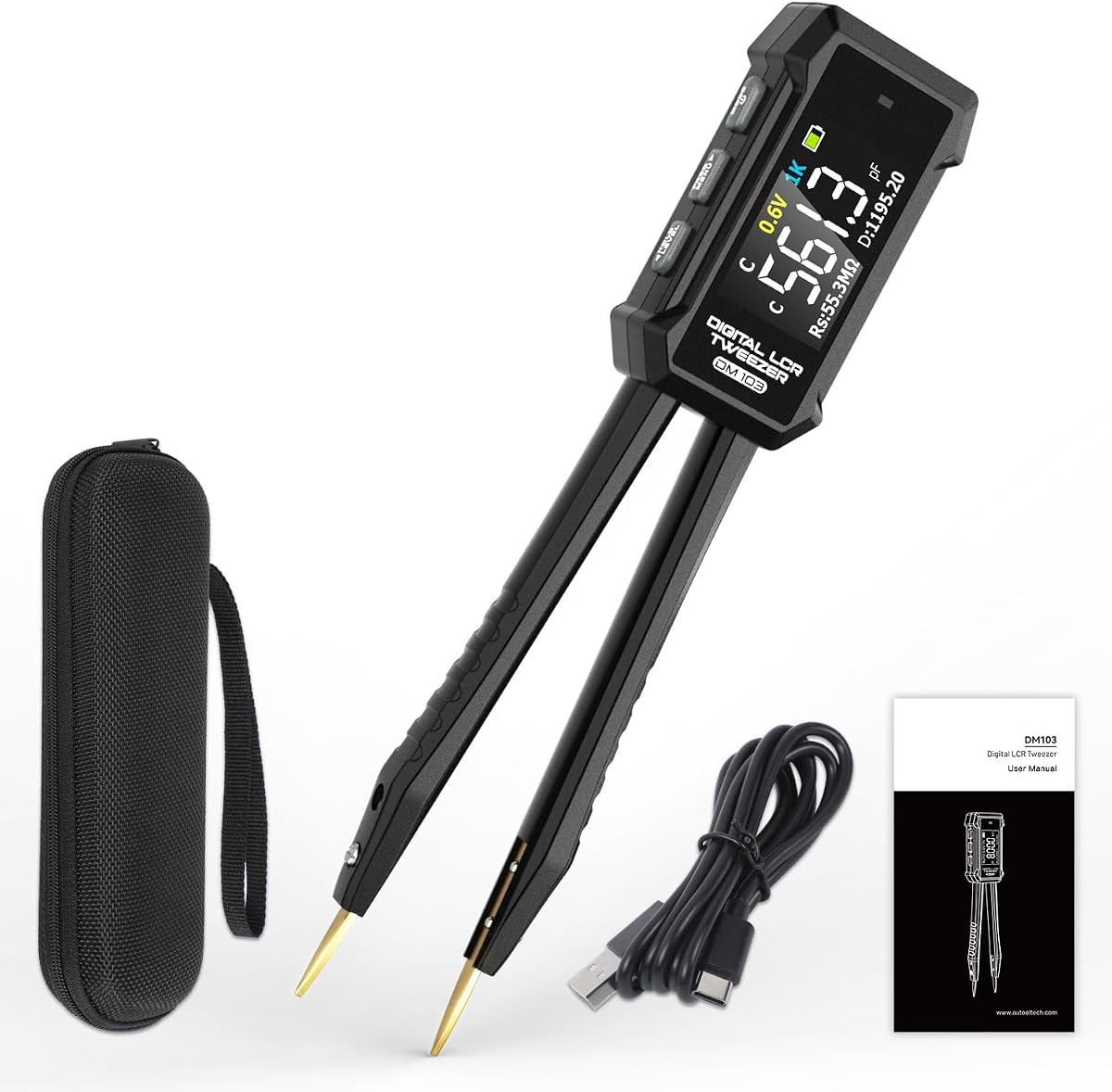
The AUTOOL DM103 focuses on clarity with a self-luminous HD IPS color screen. This ensures high contrast and fast response, reducing eye strain during long testing sessions in bright or dark workshops.
We may earn a commission when you buy through this link, at no additional cost to you.
It offers intelligent auto-recognition and dual parameter displays for deep analysis. Engineers can evaluate component quality and aging by viewing primary and secondary parameters simultaneously without mode switching.
Gold-plated precision probes guarantee stable contact on high-density PCBs. Firmware upgrade support allows for continuous optimization, making this a future-proof choice for lab environments.
Ideal for professionals who prioritize display visibility and connectivity. The combination of smart features and robust hardware makes it a reliable choice for systematic component testing.
IPS screens offer better viewing angles and color consistency compared to standard LCD displays.
Type-C firmware connections let you keep the device updated with the latest improvements.
We may earn a commission when you buy through this link, at no additional cost to you.
The Global Specialties LCR-58 is a straightforward tool designed for essential measurements without clutter. It supports DCR measurements and allows switching between parallel and series modes for accurate component analysis.
We may earn a commission when you buy through this link, at no additional cost to you.
Safety features include overload protection and low battery indication, preventing damage to the device or user. The auto-power off function helps preserve battery life during periods of inactivity.
While it lacks advanced features like data export or auto recognition, it is reliable for basic tasks. Data hold ensures you can read and record values without worrying about changing numbers.
Best for those who want a no-nonsense tool for quick checks. Its durability and basic feature set make it suitable for maintenance teams requiring consistent performance.
Overload protection ensures the meter can handle unexpected voltage spikes without damage.
Auto power off extends battery life, reducing the need for frequent replacements.
We may earn a commission when you buy through this link, at no additional cost to you.
The Mini Smart Tweezer (ZT-MD2) earns a perfect rating with its robust CNC metal housing. This build quality ensures durability against drops and physical stress common in repair environments.
We may earn a commission when you buy through this link, at no additional cost to you.
It supports five test frequencies from 100Hz to 100kHz and auto-recognizes electronic components. The ability to measure voltage and perform frequency scanning makes it a versatile tool for diagnostics.
The compact size fits easily into a toolbox, making it ideal for fieldwork. However, the metal body may feel slightly heavier than plastic counterparts during long sessions.
Choose this if you need a durable, compact tool for varied tasks. Its high rating and metal construction make it a trustworthy choice for demanding conditions.
CNC metal housing provides superior protection against physical damage compared to plastic cases.
Multiple frequencies and modes allow testing across a broad spectrum of electronic components.
We may earn a commission when you buy through this link, at no additional cost to you.
Selecting the right tool requires evaluating factors like accuracy, frequency range, and portability. Understanding these elements ensures you invest in a model that meets your specific testing needs.
Accuracy is critical when dealing with sensitive components or critical circuits. Look for devices with at least 0.5 percent accuracy for general work, or 0.1 percent for professional calibration.
Higher accuracy ensures consistent results and reduces troubleshooting time caused by incorrect measurements.
Different components behave differently at various frequencies. Ensure the device covers frequencies relevant to your projects, typically ranging from 100Hz to 100kHz for comprehensive testing.
A wider range allows you to test capacitors and inductors accurately under real-world operating conditions.
Auto recognition saves time by identifying resistors, capacitors, and inductors instantly. This feature is vital for high-volume testing where manual mode switching slows down the process.
Models with strong algorithms minimize errors caused by selecting the wrong mode manually.
A clear, bright display is essential for working in varied lighting. Features like flip screens or high contrast IPS panels improve usability during long sessions.
Readability directly impacts workflow speed, so prioritize screens that remain sharp at angles.
USB connectivity and Excel export capabilities help document results efficiently. These are essential for quality control or when sharing data with teams.
Built-in storage ensures no measurements are lost between sessions.
Rechargeable lithium batteries are standard and provide reliable power. Look for models with long life or low-power modes to avoid interruptions during critical tests.
Check if Type-C charging is supported for modern convenience.
Robust construction like metal housings or protective cases increases longevity. This is particularly important for tools used in industrial environments or daily fieldwork.
A durable build protects internal components from accidental drops or static discharge.
Features like signal generation or ESR testing can replace other tools on your bench. Consider if these add value to your specific repair or diagnostic workflow.
Extra modes often justify the price premium if used regularly.
Start by calibrating the device using the open, short, and load functions if available. This ensures baseline accuracy before measuring any components.
When testing, ensure the tips are clean and free of oxidation. Proper contact is vital to avoid measurement errors caused by resistance in the connection.
Store the device in a dry case away from extreme temperatures. Regularly charge the battery and update firmware to maintain optimal performance over time.
The primary advantage is precision combined with portability. These tools integrate measurement electrodes into tweezers, allowing direct contact with tiny SMD components without leads.
Generally no. Most LCR meters are designed for passive components and require power-off testing to avoid damaging the unit or getting incorrect readings.
Use lower frequencies for large electrolytic capacitors and higher frequencies for small ceramic capacitors or inductors. Follow datasheet specifications if available.
Yes, many models include adapters or hooks for larger parts. Check if the specific model supports through-hole testing before purchasing.
It is recommended to calibrate periodically to ensure accuracy, especially after heavy use. Some high-end models offer user calibration without sending the device in.
Most modern devices offer several hours of continuous use on a single charge. Features like auto-shutdown help extend this life during idle periods.
Many models support USB connectivity for exporting test records to Excel. This is useful for logging or quality assurance reporting.
Metal cases offer better protection against physical impact and ESD. However, plastic models are lighter and often cheaper for casual use.
We have reviewed ten top models ranging from budget-friendly options to professional-grade instruments. Each offers unique benefits depending on your specific repair or testing requirements.
Prioritize accuracy and frequency range if you work with critical components. For general repairs, budget models with auto identification may suffice without compromising quality.
Prices and availability fluctuate, so always check current listings before buying. Investing in the right tool ensures efficiency and accuracy for your electronic projects.